Your bridal lehenga is likely the most meaningful — and most expensive — garment you will ever buy. It is also one of the easiest to get wrong, because most brides shop for it exactly once, with no rehearsal and enormous emotion. This guide exists to fix that. It is the complete, honest, designer’s-eye walkthrough of shopping for a luxury bridal lehenga in 2026: when to start, what to budget, how to judge quality, what to customise, what to ask, and how to avoid the regrets we hear about most often.
At the Aahana’s atelier in Noida, we guide brides through this process every week. Here is everything we wish every bride knew before she began.
Shopping Timeline: When to Start
Start earlier than you think. The single most common — and most avoidable — mistake is beginning the search too late.
For a made-to-order luxury lehenga, begin eight to ten months before the wedding. Heavily hand-embroidered couture can take hundreds of artisan hours, and the timeline includes design, sourcing, embroidery, construction, and two or more fittings. Six to nine months is comfortable; anything under three months narrows you toward ready-to-ship or lightly customised pieces.
Starting early buys you three things money can’t: the pick of designs and appointment slots, unhurried fittings, and calm. A bride who begins at ten months makes decisions from a place of choice; a bride who begins at eight weeks makes them from a place of pressure.
Budget Breakdown: Understanding Pricing Tiers
Bridal lehenga pricing is driven by three factors — fabric, embroidery hours, and construction — not by brand markup alone. Understanding the tiers helps you shop intelligently rather than by sticker shock.
Broadly, the market breaks into:
- Entry / festive (up to ~₹50,000): lighter embellishment, often machine or mixed work, or simpler made-to-order pieces. Beautiful for functions; rarely the heaviest bridal-day look.
- Mid-luxury (~₹60,000–₹1,50,000): substantial hand embroidery, quality fabrics, made-to-order fit. The sweet spot for many reception and lighter bridal looks.
- Bridal couture (₹2,00,000+): dense hand embroidery, premium fabrics, and hundreds of artisan hours — the heirloom-grade wedding-day piece.
At Aahana’s, made-to-order pieces span this full range, with the final figure set by the density of hand embroidery and the fabric you choose. Budget beyond the lehenga too: alterations, the dupatta, a petticoat/can-can, and cleaning and storage all belong in the plan. A private consultation gives you an exact quote against your vision — no guessing.
A word on payment structure and hidden costs, because surprises here cause real stress. Most made-to-order ateliers work on a deposit-plus-balance model — a percentage to confirm and begin work, the balance on or before delivery. Before you pay anything, get the all-inclusive figure in writing and ask specifically what falls outside it: heavy customisation surcharges, rush fees for tight timelines, additional fittings beyond those included, shipping, and taxes. A trustworthy atelier states these clearly upfront; an untrustworthy one lets them accumulate. Decide your true ceiling before you fall in love with a piece, and keep a small contingency (roughly ten percent) for the accessories and alterations that always appear near the finish line.
Quality Indicators: How to Spot Luxury Craftsmanship
Luxury is felt, not labelled. These are the marks of a genuinely well-made lehenga:
- The reverse of the embroidery: turn it inside out. Real hand embroidery is neat but subtly irregular and hand-knotted; machine work is flatly uniform, and printed “embroidery” has no dimension at all.
- Fabric hand and weight: genuine silk, organza, fine net and tissue have a distinctive drape and weight; synthetics feel flat, plasticky or over-shiny.
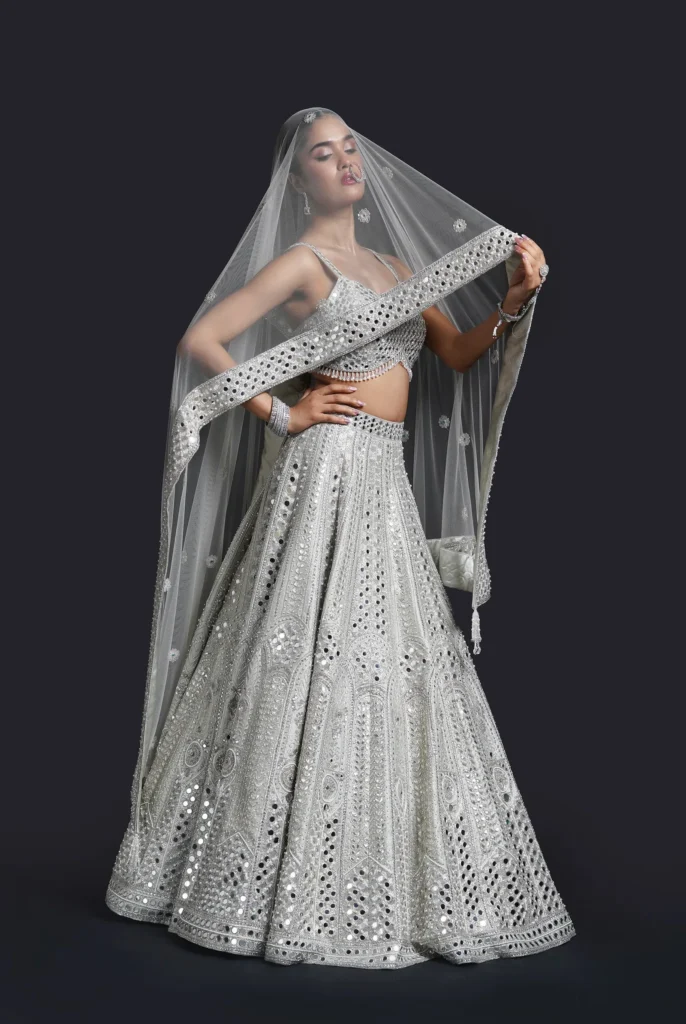
- Embroidery density and dimension: hand zardozi, dabka, gota and mirror work sit up off the fabric with depth and tiny variation — signs of real artisan hours.
- Finishing: couture finishing is clean — secure seams, neat linings, hand-finished edges, a properly weighted hem. Fraying, glue, or rushed seams are a warning.
- Fit and structure: a quality lehenga has a well-constructed waistband, boning where needed, and a skirt engineered to fall correctly.
The simple test: a luxury piece looks better the closer you inspect it. A cheaper one looks worse.
Designer vs. Non-Designer: What Justifies the Price
It’s a fair question — what are you actually paying for with a designer piece?
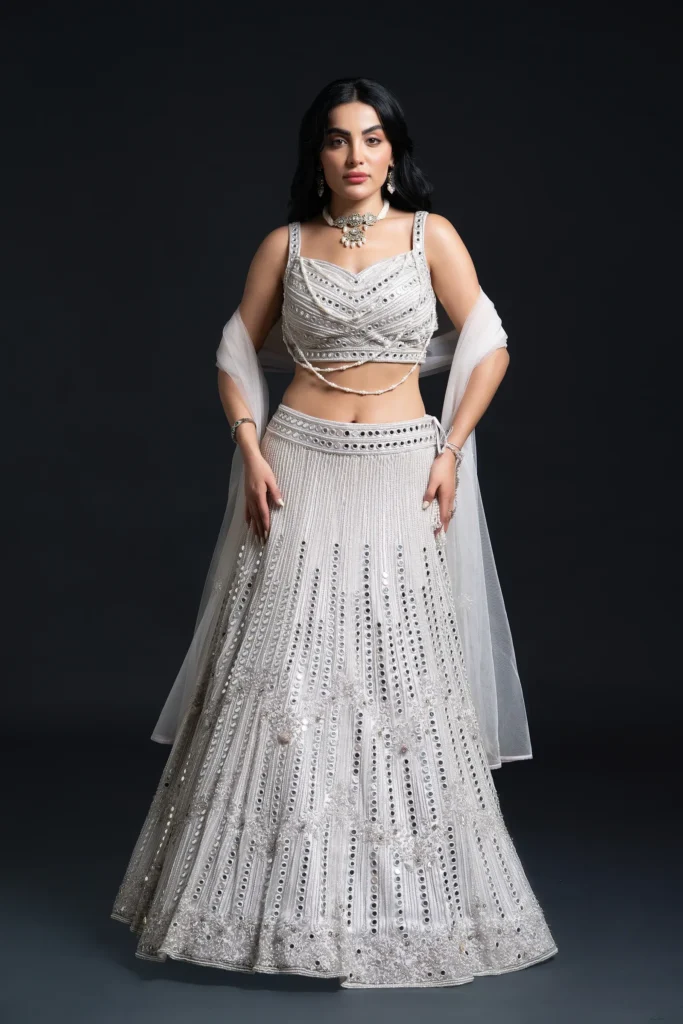
A genuine designer lehenga justifies its price through hand craftsmanship (real artisan hours versus machine output), quality materials, made-to-order fit cut for your body alone, original design and a coherent aesthetic, and service and accountability — a named house that stands behind the work and guides you through fittings. A non-designer or mass-market piece can look similar in a photo and cost far less, but typically uses lighter or machine embroidery, stock sizing, and cheaper fabric, with little customisation or after-sale support.
Neither is “wrong” — a budget-conscious bride buying for a single function may be perfectly served by a non-designer piece. But for the wedding-day lehenga you’ll be photographed in for a lifetime and may keep as an heirloom, the designer premium usually buys something real: fit, craft, longevity and peace of mind.
Online vs. Showroom Shopping: Pros and Cons
Both have a place; the trick is knowing which suits which purchase.
Online wins on convenience, range and price comparison, and it’s excellent for research, ready-to-ship pieces, and lighter occasion wear. Its risks: you can’t feel the fabric or judge true colour on a screen, fit is a gamble, and returns on bridalwear are often limited.
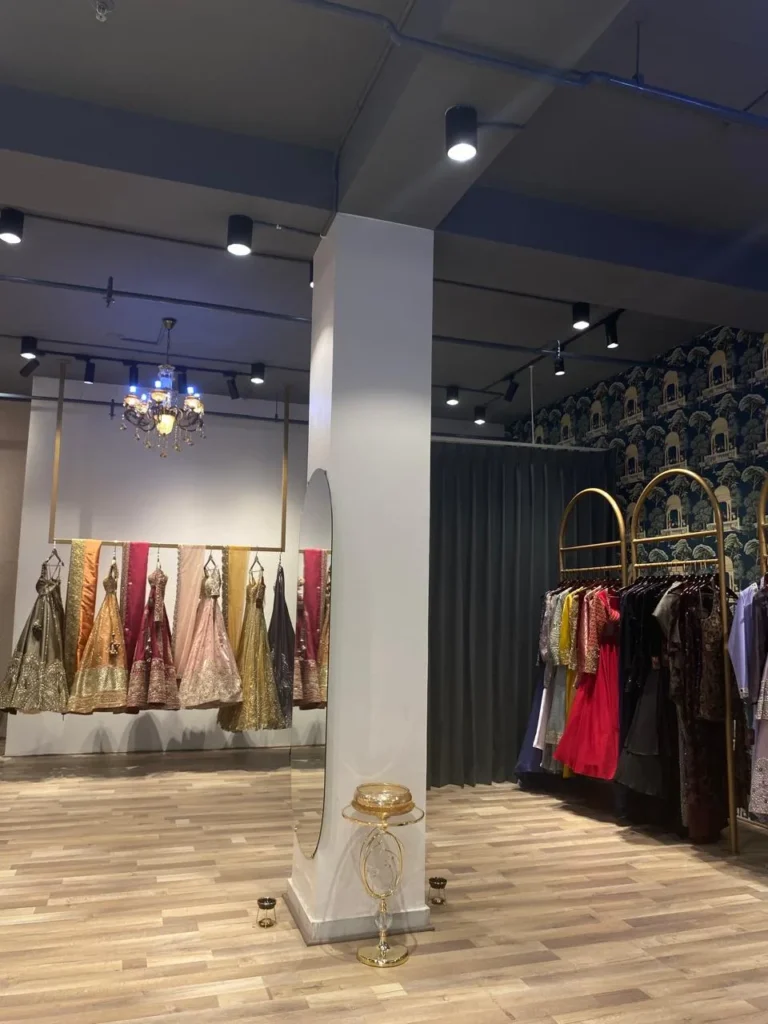
Showroom / atelier wins on everything that matters for a bridal-day piece: you feel the fabric, see the real colour, try the silhouette on your body, and — with a made-to-order house — customise and fit precisely. Its trade-offs are time and the need for appointments.
The practical answer most brides land on: research online, buy bridal in person. Use the internet to shortlist styles and understand pricing, then commit to your wedding-day lehenga in a showroom or atelier where fit and quality can be verified.
One caution about buying bridal purely online: colour on a screen is unreliable — the same red can read orange on one phone and maroon on another — and heavy embroidery photographs very differently from how it drapes in life. If you do order online, favour ateliers that will send fabric swatches or share a video call over the actual piece, that publish a clear, honest returns or alterations policy, and that have verifiable reviews from real brides rather than only styled catalogue images. For lighter occasion wear the online risk is modest; for the wedding-day lehenga, the stakes usually justify seeing it in person.
Customization Options: What’s Possible and What’s Not
With a true made-to-order atelier, far more is possible than most brides realise:
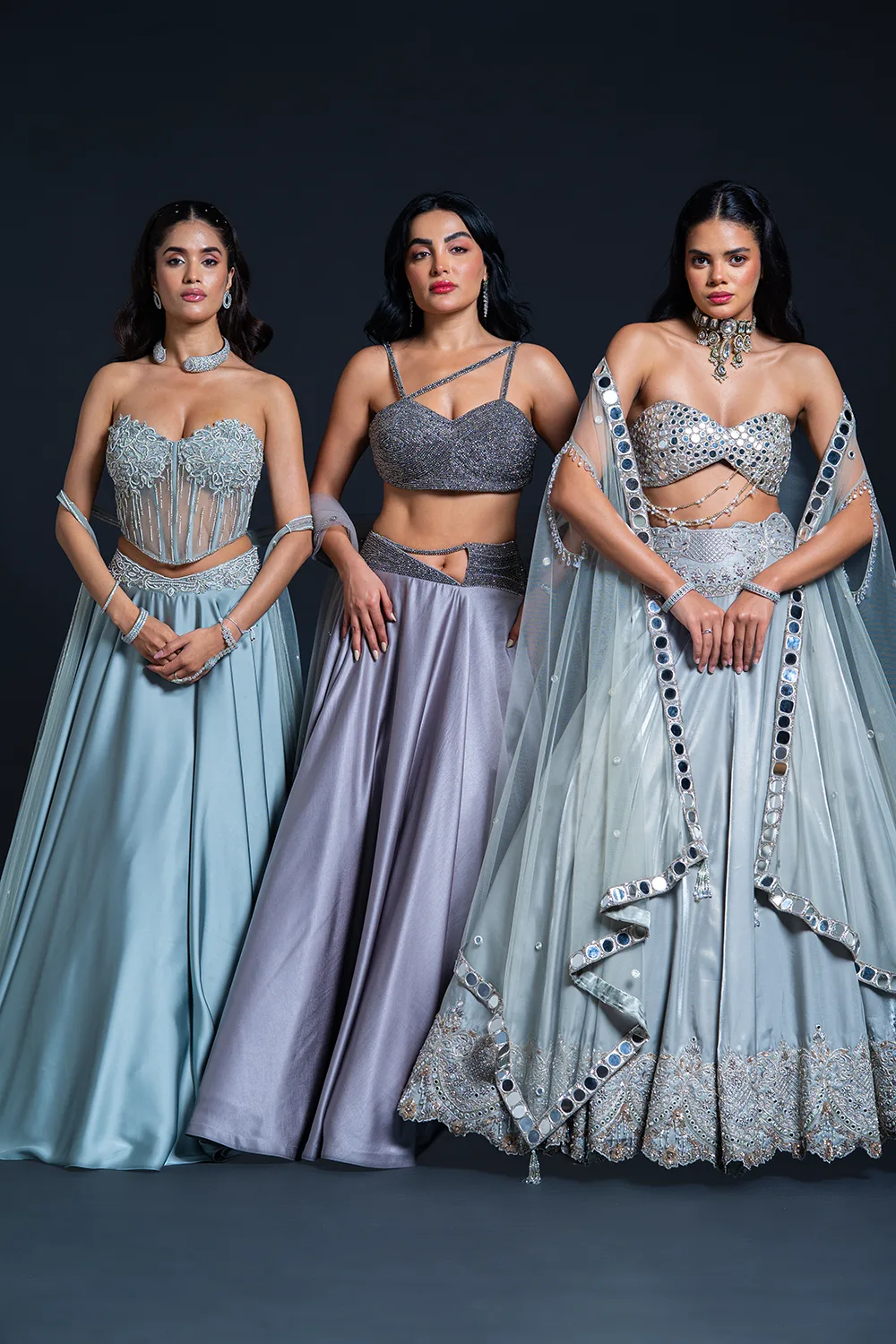
- Silhouette: skirt flare and panel count, choli neckline and sleeve, waist height, train.
- Colour: custom shades, ombré, and colour-blocking.
- Embroidery: technique (zardozi, gota, mirror, dabka), density, placement and motifs.
- Fabric: raw silk, organza, net, tissue, velvet.
- Details: blouse structure, dupatta count and weight, latkans, borders.
What’s usually not possible: rushing hundreds of embroidery hours into a fortnight, radically restructuring a finished piece after the fact, or guaranteeing an exact colour from a phone screen. The honest rule: customisation lives in time. Decide early and almost anything is achievable; decide late and your options shrink to what already exists.
Delivery Timelines: How Long Does a Piece Take
For a made-to-order bridal lehenga, plan on eight to sixteen weeks from confirmation to completion for substantial hand-embroidered pieces — longer for the most intricate couture, shorter for lighter designs. That window covers design finalisation, fabric sourcing, embroidery, construction, and fittings with adjustments. Ready-to-ship or lightly customised pieces are faster, sometimes a few weeks. Always confirm the timeline in writing, and build a buffer of several weeks before the wedding for final alterations, cleaning and the unexpected. A reputable atelier will give you a realistic date and keep you updated — vague or ever-shifting timelines are themselves a red flag.
Red Flags: Warning Signs of Low-Quality Pieces
Watch for these before you commit:
- Machine embroidery sold as handwork — flatly uniform, no dimension on the reverse.
- Synthetic fabric dressed up as silk — plasticky feel, unnatural sheen.
- No clarity on timeline or process — vague answers about who makes it and when.
- Pressure to decide instantly — genuine couture doesn’t need to rush you.
- No fittings offered on a “custom” piece — real made-to-order requires them.
- Prices too good to be true — hundreds of embroidery hours have a real floor cost.
- Poor finishing — fraying seams, glued elements, uneven hems.
- No written quote or terms — everything should be documented.
Any one of these deserves a pause; several together mean walk away.
The 20 Questions Every Bride Should Ask
Bring this list to every appointment. The answers separate authentic ateliers from resellers.
- Is the embroidery fully hand-done, and which techniques are used?
- Is this piece made to order in my exact measurements?
- What fabrics are used, and are they natural or synthetic?
- Who makes the garment, and roughly how many artisan hours does it take?
- What is the complete, all-inclusive price?
- What exactly does that price include (dupatta, blouse, petticoat)?
- What is the full timeline from order to delivery?
- How many fittings are included?
- Can I see the actual fabric and colour before confirming?
- Can the design, colour or embroidery be customised — and by when must I decide?
- What is your alterations policy after delivery?
- What is your returns or exchange policy?
- Do you take a deposit, and what are the payment terms?
- Will I get a written order confirmation and quote?
- Can I see finished examples of your work, or real client pieces?
- How should I care for and store the piece?
- What happens if the fit isn’t right at final fitting?
- Is the price likely to change, and under what conditions?
- Can you accommodate my wedding date with a safety buffer?
- Who is my point of contact through the process?
If an atelier answers all twenty openly, you’re in good hands. Hesitation or evasion is your answer.
Personal vs. Commercial Shopping Experiences
There’s a meaningful difference between being sold to and being dressed. A commercial experience is transactional — a busy showroom floor, a consultant working volume, pressure to close. A personal experience is relational — an unhurried appointment, a designer who listens to your story and your body, and a piece shaped around you. For a garment this significant, the personal experience isn’t a luxury add-on; it’s what produces a lehenga you love rather than one you settled for. Seek out ateliers that give you time, attention and honesty over those that give you urgency.
Size and Measurement: How to Get It Right
Fit makes or breaks a lehenga, and it’s where made-to-order earns its keep.
- Get professionally measured rather than guessing from a size chart; a good atelier takes multiple measurements (bust, waist, hips, blouse length, skirt length, and more).
- Account for the timeline: if your wedding is months away, discuss how possible weight changes will be handled at final fitting.
- Insist on fittings: a genuine custom piece includes at least one, usually two, so the fit can be perfected.
- Wear the right foundation garments and heel height to fittings so the length and silhouette are accurate.
- Speak up at fittings: if something feels off, say so — this is exactly what the fitting is for.
A perfectly embroidered lehenga that doesn’t fit will always read as a compromise; a well-fitted one lets you forget you’re wearing it.
Returns and Modifications: What’s Possible After Purchase
Be clear-eyed here. Because bridal couture is made to your measurements, made-to-order pieces are generally not returnable — they can’t be resold to anyone else. What is usually possible is alterations and modifications: adjusting fit at fittings, minor length or embellishment tweaks, and post-wedding alterations for re-wear. Always confirm the specific policy in writing before you pay: what alterations are included, what modifications cost extra, and what the terms are if something is genuinely wrong with the piece. Ready-to-ship items may have limited return windows; custom pieces almost never do — which is exactly why the questions above matter so much upfront.
Care and Maintenance: Protecting Your Investment
A bridal lehenga is a textile investment and deserves the care of one:
- Cleaning: specialist dry cleaning only, by a cleaner experienced with metallic hand embroidery — never machine wash.
- Storage: fold with acid-free tissue or hang on a padded hanger; wrap in breathable cotton or muslin, never plastic (which traps moisture and tarnishes goldwork).
- Environment: keep away from direct light, humidity, and perfume or deodorant contact.
- Handling: support the skirt’s weight when moving the piece so seams aren’t strained.
- Pre-wedding: steam gently rather than iron directly on embroidery.
Cared for properly, hand embroidery keeps its lustre for decades — which is what turns a lehenga into an heirloom.
Resale Options: If You Sell the Piece Later
Be realistic about resale. A bridal lehenga is deeply personal and cut to your measurements, so the resale market is limited and values are typically a fraction of the original. Options exist — pre-owned couture platforms, consignment, and rental — but the smarter way to think about “value” is cost-per-wear and heirloom worth: a timeless, well-made piece re-worn to future functions, altered for a lighter re-wear, or passed down to a daughter holds far more real value than a resale cheque. Buy something you’ll keep and love, not something you plan to offload.
Mistakes to Avoid: Common Bride Regrets
The regrets we hear most often, so you can sidestep them:
- Starting too late and settling for what’s available rather than what’s right.
- Prioritising trend over timelessness — the of-the-moment piece that dates in a year.
- Over-indexing on weight — the heaviest lehenga isn’t the best one if you can’t move in it.
- Skipping the fabric test and buying from a screen.
- Ignoring fit in favour of embroidery.
- Not asking about all-in price and being surprised by extras.
- Choosing the venue’s convenience over the right designer.
- Buying to impress others instead of to feel like yourself.
Almost every one traces back to two things: starting late, and shopping from pressure instead of clarity.
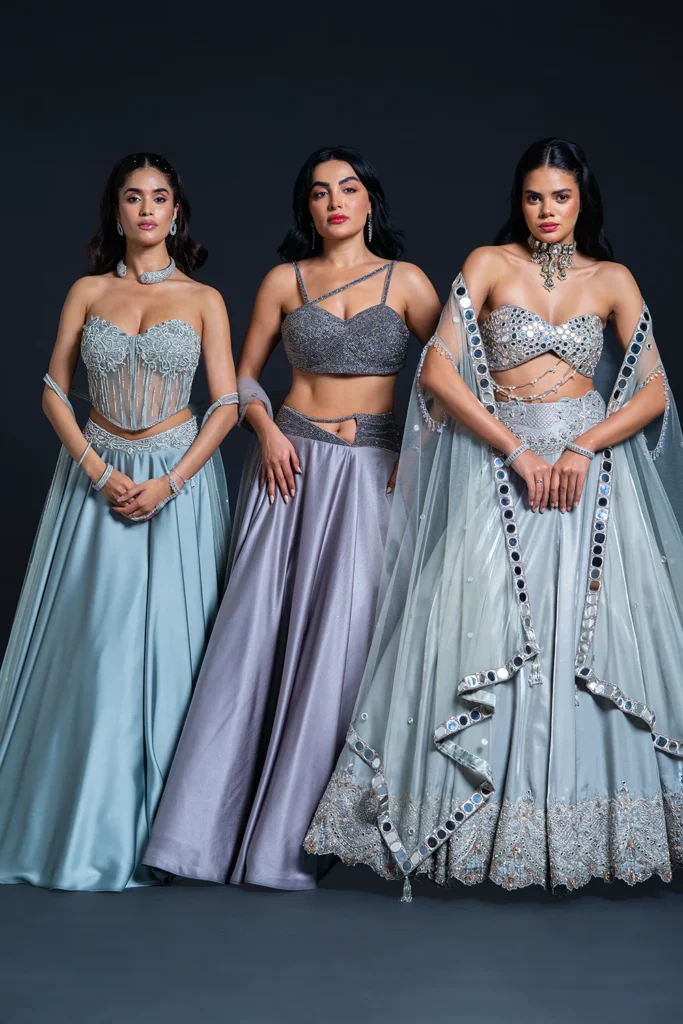
Building Your Shopping Timeline
A simple, stress-free plan:
- 10 months out: research styles, set a budget, book atelier consultations.
- 8–9 months out: choose your designer, finalise design, colour and fabric; take measurements.
- 5–7 months out: embroidery and construction underway; first fitting.
- 2–4 months out: second fitting and adjustments; finalise dupatta, blouse and accessories.
- 1 month out: final fitting, cleaning if needed, and collection.
- Final weeks: steam, store correctly, and relax.
Aahana’s Shopping Process: From Consultation to Delivery
At Aahana’s by Nidhi Mehra, the process is built to be unhurried and personal. It begins with a private 90-minute consultation at our Sector 4, Noida atelier — we set aside pieces in your colours and sizes before you arrive, offer chai or coffee, and give you real time in real fabric. From there we move to design and measurement, finalising silhouette, colour, embroidery and fabric to your exact measurements. Then the making — hand-embroidered by artisans Nidhi knows by name — followed by fittings and adjustments until the fit is flawless. There’s no pressure to decide on the spot, and you’ll meet Nidhi on every appointment. Because we design across every function, we also help brides plan a cohesive wardrobe — coordinating the wedding-day lehenga with reception, sangeet and mehendi looks so the whole celebration feels considered rather than assembled piece by piece. And because the atelier is local, every fitting and adjustment fits easily around the rest of your wedding planning. Explore starting points in our bridal and lehenga collections, then bring your vision to the atelier to make it yours.
Key Takeaways
- Start eight to ten months ahead for made-to-order bridal couture — late starts cause most regrets.
- Understand the pricing tiers — cost reflects fabric, embroidery hours and construction, not brand alone.
- Judge quality by the reverse of the embroidery, fabric hand, density and finishing — luxury looks better up close.
- Research online, buy bridal in person so you can verify fabric, colour and fit.
- Customisation lives in time — decide early and almost anything is possible.
- Ask the 20 questions, watch for red flags, and get everything in writing.
- Made-to-order pieces generally can’t be returned or resold well — buy to keep and love, and care for it as the heirloom it is.
Ready to shop with clarity, not pressure? Book a complimentary 90-minute styling session at the Aahana’s atelier in Sector 4, Noida — we’ll curate pieces in your colours and measurements and walk you through every step.
Contact Aahana’s by Nidhi Mehra
Contact Aahana’s by Nidhi Mehra
Showroom: A-77, Block A, Sector 4, Noida, UP 201301
Phone: +91 98990 04066
WhatsApp: +91 98990 04066
Email: hello@nidhimehra.in
Shop Online Collection