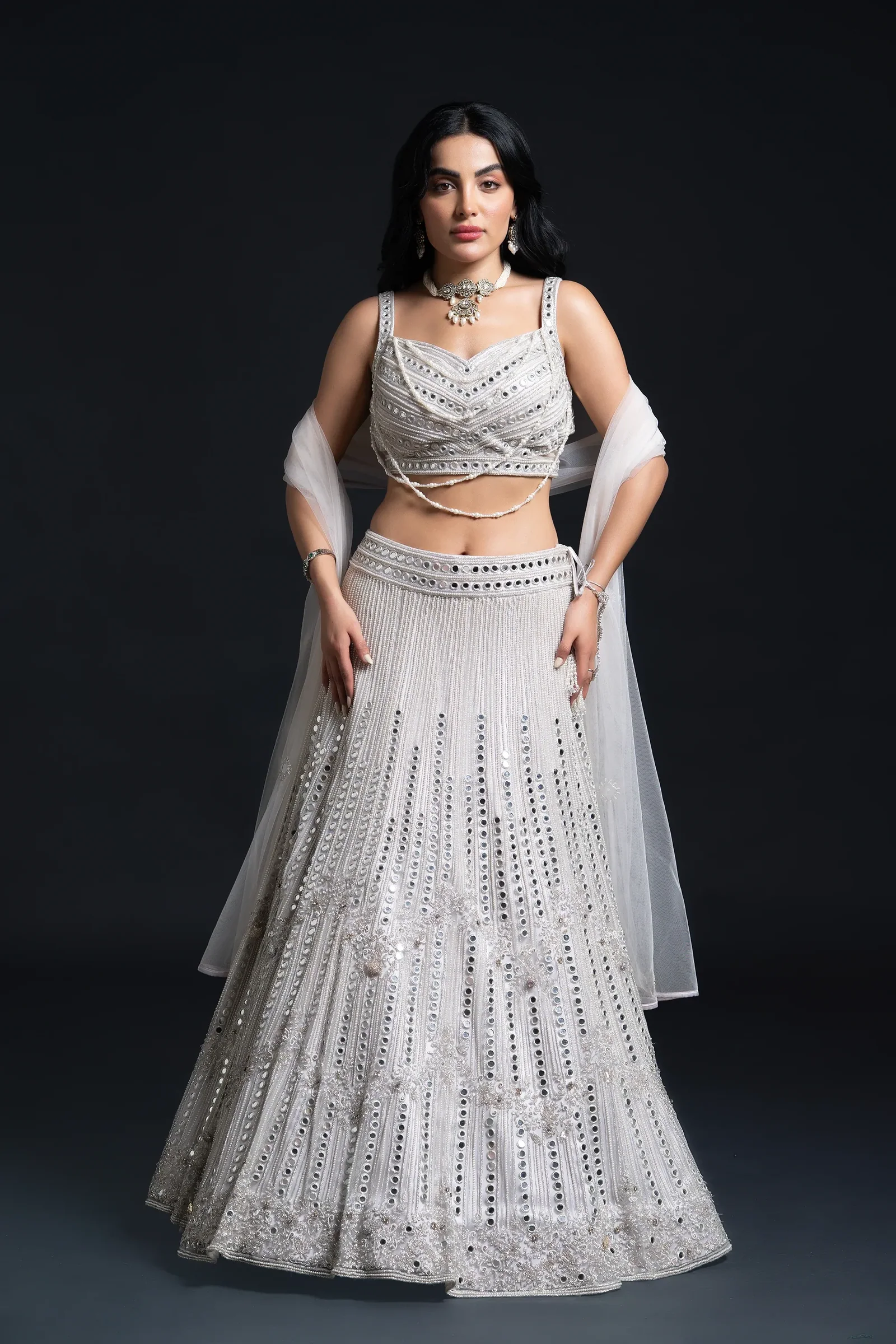
There is a quiet myth in bridal shopping that anything worth wearing must cost a small fortune. Walk into most couture conversations and the numbers climb quickly — ₹2 lakh, ₹5 lakh, and beyond. So when a bride, or the sister of a bride, or a friend with three weddings in one winter asks whether a genuine designer lehenga can be found under ₹50,000, the honest answer is yes. Not a compromise you settle for, but a considered piece you choose. The trick is knowing exactly where your money goes, what to protect, and what to let go of.
This guide is written for the value-conscious woman who still wants craftsmanship — someone who would rather own one beautifully made lehenga than three forgettable ones. Here is how to shop smart in the accessible-luxury range without losing the things that make a designer piece feel like one.
The Budget Reality Check: What ₹50K Can Actually Get You
At this price point, you are buying editing, not excess. A well-made lehenga under ₹50,000 will typically give you a pure or premium fabric base, a clean and flattering silhouette, and thoughtful embroidery placed where it matters most — the border, the yoke, a scattered motif across the skirt — rather than dense, all-over surface work.
What you are not paying for is weight. Heavy bridal lehengas carry their cost in the sheer hours of hand embroidery, the layering of zardozi and dabka, and the kilograms of material. Remove that density and the price drops dramatically, while the elegance can remain fully intact. In practice, ₹50K buys you a piece that photographs beautifully, moves well on a dance floor, and reads as “designer” to anyone who knows what they are looking at — as long as the fundamentals are right.
Quality Indicators: What to Look For in Budget Designer Pieces
Price alone tells you nothing. Two lehengas at ₹45,000 can be worlds apart. Train your eye on these markers instead:
- The inside is as clean as the outside. Turn the garment over. Neat, finished seams, bound edges, and secured thread-ends are the single most reliable sign of a serious maker.
- Embroidery is anchored, not glued. Run your fingers under the motifs. Hand or fine machine work sits into the fabric; cheap embellishment feels stuck on and sheds.
- The fabric has body and fall. Good georgette drapes and returns to shape. Stiff, papery synthetics that crease permanently are a red flag.
- Colour is even and deep. Patchy dyeing or a chemical sheen suggests corners were cut.
- The lining and canvas feel considered. A proper waistband, a soft cotton lining, and a hemline that holds its weight all signal a piece built to last.
Where Budget Pieces Differ From Premium Ones
It helps to know the trade-offs in advance so nothing feels like a surprise. In the accessible range, the compromise is almost always in density of ornamentation, not in the essentials. A premium bridal lehenga might carry hand-done zardozi across every inch; a ₹50K piece will use lighter hand embroidery, elegant borders, or a striking silhouette to do the talking. You may also see fewer fabric layers in the skirt, a slightly narrower flare, and mirror or thread work in place of the most labour-intensive metal embroidery. None of this makes the lehenga “lesser” — it makes it appropriate for the events it is designed for.
Where to Shop: Finding the Right Makers
The best value in this range comes from ateliers that also make premium couture. A studio that crafts ₹3-lakh bridals brings the same finishing discipline, fabric sourcing, and fit expertise to its accessible line — you simply get a lighter version of the same standard. Independent designers and small studios frequently outperform large retail chains here, because their overheads are lower and their attention to each garment is higher.
At Aahana’s by Nidhi Mehra, the entry-level range is built on exactly this principle: the same pure fabrics, the same made-to-measure fit, and the same in-house artisans that go into the heavier bridal work — just edited for weight and price.
Sales and Timing: When to Buy for the Best Price
Timing can shift your budget further than you expect. End-of-season windows, festive-period previews, and the quieter months just after the peak wedding season (typically late winter into early spring) are when studios are most willing to offer value on existing designs. Avoid ordering in the final weeks before a big wedding date — rush work costs more and leaves no room for fittings. The single best money-saving decision is simply to book early: it unlocks calmer craftsmanship, more customization freedom, and better pricing.
Online vs. Showroom: Budget Considerations
Online shopping can save money, but bridal wear rewards touch. Fabric weight, embroidery texture, and true colour are difficult to judge on a screen, and returns on customized ethnic wear are limited. If you buy online, buy from a designer with a real atelier, clear fabric descriptions, and a made-to-measure or alteration service. For anything you will wear in your own wedding week, a showroom visit — even a single one — is worth the trip. You will fit better, choose colour with confidence, and avoid the hidden cost of a piece that never quite sat right.
Customization on a Budget: What’s Possible
Accessible does not mean off-the-rack. In a good studio, even the under-₹50K range is made-to-measure, tailored to your exact body so the fit flatters where it should. Beyond fit, budget-friendly customization usually includes:
- Colour changes from a shade card to match your event theme.
- Blouse restyling — sleeve length, neckline, back design.
- Selective embroidery upgrades, such as a heavier border, added later or at order time for a modest extra cost.
The smart move is to spend your customization budget on the two things people notice first: the silhouette and the neckline.
Fabric Choices That Save Money Without Sacrificing Quality
Fabric is where you should never cut corners — and happily, you don’t have to. Georgette gives you flow and forgiveness at a friendly price. Raw silk brings structure and a rich, matte luxury. Pure organza offers that airy, modern shine that reads expensive on camera. All three sit comfortably in the accessible range. What to avoid: heavily synthetic blends that shine unnaturally, trap heat, and crease into permanent lines. A pure, well-chosen fabric is the foundation everything else rests on.
Embroidery Density: More vs. Less Expensive Options
Think of embroidery as a dial, not a switch. The most expensive route is dense, all-over hand zardozi and dabka. The most economical is scattered motifs or a single statement border. In between sit mirror work, thread embroidery, sequin scatter, and gota — all capable of looking stunning when placed with restraint. A lehenga with a bold, beautifully worked border and a clean skirt often looks more refined than one drowning in cheap, uniform embellishment. Density is not the same as luxury; placement is.
Silhouettes: Some Cost More Than Others
The cut of your lehenga quietly shapes its price. A full, heavily flared skirt uses more fabric and more embroidery surface, pushing costs up. A sleek A-line, a fishtail, or a paneled flare can look equally elegant while using less material. If budget is tight, choose a silhouette that flatters your frame and uses fabric efficiently — you will often end up with a more modern, wearable look as a bonus.
Regional Variations: Different Price Points, Different Strengths
India’s craft map means your money behaves differently depending on the tradition you buy into. Certain regions specialize in intricate hand embroidery, others in fabric and weave, others in mirror and thread work. Buying close to a craft’s home — or from a studio that sources directly from those artisans — cuts out layers of markup. A Noida or Delhi-NCR atelier working directly with local karigars, for instance, can offer genuine hand craftsmanship at a fairer price than a multi-store retail brand carrying the same look.
Mix and Match: Building a Look From Multiple Pieces
One of the smartest budget strategies is to stop thinking in “sets.” Pair a beautifully embroidered blouse with a simpler skirt, or dress up a modest lehenga with a statement dupatta and strong jewellery. A single well-made skirt can be restyled across two events with different blouses and drapes. This mix-and-match approach stretches a ₹50K budget across a whole wedding season instead of a single evening.
Pre-Owned and Resale: Alternative Shopping Options
The resale market has matured, and a lightly worn designer lehenga can be excellent value — sometimes a premium piece at an accessible price. The caveats: verify authenticity, inspect embroidery and seams closely for wear, and budget for cleaning and alterations, since fit is rarely perfect second-hand. Pre-owned works best for pre-wedding events rather than the main bridal moment, where most brides want something made for them.
Timing: Booking Early vs. Last-Minute
It is worth repeating because it saves the most: early is cheaper. Booking weeks in advance gives the atelier time to source the right fabric, complete unhurried hand work, and schedule proper fittings — all of which protect both quality and price. Last-minute orders compress that entire process, inflate the cost, and remove your ability to correct fit. An accessible-luxury lehenga typically takes around three to five weeks to craft; plan backward from your event with that in mind.
Research: How to Evaluate Value
Before you commit, do a little homework. Ask what fabric is being used and whether it is pure. Ask whether embroidery is hand or machine, and where it sits. Ask to see the inside finishing. Read reviews for consistency of fit and delivery, not just glamour shots. Request clear photographs in natural light. Value is simply quality divided by price — and once you can read quality, the price starts to make sense.
Aahana’s Entry-Level Options and Pricing
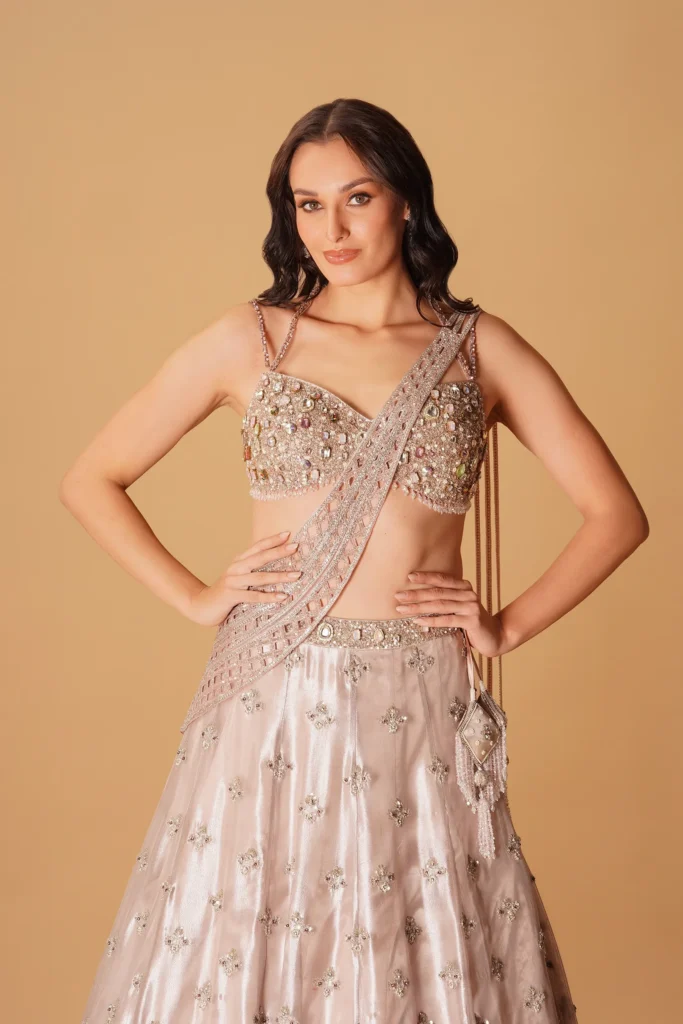
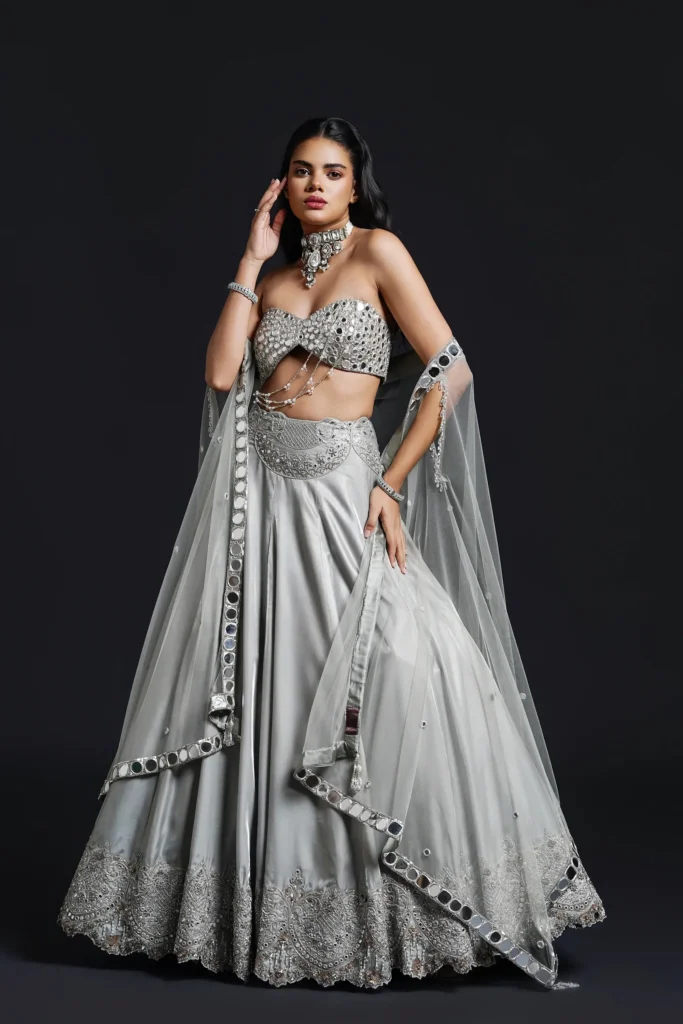
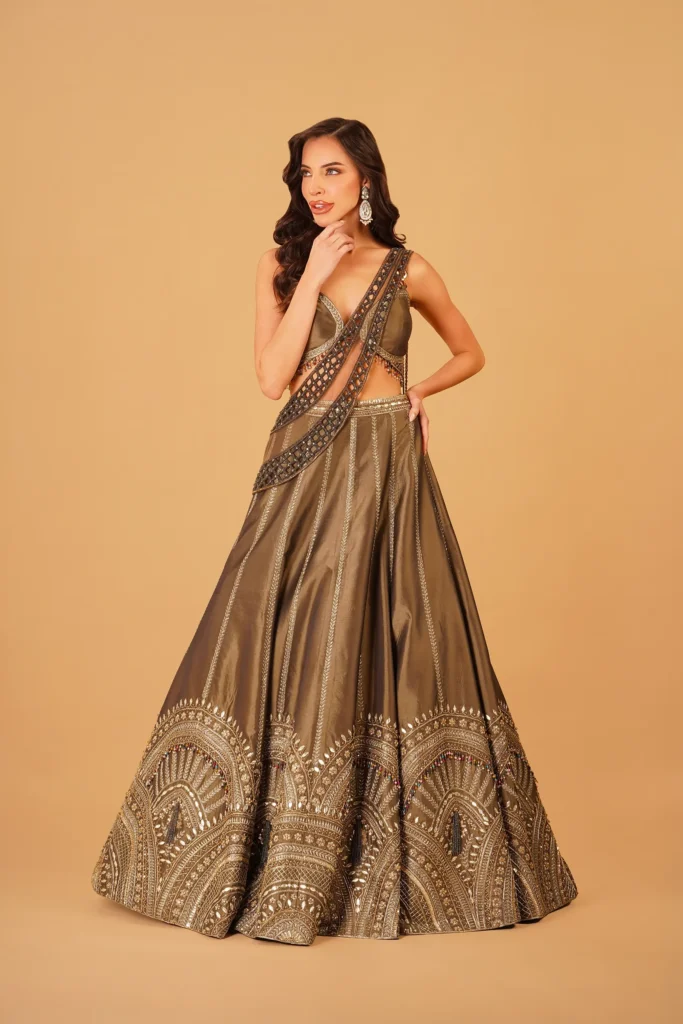
At Aahana’s by Nidhi Mehra, the accessible-luxury range under ₹50,000 is designed for exactly these moments — the Mehendi, the Sangeet, the engagement, and for the sisters and friends who want to look every bit as considered as the bride. These pieces are made-to-measure in pure georgettes, raw silks, and organzas, finished with delicate hand embroidery and a fully worked matching dupatta. Colour can be customized from the shade card, and embroidery can be upgraded later if you wish. In other words: the same standard as the heavier bridals, edited thoughtfully for weight, occasion, and budget.
Quality Assurance: Protecting Your Investment
A designer purchase deserves protection. Buy from a maker who stands behind fit with fittings or alterations, who is transparent about fabric and craft, and who finishes garments to last. Once it is yours, store it flat or rolled rather than crushed on a hanger, keep it away from direct sunlight and damp, and use a specialist for cleaning. A well-made lehenga, cared for, holds its beauty for years — and its resale value with it.
Long-Term Value: A Cost-Per-Wear View
Here is the reframe that makes ₹50K feel generous rather than tight. A piece you wear once at a single event carries its full cost in one night. A well-chosen accessible lehenga — versatile in colour, re-stylable across events, comfortable enough to actually enjoy — gets worn again: a friend’s Sangeet, a festive evening, a family celebration. Divide the price across those wears and the true cost falls with every outing. Buying quality is not the expensive choice; it is the economical one.
Key Takeaways
- A genuine designer lehenga under ₹50,000 is entirely possible — you are buying editing, not compromise.
- Protect the fundamentals: pure fabric, clean finishing, flattering silhouette. Trade off density of embroidery, never the essentials.
- Buy from ateliers that also make premium couture; the finishing standard carries down to the accessible line.
- Book early, consider silhouette and placement over sheer ornamentation, and think in cost-per-wear.
Frequently Asked Questions
Can I find a genuine designer lehenga under ₹50,000? Yes. Aahana’s offers a curated selection of accessible-luxury lehengas under ₹50K that maintain our high standards of quality and design.
What is the difference between a ₹50K lehenga and a premium bridal piece? A ₹50K lehenga typically uses slightly lighter hand embroidery or focuses on elegant silhouettes and premium fabrics rather than all-over heavy zardozi work.
Are the ₹50K lehengas custom-made or ready-to-wear? Like all our luxury pieces, these lehengas are made-to-measure to ensure a flawless fit specifically tailored to your body.
What occasions are these lehengas best suited for? These accessible-luxury pieces are perfect for pre-wedding events like the Mehendi, Sangeet, and Engagement, or for the sisters and friends of the bride.
Are the fabrics pure in this price range? Yes. We never compromise on fabric — we still use beautiful georgettes, raw silks, and pure organzas even in our accessible range.
Can I customize the colour of a ₹50K lehenga? Absolutely. You can choose from our extensive shade card to match your specific event theme.
How long does delivery take? These pieces generally take three to five weeks to craft — slightly faster than our heavy bridal pieces.
Do these lehengas come with a dupatta? Yes, they come with a fully finished matching dupatta featuring delicate borders or scattered embroidery.
Can I upgrade the embroidery later? Yes. We offer customization where you can add heavier borders or more embellishment for an additional cost.
How can I view the accessible-luxury collection? Request a private consultation at our Noida atelier to view and try on our under-₹50K designer range.
Contact Aahana’s by Nidhi Mehra
Showroom: A-77, Block A, Sector 4, Noida, UP 201301
Phone: +91 98990 04066
WhatsApp: +91 98990 04066
Email: hello@nidhimehra.in
Shop Online Collection