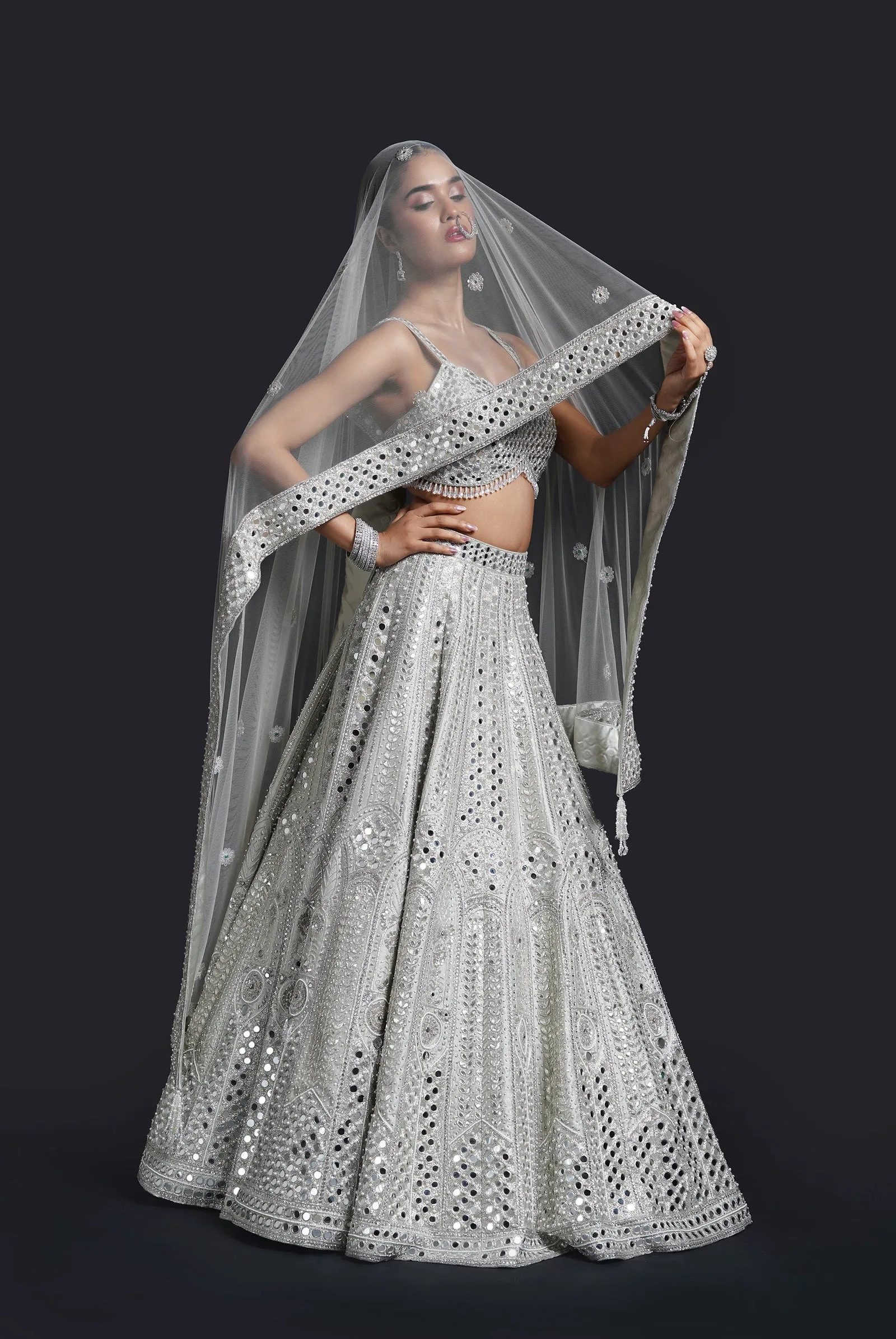
Quick answer: A quality bridal lehenga is worth the cost because its price reflects real value — hundreds of hours of hand embroidery, premium fabric, made-to-measure construction, and original design — not brand markup. When you factor in longevity (decades with proper care), heirloom potential, re-wearability, the confidence it gives you on your most photographed day, and the artisans it sustains, a well-made lehenga behaves like an asset rather than an expense. The key is judging value, not just price.
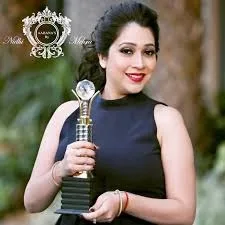
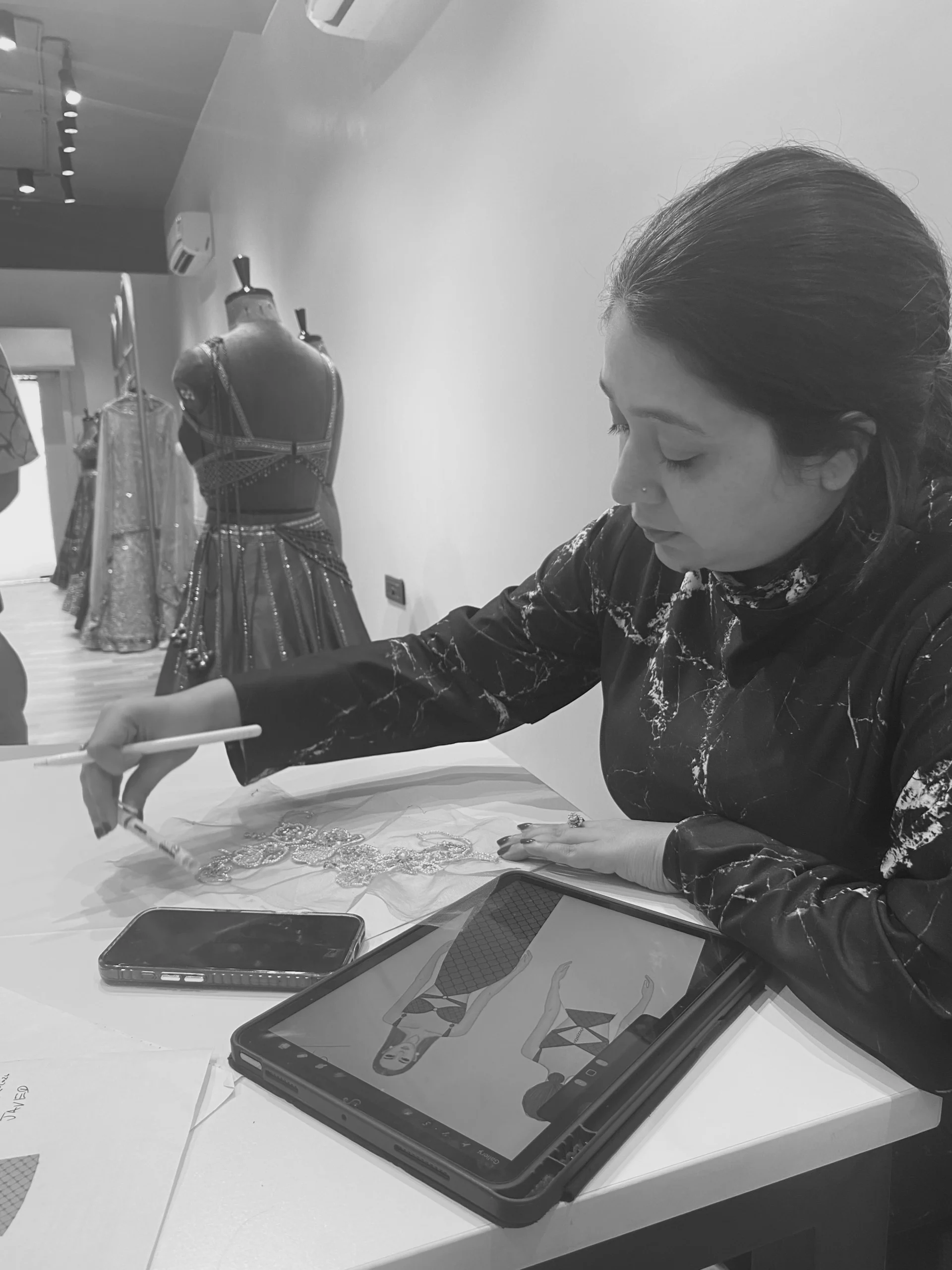
Written by Nidhi Mehra, couturier and founder of Aahana’s by Nidhi Mehra — a made-to-order bridal atelier in Sector 4, Noida. The cost breakdown below reflects how our pieces are actually made, by hand, in our own studio.
“Is it really worth it?” is the most honest question a bride asks about her lehenga — and it deserves an honest answer. A luxury bridal lehenga is a significant sum, and no one should spend it without understanding exactly what they’re buying. This guide breaks down where the money goes, how to calculate true value, and why, for the right piece, the answer is genuinely yes.
The Investment Mindset: From Expense to Asset
The difference between an expense and an investment is what you get back. An expense is spent and gone; an investment returns value over time — in use, in meaning, in longevity, in appreciation.
A fast-fashion outfit worn once and discarded is an expense. A hand-crafted bridal lehenga, cared for and kept, is closer to an asset: it holds its beauty for decades, carries emotional and heirloom worth, can be re-worn or reinterpreted, and represents craftsmanship that doesn’t depreciate the way mass production does. Shifting from “how much does it cost?” to “what value does it hold, and for how long?” is the single most useful reframe a bride can make.
Cost Breakdown: Where the Money Actually Goes
The most common misconception is that a luxury lehenga’s price is mostly “brand.” In a genuine made-to-order atelier, it isn’t. Here’s where your money actually goes:
- Labour — artisan expertise and fair wages. Hand embroidery is skilled, slow work. A single bridal piece can occupy several master artisans, and paying them fairly for that expertise is a large share of the cost — and the right thing to do.
- Materials — quality fabrics and supplies. Real raw silk, organza, fine net, tissue, and genuine metallic threads, dabka, mirrors, pearls and crystals cost many times more than the synthetics used in cheap pieces.
- Time — the hundreds of hours of creation. A heavily embroidered bridal lehenga can represent 300+ artisan hours — often cited as around 320 hours for a single intricate piece. That time is the product.
- Design — the invisible value of vision. Original design, colour and silhouette decisions, pattern-cutting and fittings are the expertise that turns fabric and thread into your lehenga. It’s invisible in the final piece, and essential to it.
Add these together and the price stops looking like a markup and starts looking like an itemised reflection of real work.
Cost Per Wear: Calculating True Value
“Cost per wear” is the smartest way to judge clothing value: price ÷ number of wears. It reframes the whole conversation.
A wedding-day lehenga is often worn once, so on a strict cost-per-wear basis it looks expensive — but that math misses three things. First, re-wearability: lighter bridal and reception pieces are re-worn to other weddings, anniversaries and festivals, sometimes altered for a fresh look, driving the per-wear cost down over years. Second, heirloom value: a piece passed to a daughter is worn across generations, not just occasions. Third, the comparison base: five cheap outfits bought and discarded over the same period often cost more in total than one quality piece — and none of them last.
The honest takeaway: for the wedding-day lehenga, value lives in longevity and meaning more than raw wear count; for reception and festive pieces, cost-per-wear genuinely falls with re-wear. Either way, cheap-and-disposable is rarely the economical choice over time.
Longevity and Durability: How Long Pieces Last
This is where luxury and mass-market diverge most sharply. A well-made lehenga — quality fabric, hand embroidery, proper construction — lasts for decades when stored and cleaned correctly; the goldwork keeps its lustre, the fabric holds, the seams stay sound. A cheap piece, by contrast, often shows its age within a wear or two: threads pull, machine embroidery frays, synthetic fabric creases and dulls, and seams give.
Durability isn’t glamorous, but it’s central to value. You are not just paying for how a luxury lehenga looks on the day — you’re paying for whether it still looks that way in twenty years. Cheaper pieces cost less upfront and far more in disappointment.
Resale Value: Can You Sell It Later?
Be realistic here. A bridal lehenga is deeply personal and cut to your measurements, so the resale market is limited and resale values are typically a fraction of the original. Pre-owned couture platforms, consignment and rental exist, but no one should buy a bridal lehenga expecting to recoup its cost by selling it. The smarter value framing is keep, don’t flip: a timeless, well-made piece re-worn, altered for lighter re-use, or passed down holds far more real value than a modest resale cheque ever would. Buy something you’ll want to keep.
Heirloom Potential: Passing to the Next Generation
The deepest return on a bridal lehenga isn’t financial — it’s generational. A hand-embroidered piece, preserved well, becomes an heirloom: the lehenga a daughter one day opens, wears, or reinterprets, carrying her mother’s wedding into her own. Mass-produced clothing simply cannot do this; it isn’t built to survive, and it carries no story. This heirloom potential is a genuine, if unquantifiable, part of what your investment buys — and for many families, it’s the part that matters most.
Versatility: How Many Occasions Can You Wear It?
Versatility multiplies value. While the heaviest bridal-day lehenga is often reserved, most luxury pieces are more wearable than brides expect: reception lehengas, lighter bridal sets, and festive pieces travel comfortably to other weddings, anniversaries, receptions-as-a-guest, and festivals like Diwali and Karva Chauth. Choosing a slightly more versatile colour and silhouette — and having it altered for lighter re-wear — turns a single purchase into a wardrobe cornerstone you return to for years. When you shop, ask yourself not just “how will this look on the day?” but “where else could this live?”
Designer vs. Mass-Market: A Cost Analysis
Placed side by side, the comparison clarifies what the premium buys:
| Luxury / Designer Lehenga | Mass-Market Lehenga | |
|---|---|---|
| Embroidery | Hand-done, dimensional, hundreds of hours | Machine or minimal, flat |
| Fabric | Natural silk, organza, fine net | Synthetic, lighter |
| Fit | Made to your measurements | Stock size, altered |
| Lifespan | Decades with care | Wears out quickly |
| Heirloom value | High | None |
| Upfront cost | Higher | Lower |
| True long-term value | High | Low |
The mass-market piece wins on upfront price alone. On everything that determines value over time — craft, fit, durability, meaning — the designer piece wins decisively.
Quality Indicators: What Premium Prices Deliver
A premium price should deliver visible, testable quality: hand embroidery that’s neat but subtly irregular on the reverse; fabric with genuine weight and drape; dense, dimensional embellishment; clean couture finishing (secure seams, neat linings, weighted hems); and a made-to-measure fit that simply sits right. If a piece looks better the closer you inspect it, the premium is real. If it looks worse up close, you’re paying for a label, not craft — and that’s exactly what to avoid.
Aesthetic, Confidence and Craftsmanship Value
Not all value is on a spreadsheet.
- Aesthetic appreciation: beauty has worth. A genuinely beautiful, well-made piece brings pleasure every time it’s seen and worn — a return that compounds quietly over a lifetime.
- Confidence value: on the most photographed day of your life, wearing something that fits perfectly and feels like you removes the tugging, second-guessing and self-consciousness that a poorly made or ill-fitting piece creates. That confidence is priceless and shows in every photograph.
- Craftsmanship value: buying hand-made supports skilled artisans and keeps centuries-old embroidery traditions alive. Your investment sustains real people and real heritage — a form of value that mass production actively erodes.
Storage, Care and Insurance: Protecting the Investment
An investment is only preserved if it’s protected.
- Care: dry clean only, by a specialist experienced with metallic hand embroidery — never machine wash.
- Storage: fold with acid-free tissue or hang on a padded hanger; wrap in breathable cotton or muslin, never plastic (which traps moisture and tarnishes goldwork); keep away from light, humidity and perfume.
- Transport: use a structured garment bag to move the piece wrinkle-free.
- Insurance: for very high-value pieces, consider adding the lehenga to a home-contents or valuables policy, and keep your purchase documentation. It’s a small step that protects a significant asset.
Proper preservation is what allows a lehenga to become an heirloom rather than simply age.
AAHANA’s Value Proposition: What You Get for the Price
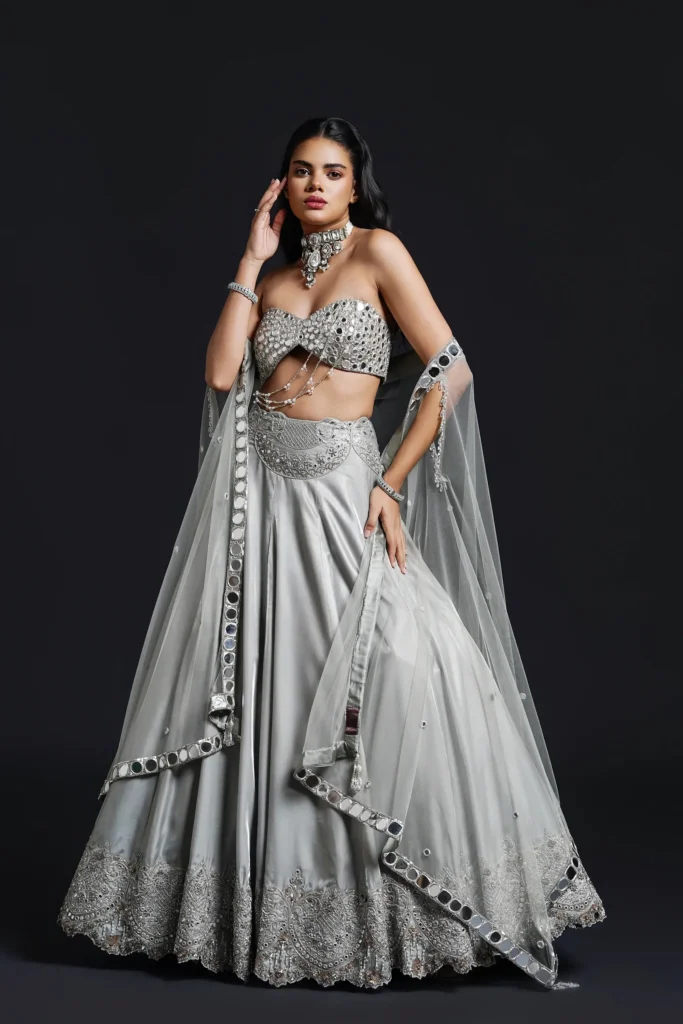
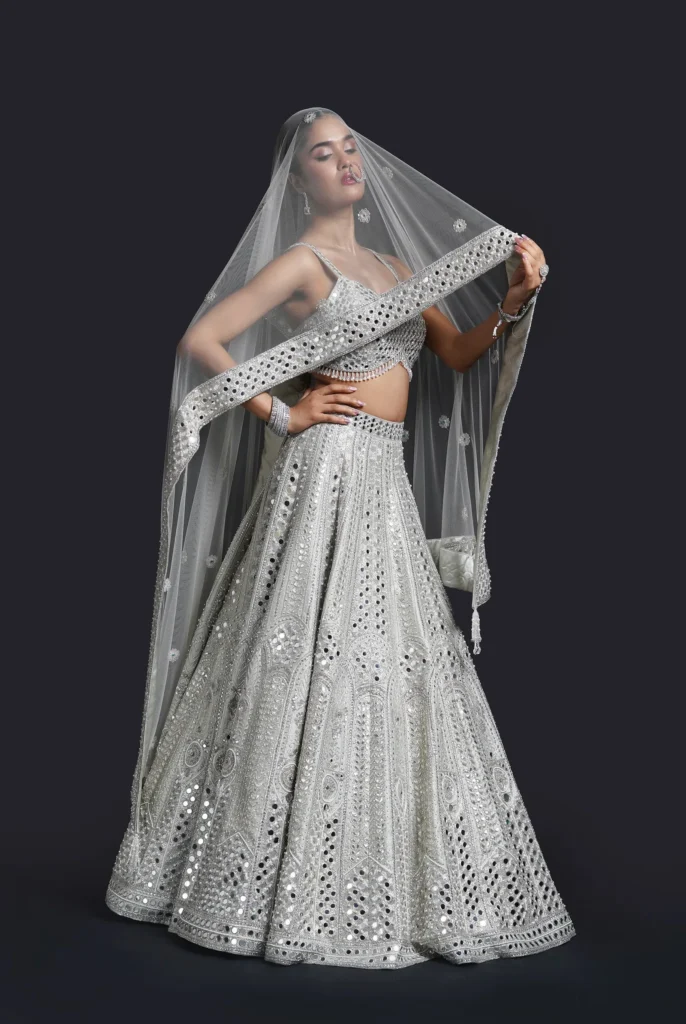
At Aahana’s by Nidhi Mehra, the price buys exactly what this article describes: a piece made to order, cut to your exact measurements, hand-embroidered by artisans Nidhi knows by name, in fabric personally chosen at the atelier — with the designer present at every appointment. Our Sage Green Mirror Work Lehenga (₹220,000), for example, carries hand dabka, gota patti, mirror and sequin work across quality fabric — the kind of dimensional craftsmanship that justifies its price and lasts a lifetime. Explore starting points in our bridal and lehenga collections, then bring your vision to the atelier. You’re not buying an outfit; you’re commissioning an heirloom.
Justifying the Cost to Family and Partner
If you need to make the case to family or a partner, make it on value, not desire. Explain the cost breakdown — that the price is hundreds of artisan hours, real fabric, and made-to-measure work, not markup. Frame it in cost-per-wear and heirloom terms — a piece kept for decades and possibly passed down, versus disposable alternatives that cost more in total over time. And point to the intangibles that matter on the day: perfect fit, confidence, and photographs that last a lifetime. Framed as an investment in something lasting, the decision usually explains itself.
Confidence in the Decision: Avoiding Regret
The brides who regret their lehenga almost always regret one of two things: rushing (and settling), or buying to impress others rather than to feel like themselves. The brides who don’t regret it made the decision from clarity — they understood what they were paying for, judged value over price, and chose a piece they genuinely loved. Decide once, from understanding, and then stop second-guessing. Confidence in the decision is itself part of the value: it lets you enjoy the piece instead of questioning it.
Key Takeaways
- A quality bridal lehenga is an investment, not an expense — value returned in longevity, meaning and use.
- The price reflects real cost: artisan labour, premium materials, 300+ hours of work, and original design — not brand markup.
- Judge value, not just price — cost-per-wear, durability, heirloom potential and re-wearability.
- Luxury pieces last decades and can be passed down; cheap pieces wear out and carry no story.
- Resale is limited — buy to keep, not to flip.
- Premium prices should deliver testable quality; if a piece looks better up close, the value is real.
- Protect the investment with proper care, storage and, for high-value pieces, insurance.
Frequently Asked Questions
Is a ₹1 lakh+ bridal lehenga really worth it? Yes, when the price reflects genuine hand embroidery, quality fabric and made-to-measure construction rather than brand markup. Factoring in decades of longevity, heirloom potential, re-wearability and the confidence it provides, a well-made lehenga behaves like an asset. The key is judging value, not price alone.
Where does the cost of a luxury lehenga actually go? Primarily to artisan labour (hundreds of skilled hand-embroidery hours), quality materials (real silk, fine net, metallic threads, mirrors and pearls), the time to create the piece, and original design and made-to-measure construction — not to brand markup.
How long does a quality bridal lehenga last? With proper care — specialist dry cleaning and correct storage — a hand-embroidered lehenga can last for decades and be preserved as an heirloom, unlike mass-market pieces that wear out within a few wears.
Can I resell my bridal lehenga later? Resale is possible through pre-owned couture platforms, consignment or rental, but values are typically a fraction of the original because the piece is personal and made to your measurements. It’s wiser to keep, re-wear or pass down the piece than to buy expecting to resell it.
How do I calculate the true value of a bridal lehenga? Use cost-per-wear (price divided by wears), and factor in longevity, re-wearability across future occasions, and heirloom value. Compare it against the total cost of buying several disposable pieces over the same years — quality usually wins on long-term value.
What makes a designer lehenga worth more than a mass-market one? Hand embroidery, natural fabrics, made-to-measure fit, decades of durability, heirloom value and original design — versus machine work, synthetic fabric, stock sizing and short lifespan in mass-market pieces.
About the Author
Nidhi Mehra is a fashion designer and the founder of Aahana’s by Nidhi Mehra, a made-to-order luxury bridal atelier in Sector 4, Noida. She and her artisans hand-embroider every piece in-house, and she personally guides each bride through the design and costing process. She writes on Indian bridal couture, craftsmanship and the true value of hand-made clothing.
Contact Aahana’s by Nidhi Mehra
Showroom: A-77, Block A, Sector 4, Noida, UP 201301
Phone: +91 98990 04066
WhatsApp: +91 98990 04066
Email: hello@nidhimehra.in
Shop Online Collection