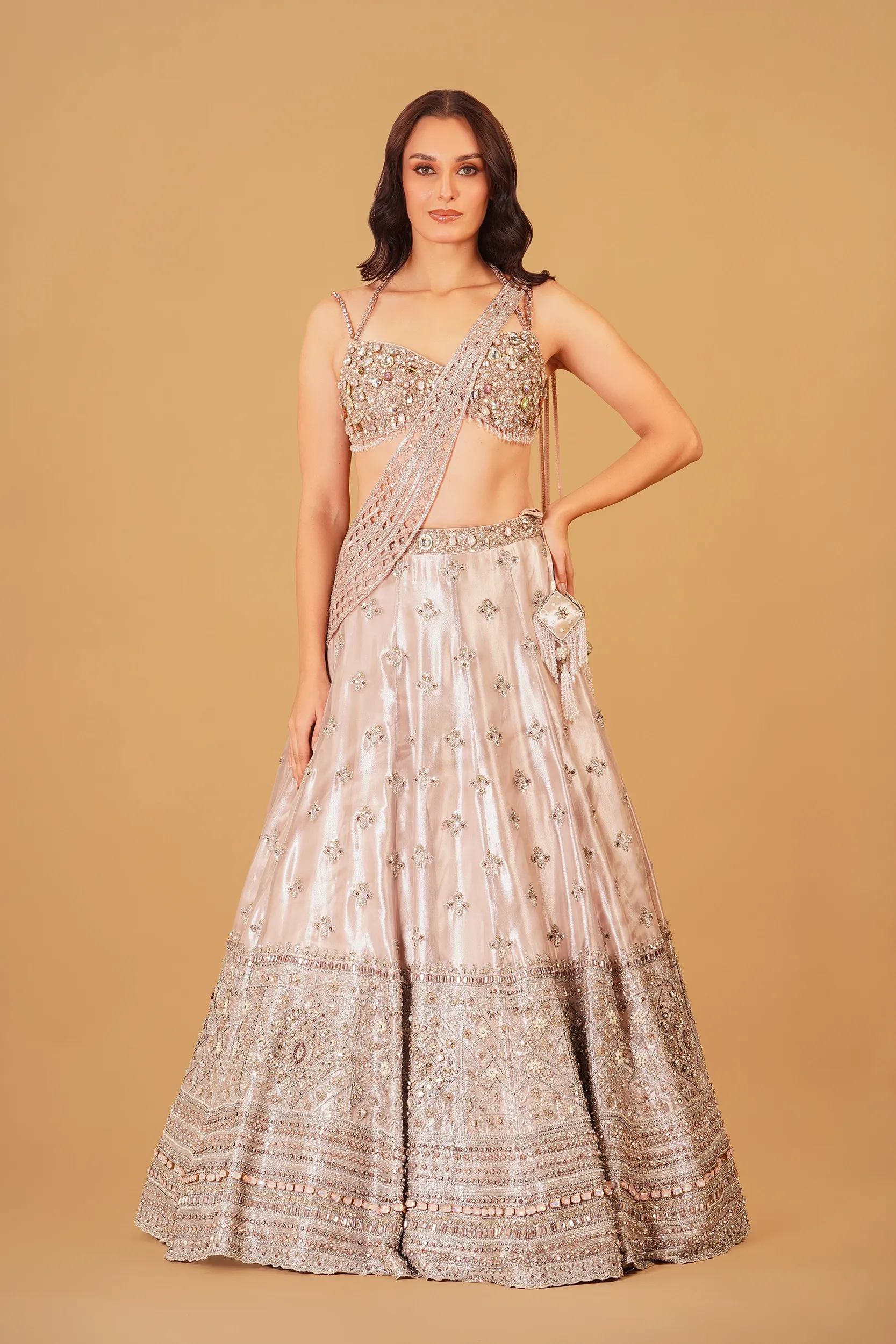
The Magic of a Hand Embroidered Bridal Lehenga
In the world of fast fashion and machine-made replicas, the authenticity and soul of a hand embroidered bridal lehenga stand unparalleled. It is the human touch—the slight imperfections that become perfect, the hours of dedication, and the passion of the artisan—that elevates a simple lehenga into a couture creation. In this comprehensive guide, we delve deep into the transformative journey of hand embroidery and why it remains the cornerstone of luxury bridal wear. From the initial sketches to the final fitting, every step is a celebration of art and elegance.
The Journey from Fabric to Canvas
The creation of a couture lehenga begins long before the first stitch is made. It starts with the selection of the finest fabrics—rich silks, delicate organzas, ethereal tulles, and sumptuous velvets. These fabrics act as a blank canvas waiting to be brought to life. But a blank canvas, no matter how exquisite, requires the stroke of an artist’s brush to become a masterpiece. In bridal couture, that brush is the needle, and the paint is an array of dazzling threads, beads, sequins, and metallic wires. The fabric must be strong enough to hold the weight of the embroidery, yet graceful enough to drape beautifully around the bride.
When a bride opts for a hand embroidered bridal lehenga, she is choosing a garment that has been carefully conceptualized and designed to flatter her silhouette while telling a story. The process begins with a sketch, followed by the meticulous transfer of the design onto the fabric (a process known as ‘chhapai’). This is where the magic begins. The artisans, often hailing from families that have practiced this craft for generations, sit around the ‘adda’ (a wooden embroidery frame) and begin their painstaking work. This journey from fabric to canvas is a symphony of tradition, skill, and artistry. Each motif is carefully mapped out, ensuring perfect symmetry and visual balance, a crucial aspect of high-end couture.
The Distinctive Techniques of Hand Embroidery
What makes a hand embroidered bridal lehenga truly couture is the variety and complexity of the embroidery techniques used. At Aahana’s by Nidhi Mehra, our creations often feature a harmonious blend of several traditional Indian embroidery styles, each bringing its own unique texture and brilliance to the ensemble.
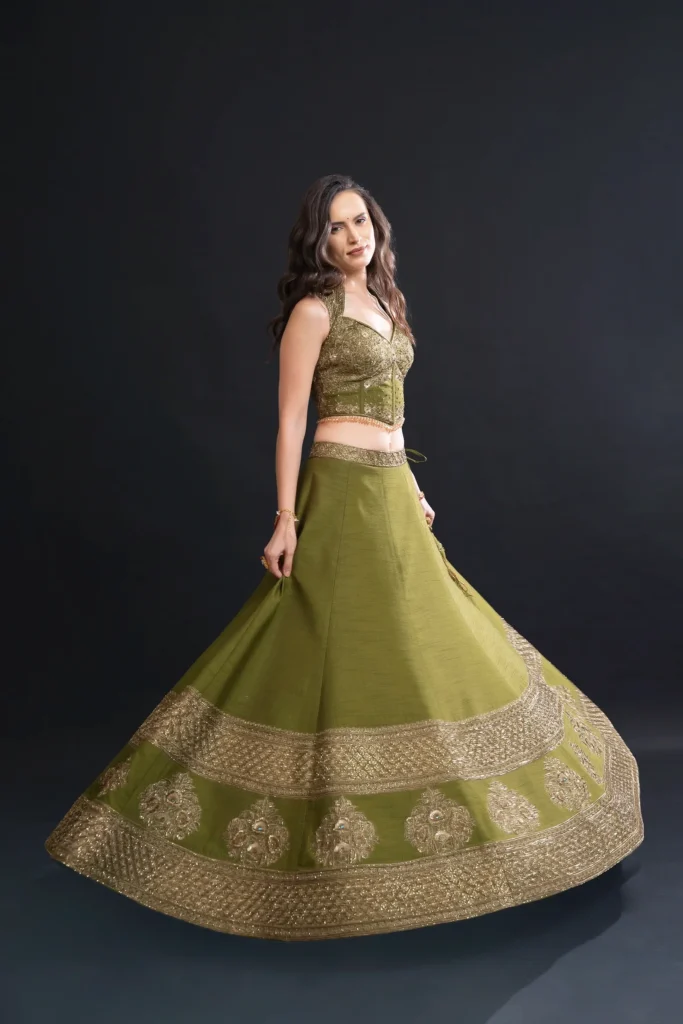
- Zardozi: The epitome of regal elegance, Zardozi involves the use of metallic threads, typically gold and silver, intertwined with pearls, beads, and precious stones. It imparts a three-dimensional, majestic look to the lehenga, making it fit for a queen. The intricate loops and twirls of Zardozi catch the light magnificently, creating an aura of opulence.
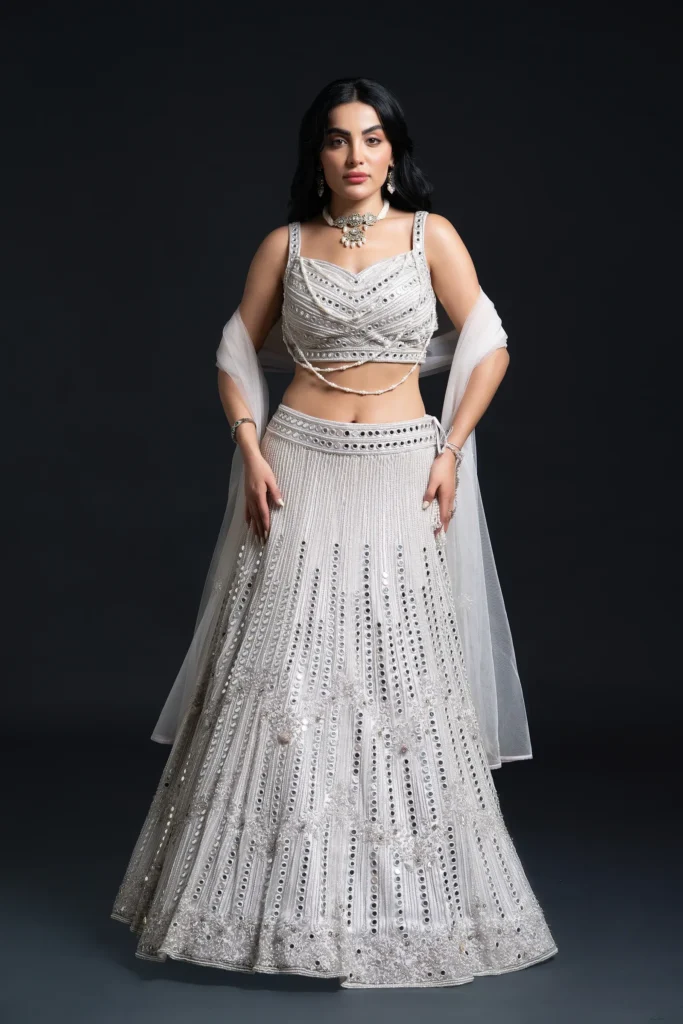
- Gota Patti: Originating from Rajasthan, this technique uses appliqué work with metallic ribbon (gota) to create elaborate patterns. It is lightweight yet highly reflective, adding a joyous sparkle to a hand embroidered bridal lehenga without adding unnecessary weight. This technique is perfect for brides looking for traditional charm combined with modern comfort.
- Aari Work: Known for its fine, chain-stitch-like appearance, Aari work is created using a hooked needle. It is incredibly delicate and allows for highly detailed, continuous motifs, perfect for intricate floral and avian designs. The seamless flow of Aari embroidery gives a sophisticated and refined finish to the bridal attire.
- Thread Work (Resham): The use of silk threads (Resham) adds vibrant colors and a soft, lustrous texture to the lehenga. It is often combined with other techniques to create a rich tapestry of hues and patterns. Resham work is incredibly versatile, allowing for the creation of both traditional motifs and contemporary geometric designs.
- Dabka and Nakshi: These involve the use of coiled metallic wires to create raised, highly textured motifs. They catch the light beautifully and add a dramatic, sculptural quality to the embroidery. The precision required for Dabka and Nakshi is immense, making it a true marker of luxury couture.
The Interplay of Colors and Threads
A crucial element that transforms a hand embroidered bridal lehenga into couture is the masterful use of color. In a truly bespoke piece, the colors of the embroidery threads, beads, and sequins are chosen not just to match the base fabric, but to create depth, shadow, and highlight. A single petal in a floral motif might feature three to four different shades of a color to give it a realistic, three-dimensional appearance. This gradient effect, known as shading, requires an artisan to have an impeccable eye for color and an innate understanding of how different threads interact with light.
Furthermore, the contrast between matte threads like cotton or raw silk and the shiny finish of metallic zardozi or glass beads creates a textural dynamism that is visually captivating. It is this complex interplay of materials and colors that makes a couture lehenga so engaging to look at. From afar, it presents a stunning silhouette, but up close, it reveals a world of microscopic details that captivate the observer. At Aahana’s by Nidhi Mehra, our designers spend hours perfecting the color palette of every hand embroidered bridal lehenga, ensuring it complements the bride’s complexion and matches the thematic essence of her wedding.
The Soul of Couture: Time, Patience, and Precision
The defining characteristic of couture is exclusivity, and exclusivity in bridal wear is born from time. A truly magnificent hand embroidered bridal lehenga can take anywhere from hundreds to thousands of hours to complete. Each sequin is individually placed, every bead is carefully strung, and every metallic thread is expertly coiled by human hands. This slow, deliberate process is what imbues the garment with its unique character.
This level of dedication cannot be replicated by machines. Machine embroidery, while fast and uniform, lacks the soul, depth, and character of handcraftsmanship. A machine cannot adjust its tension to the slight variations in the fabric, nor can it intuitively decide exactly where a crystal will catch the light best. The artisans pour their spirit into their work, resulting in a garment that has a pulse of its own. When you wear a hand-embroidered piece from Aahana’s by Nidhi Mehra, you are wearing the culmination of months of artistic dedication and unyielding patience. It is an acknowledgment of the fact that true beauty cannot be rushed.
Why Machine Embroidery Falls Short
In today’s fast-paced fashion industry, machine embroidery has become prevalent due to its speed and cost-effectiveness. However, when it comes to bridal couture, machine embroidery simply falls short. Machine embroidery is inherently flat; it lacks the raised, sculptural quality that hand techniques like Zardozi and Dabka provide. Moreover, machine stitches are uniform and rigid, missing the subtle, organic variations that give a hand embroidered bridal lehenga its charm and authenticity.
Machine embroidery also limits the types of materials that can be used. Delicate beads, large crystals, and complex metallic wires often cannot be processed by commercial embroidery machines and must be attached by hand regardless. Therefore, a fully machine-made lehenga will never possess the same level of intricate detailing and luxurious texture as a handcrafted piece. For the bride who seeks unparalleled elegance and a garment that truly stands apart, hand embroidery is the only choice that fulfills the promise of couture.
Customization: Tailoring Dreams into Reality
One of the most profound ways hand embroidery transforms a lehenga into couture is through customization. Couture is about the individual; it is about creating a garment that is as unique as the bride wearing it. With a hand embroidered bridal lehenga, the possibilities for personalization are endless. Every bride has a vision, and hand embroidery allows us to bring that vision to life with exacting precision.
At our Noida studio, we work closely with brides to infuse their personal stories into their outfits. Perhaps it is a motif that represents the city where the couple met, or the embroidery of their wedding date hidden within the pleats, or a specific floral pattern that holds familial significance. Because every element is crafted by hand, we can seamlessly integrate these personal touches into the overarching design, creating a bespoke masterpiece that is truly one-of-a-kind. This level of intimate customization is the very hallmark of true couture, transforming a beautiful dress into a deeply personal narrative woven in thread.
The Weight of Luxury: A Tactile Experience
There is a distinct, tangible difference when you hold a hand-embroidered garment. The weight, the texture, and the drape are significantly altered by the addition of artisanal embellishments. While some might assume that a heavily embroidered lehenga is uncomfortably heavy, masterful hand embroidery is designed to distribute weight evenly across the garment, ensuring the bride can move with grace and comfort.
The tactile experience of running your hands over a hand embroidered bridal lehenga is unparalleled. You can feel the raised textures of the Zardozi, the smooth glide of the Resham threads, and the intricate beadwork. This sensory richness adds layers of luxury to the garment, making it feel substantial, regal, and deeply precious. It is this very texture that catches the light from different angles, creating a dynamic, mesmerizing visual effect as the bride moves down the aisle. It is a dress meant to be experienced, not just seen.
Styling Your Hand Embroidered Lehenga
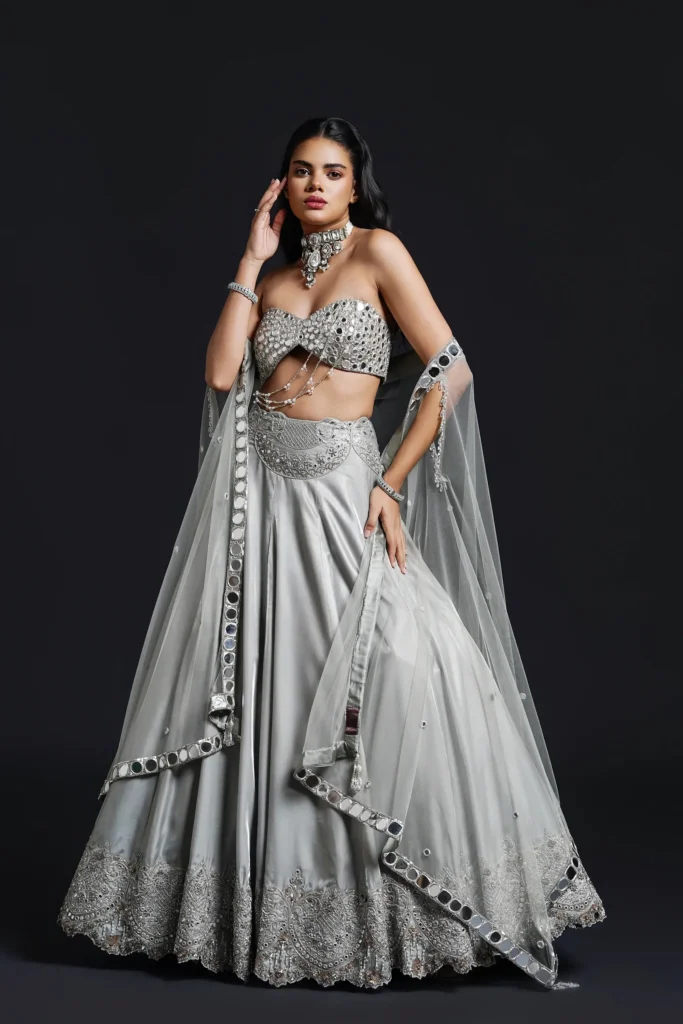
The beauty of a hand embroidered bridal lehenga is that it serves as a stunning centerpiece for your entire bridal look. When styling such an opulent garment, balance is key. Because the lehenga itself is rich in detail and texture, your jewelry and accessories should complement rather than compete with it. Traditional Kundan, Polki, or Jadau jewelry works beautifully to enhance the regal vibe of hand-embroidered fabrics.
For the dupatta, many brides opt for a lighter fabric with a heavy embroidered border that matches the lehenga skirt. This allows the intricate work on the blouse and skirt to shine while framing the face beautifully. At Aahana’s by Nidhi Mehra, we provide comprehensive styling consultations to ensure that your hair, makeup, jewelry, and draping all work in harmony to elevate the breathtaking artistry of your hand embroidered bridal lehenga, creating a cohesive and unforgettable bridal avatar.
Preserving Heritage and Empowering Artisans
Choosing a hand embroidered bridal lehenga is also a powerful statement in support of heritage and artisanal communities. The skills required for these intricate embroideries are often passed down through generations, from master to apprentice. By investing in hand-embroidered couture, you are directly contributing to the preservation of these ancient art forms, ensuring that they do not fade into obscurity in the face of mass production and modernization.
At Aahana’s by Nidhi Mehra, we take immense pride in our family of artisans. Their hands hold the magic that transforms our designs into reality. The creation of a couture lehenga sustains livelihoods and empowers these craftsmen, giving them the recognition, respect, and financial support they rightfully deserve. A couture lehenga is, therefore, not just a beautiful garment; it is a tapestry woven with the threads of community, heritage, and sustainable luxury. It is fashion with a conscience.
The Timeless Appeal of an Heirloom
Fast fashion is fleeting, but couture is eternal. A machine-made garment may look pristine for a season, but a hand embroidered bridal lehenga is built to last a lifetime and beyond. The meticulous construction, the high-quality materials, and the enduring beauty of traditional embroidery ensure that the garment stands the test of time, resisting the wear and tear that plagues lesser-quality garments.
A couture lehenga is inherently an heirloom piece. It is designed to be cherished, preserved, and eventually passed down to future generations. The hand embroidery, with its classical motifs and enduring beauty, never goes out of style. It transcends fleeting trends, retaining its value and emotional significance for decades. When a bride invests in such a piece, she is acquiring a family treasure, a tangible piece of her history that will carry her legacy forward for her daughters and granddaughters to admire.
Conclusion: The Ultimate Expression of Bridal Beauty
The transformation of a bridal lehenga into a couture masterpiece is a journey of artistry, patience, and profound skill. Hand embroidery is the soul of this transformation. It elevates fabric into a canvas of dreams, infuses a garment with personal history, and connects the wearer to a rich legacy of craftsmanship. It is the ultimate expression of luxury, ensuring that the bride not only looks magnificent but feels deeply connected to the art she is wearing. Every stitch is a promise, every motif a blessing for the journey ahead.
At Aahana’s by Nidhi Mehra in Noida, we are dedicated to crafting these unforgettable, transformative pieces. We invite you to experience the magic, the texture, and the unparalleled beauty of a true hand embroidered bridal lehenga. Let us help you translate your bridal dreams into a breathtaking couture reality, a garment that will not only define your wedding day but will be treasured for a lifetime.
Ready to begin your couture journey? Visit Aahana’s by Nidhi Mehra in Noida today and explore our exquisite collection of hand-embroidered bridal wear. Let our master artisans weave your love story into a timeless masterpiece.