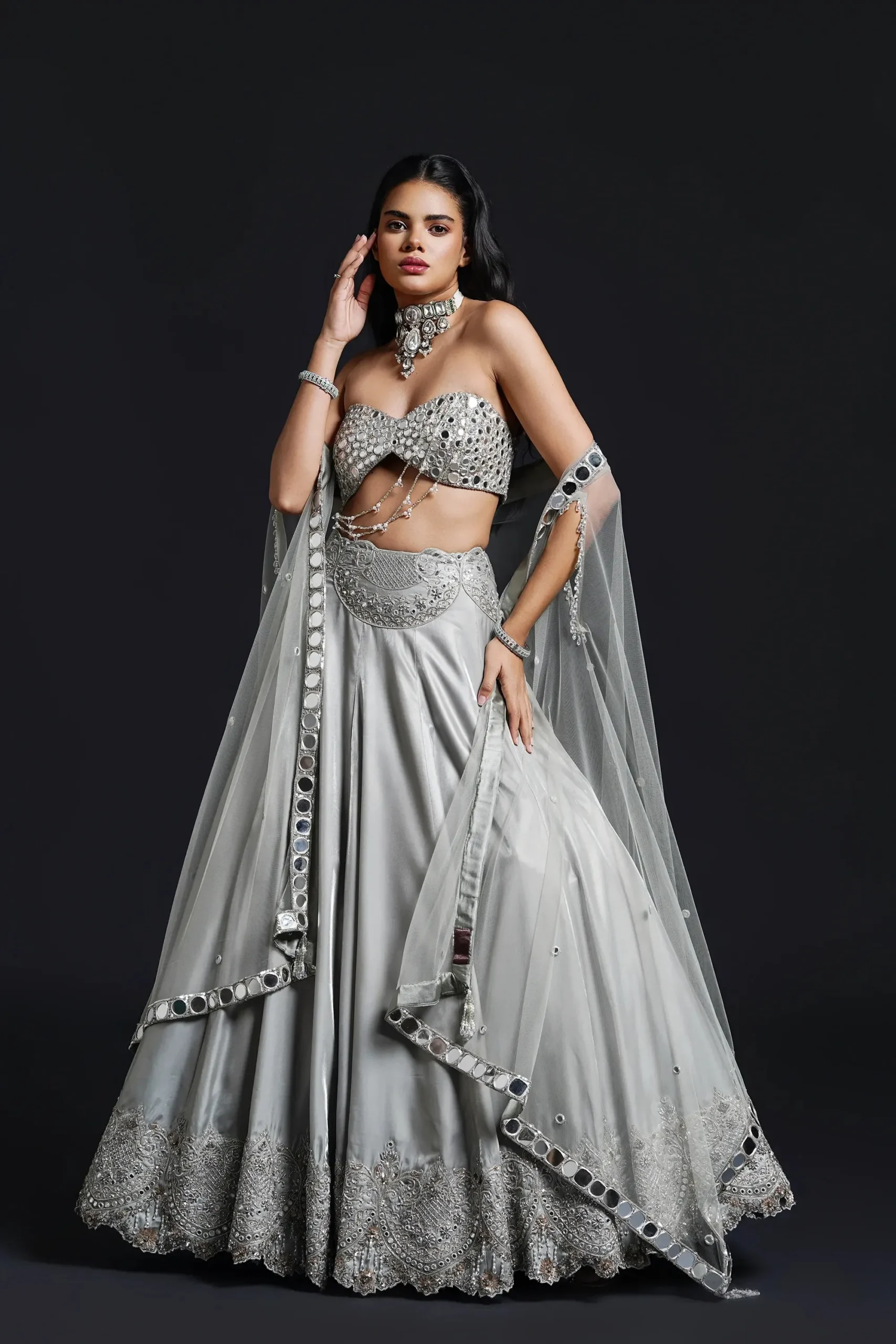
Quick answer: A cape lehenga is a modern bridal silhouette that replaces or reimagines the traditional draped dupatta with a cape attached at the shoulders — sheer, structured, cropped or floor-length. In 2026 it is one of the most sought-after bridal trends because it keeps hands free, flatters almost every body type, photographs beautifully in motion, and pairs contemporary tailoring with classic hand embroidery. It suits sangeet, mehendi, engagement and reception especially well.
Written by Nidhi Mehra, couturier and founder of Aahana’s by Nidhi Mehra — a made-to-order bridal atelier in Sector 4, Noida. Every observation below comes from dressing real brides and hand-embroidering these silhouettes in our own studio.
The cape lehenga has moved from runway novelty to genuine bridal mainstay, and 2026 is its defining year. For the modern Indian bride — one who wants to look unmistakably bridal and unmistakably herself — it has become the silhouette of choice. This guide answers the questions brides and search engines ask most: what a cape lehenga actually is, why it’s trending, whom it flatters, how to style and care for it, and how to shop one that’s made for you.
What Is a Cape Lehenga? Definition and Silhouette Evolution
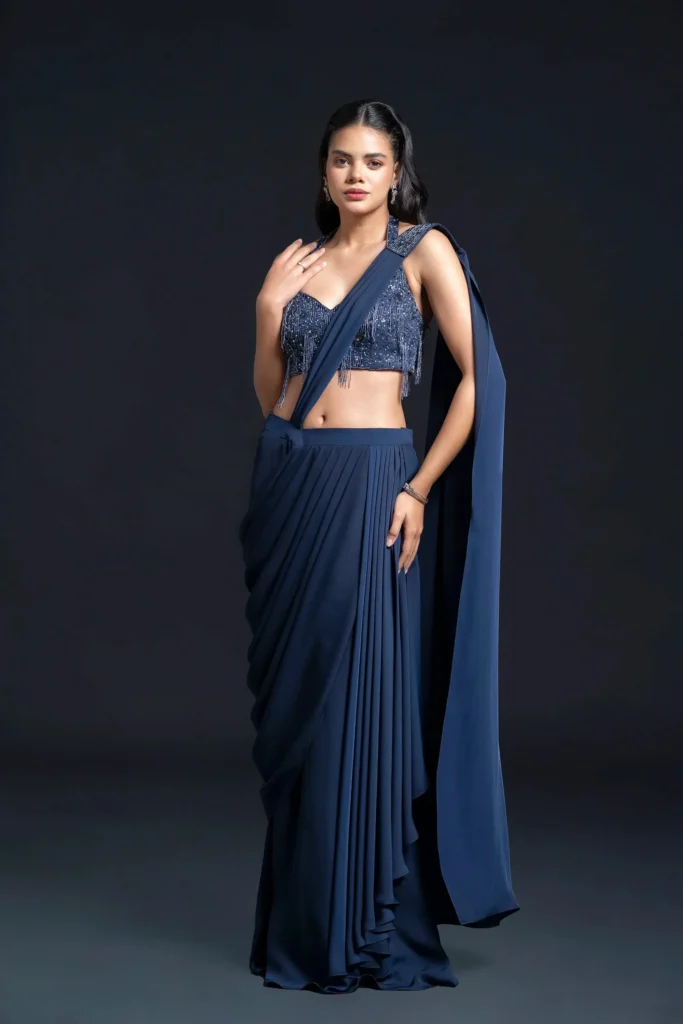
A cape lehenga is a three-part bridal ensemble — a blouse, a flared skirt, and a cape — where the cape takes the place of, or reinvents, the traditional dupatta. Instead of a length of fabric draped and re-draped through the day, the cape is fixed at the shoulders and falls freely: it can be a sheer floor-grazing veil, a cropped waist-length layer, or a structured, embroidered statement.
The silhouette evolved from Indian couture’s decade-long conversation with global tailoring. Designers took the drama of a gown’s train and the ease of ready-to-wear, then fused both onto a lehenga base. The result preserves everything brides love about a lehenga — the swirling skirt, the hand embroidery, the ceremonial glow — while updating the styling to read modern, architectural and editorial. In short: the skirt stays traditional; the drape becomes contemporary.
Why Capes? Modern Aesthetic Advantages Over Traditional Cholis
Compared with a traditional draped dupatta, the cape offers clear, practical aesthetic advantages:
- A cleaner, elongating line. A cape frames the whole figure in a long vertical, where a cross-body dupatta interrupts it.
- Hands-free elegance. Nothing to hold, pin or re-drape — the cape stays put all day.
- Architectural drama. A cape creates shape and movement a flat dupatta can’t, giving a modern, gown-like presence.
- A fresh canvas for embroidery. The cape becomes an extra design surface — matched to the skirt, or left minimal for contrast.
- Effortless polish. It reads as considered, fashion-forward and distinctive without abandoning tradition.
For the bride who finds the traditional dupatta beautiful but fussy, the cape solves the problem without losing the romance.
Why Are Cape Lehengas Trending in 2026?
Several forces have converged to make the cape the bridal silhouette of 2026:
- The rise of the individual bride. Today’s bride marries with a formed sense of style and wants a look that’s hers, not a template — the cape delivers distinction.
- Multi-event weddings. With sangeet, mehendi, cocktail and reception all demanding outfits, brides want silhouettes they can move and dance in; the cape is built for it.
- The camera-first celebration. Weddings are filmed as much as photographed, and the cape’s motion — the trailing sheer, the clean vertical — is made for reels and cinematic frames.
- Tradition meets modernity. Brides no longer want to choose between the two; the cape lets classic hand embroidery live on a contemporary shape.
- Designer momentum. Couture houses across India have championed the cape, normalising it as a bridal-day choice rather than an experiment.
The trend, in one line: brides want heritage craftsmanship in a modern, wearable, photogenic silhouette — and the cape lehenga is exactly that.
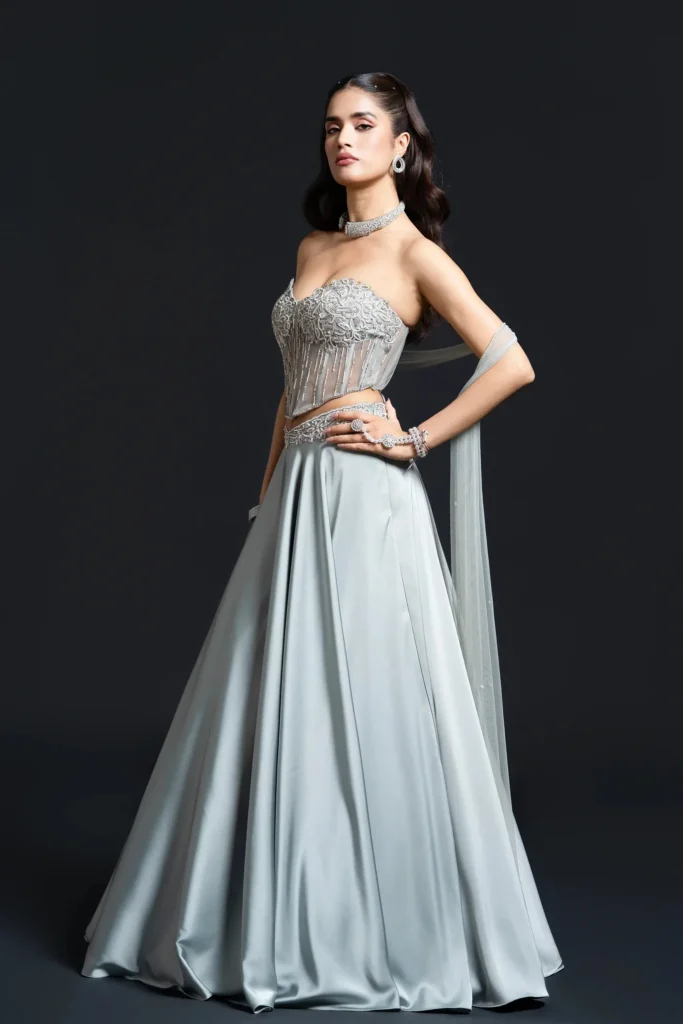
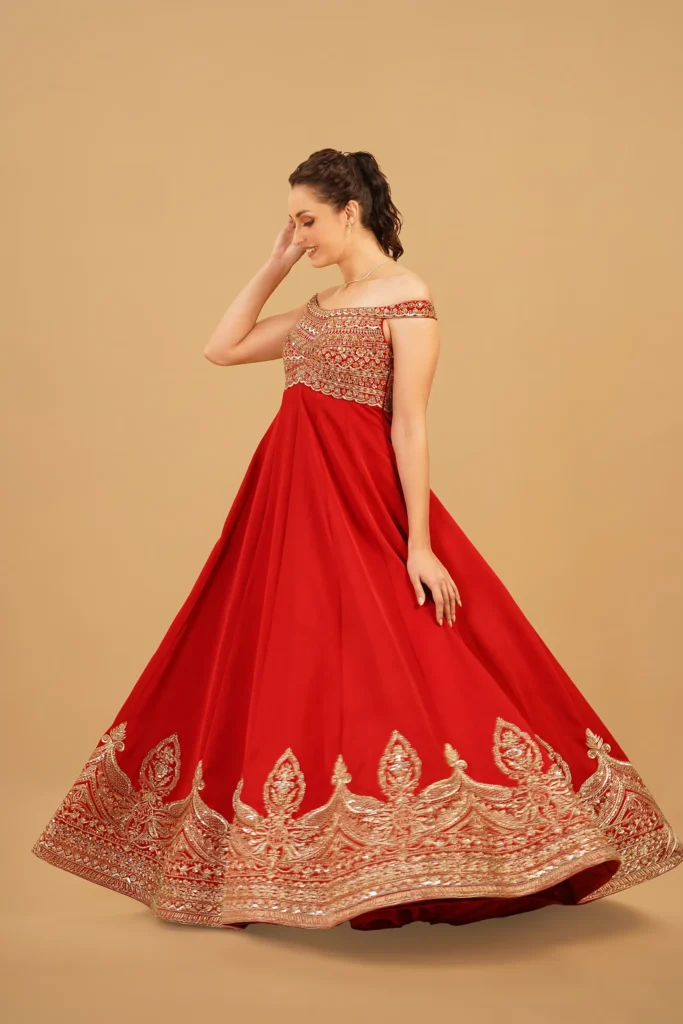
Cape lehenga styles and colours trending in 2026: sheer floor-length capes for gown-like drama; cropped, waist-length capes for dance-heavy functions; and detachable capes that convert one lehenga into two looks. On colour, brides are moving beyond classic red toward fresh, photogenic palettes — cool pastels like mint, sage and powder blue for daytime and mehendi; ivories and champagnes for understated luxury; and deep jewel tones like emerald and wine for evening receptions. Gold and pearl embroidery on a pastel cape is a particularly strong 2026 signature, balancing modern colour with traditional craft.
Body Type Guide: Which Brides Suit a Cape Lehenga?
One of the cape’s greatest strengths is how broadly it flatters. Here’s how to make it work for your frame:
- Petite brides: A cropped or waist-length cape adds vertical interest without overwhelming a smaller frame. Keep a floor-length cape’s proportions precise (made-to-order helps) so it lengthens rather than shortens.
- Tall brides: A full-length sheer cape is spectacular here, using height for a dramatic, gown-like line.
- Curvier figures: A fluid cape skims rather than clings and draws the eye into a long vertical, softening and elongating beautifully.
- Athletic or straight frames: A structured cape adds shape and the impression of curves at the shoulder and hip.
- Broader shoulders: Choose a soft cape that falls from the shoulder rather than a stiff one that widens it.
The short answer to “who can wear a cape lehenga?” is: almost every bride — the variable is tuning the cape’s length, opacity and embroidery to your proportions.
Movement and Comfort: Why Capes Work Better for Active Brides
A wedding day is long, and a sangeet night is longer. Because the cape anchors at the shoulders and leaves both hands completely free, it is far easier to live a celebration in than a dupatta that needs constant managing. You can greet guests, hold a glass, lift the skirt on stairs, and dance — all without a second thought for your drape. A lightweight sheer cape adds drama with almost no weight. The one caveat: a heavily embroidered, structured cape can carry real weight, so comfort depends on construction — which is exactly why fittings and made-to-order tailoring matter.
How to Style a Cape Lehenga: Jewellery, Dupatta and Makeup
Style a cape lehenga to amplify its clean, modern line:
- Jewellery: Let the neckline lead. Statement earrings and a maang tikka suit a covered neckline; a layered necklace works with an open one. Keep it balanced — the cape is already a statement.
- Dupatta: Usually none — the cape replaces it. If you want extra ceremony, a light second dupatta can be draped minimally, but avoid cross-body drapes that break the vertical line.
- Makeup: A defined, camera-ready look — a considered eye, confident lip, and subtle highlight — reads best under evening and stage light. Prioritise long-wear, transfer-resistant formulas for a full day.
- Hair: Sleek, sculptural styles or a soft classic updo keep focus on the silhouette and neckline.
- One focal point: If the cape is heavily embroidered, keep jewellery quieter — and vice versa.
Cape Lehengas for Different Occasions
The cape is versatile across the wedding calendar:
- Sangeet: A cropped or lightweight cape frees the arms for dance while keeping the drama.
- Mehendi: Softer, pastel capes suit the relaxed, daytime mood.
- Engagement / cocktail: The cape reads perfectly contemporary and celebratory.
- Reception: Its natural home — modern, photogenic and easy to move in for an evening of greeting and dancing.
- Wedding ceremony: For a modern or intimate ceremony, an embroidered cape can absolutely be the bridal-day look.
Many brides wear a traditional lehenga for the ceremony and a cape lehenga for the reception — letting one wardrobe narrate both halves of the day. (For a full comparison, see our guide: Cape Lehenga vs. Traditional Lehenga — Which Silhouette Should You Choose?)
Care and Maintenance of Draped Cape Pieces
A cape lehenga is a couture textile and deserves specialist care:
- Cleaning: Dry clean only, by a cleaner experienced with hand embroidery — never machine wash.
- Storage: Hang the cape and skirt on padded hangers or box flat with acid-free tissue; wrap in breathable cotton or muslin, never plastic.
- Sheer capes: Handle gently to avoid pulls and snags on delicate net or organza.
- Structured capes: These hold shape well in storage; support their weight when moving the piece.
- Protection: Keep away from direct light, humidity, and perfume or deodorant contact to preserve embroidery and colour.
Cared for correctly, a cape lehenga keeps beautifully — an heirloom, not a one-day outfit.
AAHANA’s Mint Green Cape Lehenga: Specifications
Our signature expression of the trend is the Mint Green Cape Lehenga — a cool mint lehenga finished with a flowing cape, hand-embroidered with dabka, mirror work, and pearl-edged crystal drops traced along its hem. It’s a silhouette built to move: modern in line, traditional in craft.
- Price: ₹140,000 (made-to-order)
- Colour: Mint green — a fresh, photogenic pastel ideal for mehendi, sangeet and daytime functions
- Craft: Dabka, mirror work, pearl and crystal detailing, hand-embroidered in our Noida atelier
- Sizes: XS–XXL, plus Custom (made to your exact measurements)
- Silhouette: Flowing cape over a flared lehenga skirt
Every piece is cut to order and hand-embroidered by artisans Nidhi knows by name, in fabric personally chosen at the atelier. Explore more in our lehenga and reception collections.
How to Shop and Customize a Cape Lehenga
Because the cape is such a customisable silhouette, made-to-order is where it comes alive. At Aahana’s, shopping one is simple and unhurried:
- Book a private 90-minute consultation at our Sector 4, Noida atelier (or a virtual session).
- Choose your silhouette — cape length (cropped, hip or floor), opacity (sheer or structured), and whether the cape is embroidered to match or left minimal.
- Personalise the colour, embroidery technique, neckline and skirt flare to your vision.
- Fittings ensure the cape and skirt fall perfectly on your frame.
- Collection — your finished, made-to-measure piece, weeks before the wedding.
Plan six to nine months ahead for heavily embroidered bridal capes; lighter pieces need less lead time. You’ll meet Nidhi on every appointment.
Key Takeaways
- A cape lehenga replaces the traditional dupatta with a shoulder-anchored cape — modern, hands-free, and photogenic.
- It is the defining bridal trend of 2026, driven by individuality, multi-event weddings, and camera-first celebrations.
- It flatters almost every body type when the cape’s length, opacity and embroidery are tuned to your frame.
- Capes are easier to move and dance in than draped dupattas, ideal for active brides.
- They excel at sangeet, mehendi, engagement and reception, and can be a modern wedding-day look.
- AAHANA’s Mint Green Cape Lehenga (₹140,000) showcases the trend — mint, cape, dabka, mirror and pearl work, made to order.
- Plan six to nine months ahead and customise via a made-to-order atelier.
Frequently Asked Questions
What is a cape lehenga? A cape lehenga is a bridal ensemble of a blouse, a flared skirt, and a cape attached at the shoulders that replaces or reimagines the traditional draped dupatta. The cape can be sheer, structured, cropped or floor-length.
Why are cape lehengas trending for 2026 weddings? They combine modern, hassle-free silhouettes with traditional hand embroidery, keep the hands free, flatter most body types, and photograph beautifully in motion — perfect for today’s multi-event, camera-first weddings.
Which wedding functions suit a cape lehenga best? Cape lehengas are especially popular for sangeet, mehendi, engagement and reception, where ease of movement matters, and can also be worn as a modern wedding-day look.
Can a cape lehenga feature traditional hand embroidery? Yes. The 2026 cape trend seamlessly integrates classic techniques — zardozi, dabka, mirror and pearl work — onto modern cape designs, exactly as in our Mint Green Cape Lehenga.
Who should wear a cape lehenga? Almost every bride. Petite brides suit cropped capes, tall brides carry full-length sheer capes beautifully, and curvier figures are flattered by fluid capes that elongate — the key is tuning the cape to your proportions with made-to-order tailoring.
How much does a cape lehenga cost? Pricing reflects fabric and embroidery hours. At Aahana’s, made-to-order pieces range broadly from around ₹35,000 for lighter designs to ₹2,00,000+ for bridal couture; our Mint Green Cape Lehenga is ₹140,000.
About the Author
Nidhi Mehra is a fashion designer and the founder of Aahana’s by Nidhi Mehra, a made-to-order luxury bridal atelier in Sector 4, Noida. She and her artisans hand-embroider every piece in-house, and she personally meets each bride during the design process. She writes on Indian bridal couture, craftsmanship and silhouette.
Showroom: A-77, Block A, Sector 4, Noida, UP 201301
Phone: +91 98990 04066
WhatsApp: +91 98990 04066
Email: care@nidhimehra.in
Shop Online Collection