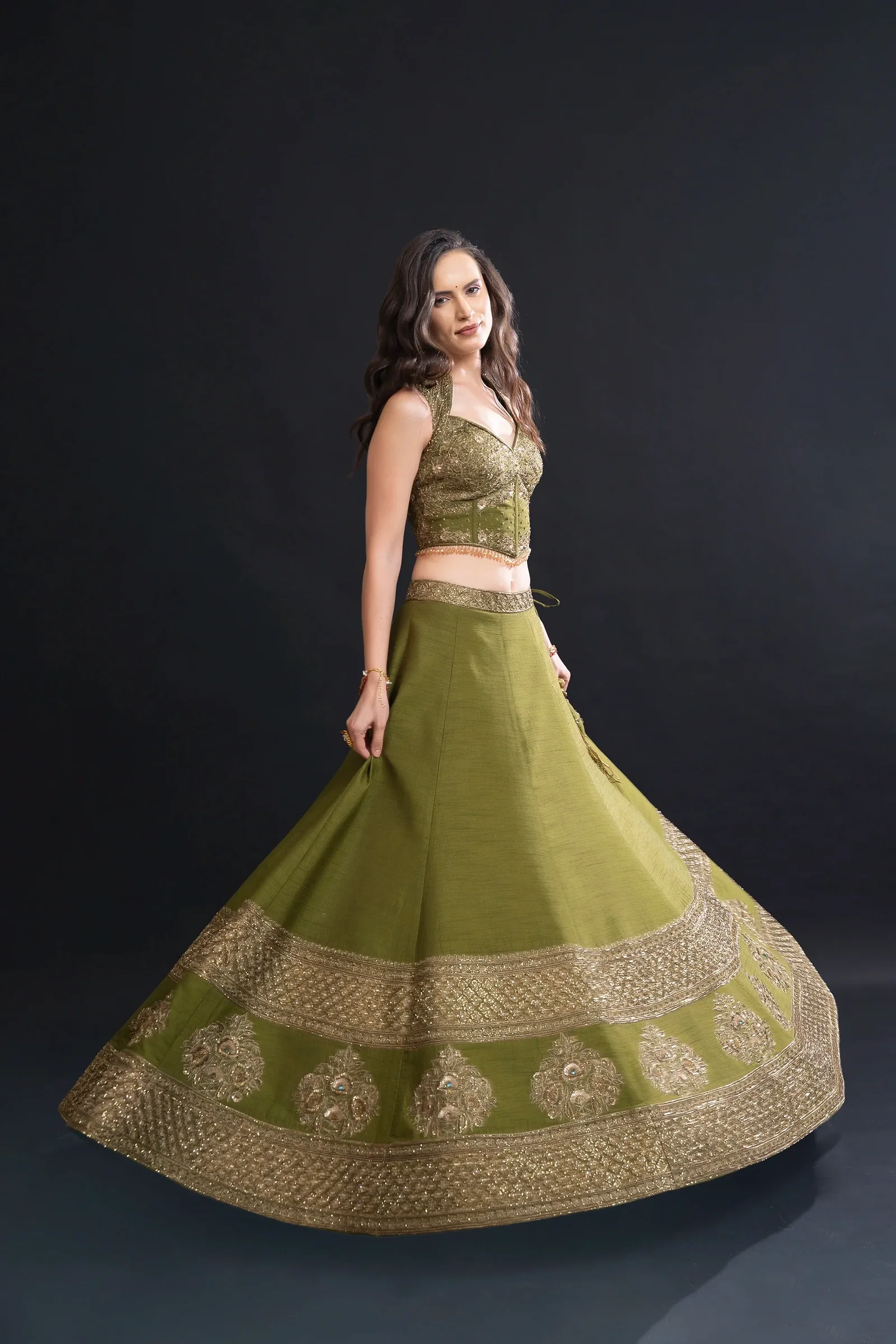
The mehendi is the most joyful, colourful function of the wedding week — and your lehenga should feel like it. Green remains the auspicious classic, but 2026 is all about vibrant yellows, oranges, fuchsia, and playful colour-blocking in light, movement-friendly fabrics. Keep embroidery lighter for comfort, coordinate with earthy makeup and minimal jewellery, and remember your hennaed hands will be the centre of every photograph. Choose a piece you can dance in, sit cross-legged in, and wear again.
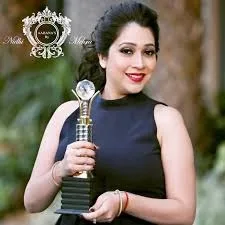
By Nidhi Mehra, couturier and founder of Aahana’s by Nidhi Mehra — a made-to-order bridal atelier in Sector 4, Noida.
If the wedding day is about solemn beauty and the reception about drama, the mehendi is about pure joy. It is the function where colour runs highest, laughter is loudest, and the bride sits at the centre of it all while henna is drawn across her hands. Your mehendi lehenga should capture exactly that mood — vibrant, festive, and easy to celebrate in. Here is everything worth knowing about choosing the right colour, in the right fabric, for the happiest morning of your wedding week.
What the Mehendi Really Is
The mehendi is the henna ceremony — a pre-wedding celebration where intricate henna is applied to the bride’s hands and feet, surrounded by family, music and food. Traditionally it carries meaning: the depth of the henna’s colour is said to reflect the love in the marriage, and the ritual is as much about togetherness as adornment. Today it has grown into one of the most photographed, most joyful events of the wedding, which is exactly why the outfit matters. This is not a formal, restrained occasion — it is colour, movement and celebration, and your lehenga should speak that language.
Traditional Mehendi Colours and Their Meanings
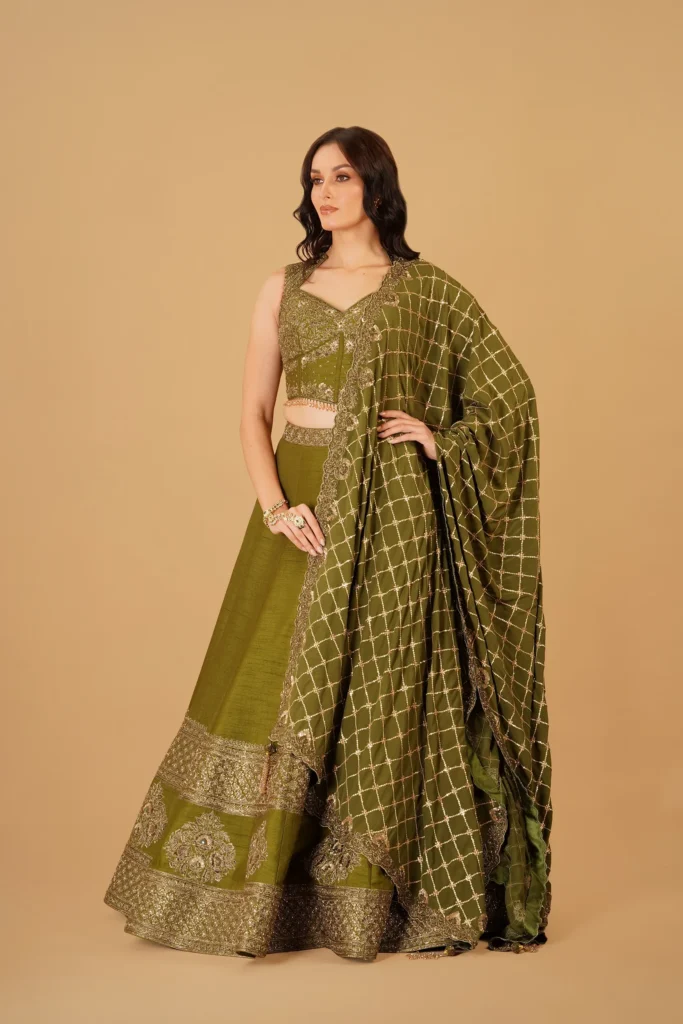
Certain colours have long belonged to the mehendi, each carrying its own significance. Green is the classic — the colour of henna itself, of growth, fertility and new beginnings, and considered deeply auspicious for the ceremony. Yellow signals happiness, optimism and the marigold-bright energy of celebration, often shared with the haldi. Orange speaks of warmth and festivity. These traditional tones aren’t obligations, but they carry a resonance that still makes them the most beloved choices — a bride in mehendi green or marigold yellow looks unmistakably of the occasion.
Modern Mehendi Colour Trends for 2026
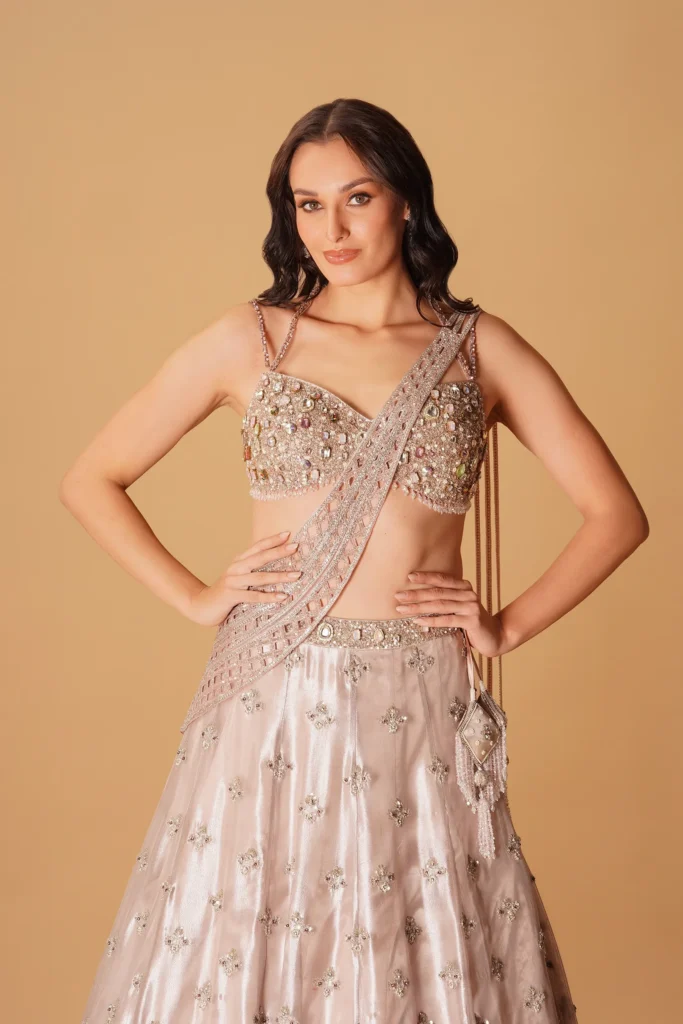
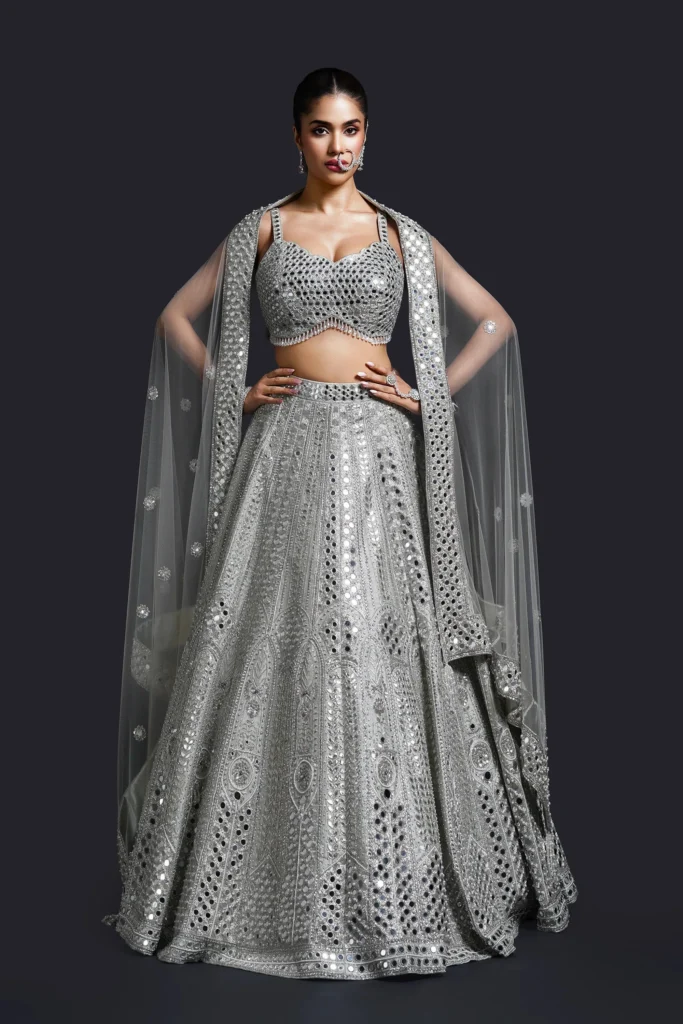
2026 keeps the joy but widens the palette. The strongest directions this season: vibrant colour-blocking — pairing a fuchsia choli with a yellow skirt, or green with pops of orange, for a playful, contemporary look; bright citrus tones like lemon, mango and tangerine that photograph beautifully in daylight; fuchsia and magenta, which read as festive and modern all at once; and tonal florals and mirror work on lighter bases for brides who want vibrancy with texture rather than density. The mood across all of these is the same: fresh, energetic, and unafraid of colour. The mehendi is the one function where more colour is almost always the right answer.
Why Green Is Auspicious for the Mehendi
Green earns its place at the centre of the mehendi for reasons both symbolic and practical. Symbolically, it echoes the henna itself and represents growth, prosperity and new life — a fitting sentiment as a bride begins her marriage. Practically, green is remarkably versatile: from soft sage and mint to deep emerald and bottle green, there is a shade for every complexion and every mood, and it pairs effortlessly with the yellows, oranges and pinks that fill a mehendi celebration. It is the colour most brides return to precisely because it feels both traditional and endlessly wearable.
Beautiful Colours Beyond Green
Green may be the classic, but the mehendi welcomes a whole spectrum. Marigold and mustard yellow bring sunlit warmth. Coral, peach and orange feel soft yet festive. Fuchsia, magenta and hot pink are bold, modern and joyful. Teal and turquoise offer a fresh, contemporary alternative to green. And multicolour and ombré pieces capture the full celebratory spirit of the day. The only colours to approach with care are the deep, formal jewel tones and heavy reds better suited to the reception or wedding day — at the mehendi, lightness and brightness win. Browse movement-friendly options in our Sangeet & Mehendi edit.
Matching Mehendi Colours to Your Skin Tone
Bright colours flatter everyone — the styling simply shifts by complexion. On deep and rich skin tones, vivid greens, fuchsias and oranges are spectacular and high-impact; lean into the boldest end of the palette. On medium and wheatish tones, almost the entire mehendi spectrum works — marigold, coral, teal and emerald all sing. On fair, cool-toned skin, softer citrus, coral and mint tend to flatter more than the very brightest neons, and a touch of gold in the embroidery adds warmth. As always, the surest test is holding the fabric against your face in natural daylight — the mehendi is a daytime event, so daylight is exactly the light you’ll be seen in.
A Daytime Event — Dress for the Light
Most mehendi functions happen in the morning or afternoon, often outdoors or in bright, open spaces. That matters for colour: daylight loves fresh, saturated tones and can wash out anything too dark or heavy. It also matters for fabric and comfort — a daytime celebration in warm weather calls for breathable, lightweight cloth rather than dense, structured couture. Choosing with the light in mind is the single best way to ensure you look as radiant in person as you do in every candid photograph.
Keep the Embroidery Light — You’ll Be Celebrating
The mehendi is an active function. You will sit for henna, then rise to dance, hug relatives, pose for photos and move through hours of celebration. A heavily embroidered, rigid bridal lehenga — beautiful as it is — simply doesn’t perform well here. The right mehendi piece favours lighter embellishment: scattered mirror work, gota, sequins, tassels and thread embroidery that catch light and movement without weighing you down. Fabrics like net, georgette, silk organza and lighter crepe flare and move freely. Save the dense zardozi for the wedding day; at the mehendi, comfort and movement are part of looking good.
Jewellery Coordination
The mehendi calls for a lighter, more playful hand with jewellery — partly for comfort, partly because your hennaed hands will already be a focal point. Florals are a signature: fresh or fabric flower jewellery (kaleere, haathphool, floral maang tikka) is quintessentially mehendi and photographs beautifully against henna. Beyond that, keep it light — delicate jhumkas, a single statement piece rather than a full heavy set, and minimal rings so the henna on your hands stays the star. Bright, colourful, or mirror-accented jewellery suits the festive mood far better than formal diamond sets.
Makeup for the Mehendi: Fresh and Natural
Mehendi makeup is about looking radiant and relaxed, not heavily done. Think a glowing, fresh base, softly warm earthy eyes (bronze, terracotta, soft gold), a hint of sun-kissed blush, and a coral, peach or warm-rose lip that complements the bright outfit without competing with it. The mood is sunlit and natural — makeup that looks beautiful in daylight photographs and lasts comfortably through hours of laughing and dancing. Save the dramatic, deeply contoured look for the reception; the mehendi suits an effortless, joyful glow.
Photographing with Henna on Your Hands
Here is a detail brides often overlook: at the mehendi, your hands are the hero of the photographs. Once the henna is applied, nearly every image will feature your palms, wrists and forearms front and centre. Choose a lehenga whose colour makes the reddish-brown of henna pop — greens, yellows, corals and fuchsias all provide gorgeous contrast against henna, while very dark or muddy tones can dull it. Sleeve length matters too: shorter or three-quarter sleeves keep the henna visible and the images clean. Dress knowing the camera will keep returning to your hands.
Dupatta and Scarf Styling
The dupatta is where you can add movement and drama without adding weight. For a mehendi, a light, sheer dupatta — net, organza or chiffon with a gota or tassel edge — drapes beautifully and moves as you dance. Many brides go dupatta-free or wear it loosely across one shoulder to keep the hands and outfit unobstructed for henna and photographs. A contrasting or multicoloured dupatta is a lovely way to introduce the playful colour-blocking that defines the 2026 mehendi look.
Footwear Choices
Comfort is everything at a function where you’ll sit cross-legged for henna and then dance for hours. Favour comfortable, embellished flats, juttis or kolhapuris over sky-high heels — they suit the relaxed, festive mood, keep you steady on grass or uneven ground, and let you move freely. Bright, mirror-worked or embroidered juttis are both practical and perfectly in keeping with the celebration. Your feet will thank you, and no one photographs a wince.
Comfort for Sitting and Intricate Henna
A mehendi involves a long stretch of sitting still while detailed henna is applied — sometimes an hour or more. That makes a comfortable, non-restrictive silhouette essential: a choli that lets you raise and rest your arms easily, a skirt with enough give to sit cross-legged, and fabrics that don’t crush or dig in. Avoid anything so structured or heavily boned that sitting becomes a chore. The most beautiful mehendi look is one you can genuinely relax in while the artistry unfolds on your hands.
The Repeat-Wear Factor
One of the quiet joys of a mehendi lehenga is that it is often the most re-wearable outfit of the entire wedding wardrobe. Because it is lighter, brighter and less bridal-specific than the wedding-day lehenga, a well-chosen mehendi piece can return for a future sangeet, a festive occasion, a friend’s wedding, or a Diwali celebration. Choosing a colour and silhouette you genuinely love — rather than something so occasion-locked it can only be worn once — makes it a far smarter, more sustainable investment.
Budget Considerations
Because mehendi pieces are lighter and less densely embellished than bridal-day couture, they typically sit at a more accessible point than the heaviest wedding lehengas — while still delivering full festive impact. This is where thoughtful spending pays off: put the largest share of the budget into the wedding-day outfit, and choose a mehendi piece that balances vibrancy, comfort and re-wearability. A made-to-order approach means you invest only in what serves the occasion — lighter embroidery, breathable fabric, and a colour that’s truly yours — without paying for bridal-weight work you don’t need for a dancing morning.
Aahana’s Pieces for the Mehendi
At Aahana’s by Nidhi Mehra, our Sangeet & Mehendi edit is built specifically for functions where movement matters as much as embellishment — lighter lehengas and co-ord sets in vibrant, festive palettes, with mirror work, sequins and beadwork that catch the light during dance performances without weighing you down. Fabrics are chosen for breathability and flare, so the piece moves with you through a long, joyful morning. For brides who want a fresh, contemporary mehendi look, our Lehenga collection also offers lighter, occasion-ready options across a range of colours.
Customising for Your Mehendi
Because every piece is made to order, your mehendi lehenga can be tuned exactly to the day. You can choose the precise shade — the exact green, the right marigold, a custom colour-blocked pairing; adjust the embroidery weight for comfort and movement; select a silhouette that lets you sit and dance freely; and coordinate the dupatta and colour accents to your celebration’s theme. If you love the idea of a bright, playful mehendi look but aren’t sure how to balance colour, comfort and photography, that is exactly what a consultation is for — we help you get all three right.
Confidence at the Mehendi: You Are the Centre
At the mehendi, all eyes genuinely are on you — you’re seated at the heart of the celebration while everyone gathers around. That attention can feel like a lot, so choose an outfit that makes you feel unshakeably yourself: comfortable, vibrant, and easy to move in. When you aren’t fussing with a heavy, restrictive lehenga, you can simply be present — laughing with family, admiring your henna, dancing when the music starts. The most radiant mehendi brides are not the most heavily dressed; they are the most at ease.
Key Takeaways
- Green is the auspicious classic, but 2026 loves marigold, coral, fuchsia, teal and playful colour-blocking.
- The mehendi is a daytime, active celebration — choose bright colours, breathable fabric and lighter embroidery you can dance in.
- Your hennaed hands are the photo hero — pick a colour that makes henna pop, and consider shorter sleeves.
- Keep jewellery light and playful (florals, kaleere) and makeup fresh and earthy.
- Prioritise comfort for sitting and dancing — flats over heels, non-restrictive silhouettes.
- A great mehendi lehenga is re-wearable — a smarter, more sustainable investment than a one-time piece.
Frequently Asked Questions
What colour lehenga is best for a mehendi?
Green is the traditional, auspicious choice, but bright, festive colours all work beautifully — marigold yellow, coral, orange, fuchsia and teal, as well as playful colour-blocked combinations. Because the mehendi is a joyful daytime event, fresh and vibrant tones are ideal, while heavy dark jewel tones are better saved for the reception.
Should a mehendi lehenga be heavy or light?
Light. The mehendi is an active celebration — you’ll sit for henna, then dance and move for hours — so lighter embellishment (mirror work, gota, sequins, thread embroidery) on breathable fabrics like net, georgette and organza is far more comfortable and flattering than dense bridal embroidery.
Does green really suit everyone for the mehendi?
Green is remarkably versatile because it spans so many shades — from soft sage and mint to deep emerald. Deep skin tones glow in rich emerald, medium tones suit almost any green, and fair, cool-toned brides often prefer softer mints and sages, sometimes warmed with a little gold embroidery.
How do I make my henna stand out in mehendi photos?
Choose a lehenga colour that contrasts with the reddish-brown of henna — greens, yellows, corals and fuchsias all make henna pop, while very dark or muddy tones can dull it. Shorter or three-quarter sleeves keep your hands visible, and lighter jewellery lets the henna remain the focal point.
Can I wear my mehendi lehenga again?
Yes — and that’s one of its advantages. Because a mehendi lehenga is lighter and less bridal-specific than the wedding-day outfit, a well-chosen piece can be re-worn for a future sangeet, festive occasion or a friend’s wedding, making it a smart, sustainable choice.
About the Author
Nidhi Mehra is a fashion designer and the founder of Aahana’s by Nidhi Mehra, a made-to-order luxury bridal atelier in Sector 4, Noida. She and her artisans hand-embroider every piece in-house, and she personally guides each bride through her design journey. She writes on Indian bridal couture, colour, and craftsmanship.
Contact Aahana’s by Nidhi Mehra
Showroom: A-77, Block A, Sector 4, Noida, UP 201301
Phone: +91 98990 04066
WhatsApp: +91 98990 04066
Email: hello@nidhimehra.in
Shop Online Collection