Quick answer: Shopping local for bridal wear means your money stays in the regional economy, sustains generational hand-embroidery artisans, and funds fair, ethical production instead of a global supply chain. Because pieces are made-to-order in Noida, there is zero deadstock waste, a much smaller carbon footprint than imported fast fashion, faster bespoke turnaround, direct accountability with the designer, and the preservation of heritage crafts like zardozi, aari, pearl and shisha (mirror) work. In short: a local, handcrafted lehenga is a vote for people, craft and community — not just an outfit.
Written by Nidhi Mehra, couturier and founder of Aahana’s by Nidhi Mehra — a made-to-order bridal atelier in Sector 4, Noida, where every piece is hand-embroidered by karigars we work with directly.
Every bridal purchase is a choice about more than a garment. When you buy from a local Noida atelier rather than a mass-market or imported label, that single decision ripples outward — to the artisan who embroidered it, to the family that livelihood supports, to the craft tradition it keeps alive, and to the regional economy it strengthens. This guide explains exactly how shopping local impacts the fashion industry, and why, for a bride who cares where her clothes come from, it matters.
The Economic Impact: How Local Shopping Supports Communities
Money spent locally behaves very differently from money spent with a distant corporation. A purchase from a local atelier circulates within the region — paying artisans, local fabric suppliers, tailors and small businesses — and much of it is spent again nearby, multiplying its effect. A purchase from a global brand largely leaves the local economy. For every bridal lehenga commissioned locally, a chain of regional livelihoods is supported, from the embroidery floor to the fabric merchant. Shopping local isn’t charity; it’s choosing where the value of your spend actually lands.
Artisan Support: Direct Impact on Embroidery Workers
Behind every hand-embroidered lehenga are the karigars — the skilled artisans whose hands do the zardozi, dabka, mirror and pearl work. When you buy from a local atelier that embroiders in-house, your purchase directly funds their work and skill, rather than being absorbed by layers of middlemen. At Aahana’s, this is not abstract: our pieces are hand-embroidered by generational artisans in our own Noida studio, and your commission is quite literally what keeps their looms and needles busy. Buy the outfit, and you sustain the people who made it possible.
Fair Wages and Ethical Production
Fast fashion’s low prices are often subsidised by underpaid, invisible labour. A local, made-to-order model works the opposite way: because the designer knows the artisans personally and controls production directly, fair wages and humane working conditions are far easier to guarantee. Ethical production stops being a marketing claim and becomes a relationship. When you can shake the hand of the person who embroidered your lehenga, accountability is built in — and that is the quiet, important difference between ethical and exploitative fashion.
Community Sustainability and Long-Term Regional Benefits
Supporting local artisans isn’t a one-time transaction; it builds durable community strength. Sustained demand for handcraft keeps skilled workers employed year-round, encourages young people to enter the trade rather than abandon it, and helps craft-based livelihoods remain viable for the next generation. Over years, this is what allows a region to retain its artisans and its heritage industries instead of losing them to cheaper, mechanised production elsewhere. Your wedding purchase is a small but real contribution to that long-term stability.
Environmental Impact: Local and Made-to-Order vs. Imported Fast Fashion
Local, bespoke fashion is dramatically kinder to the environment than the global fast-fashion model, for two reasons. First, zero deadstock: a made-to-order atelier only creates a garment once it is ordered, so nothing is mass-produced to be discarded unsold. Second, a smaller footprint: producing and buying locally avoids the long-haul international shipping, warehousing and returns that define imported fast fashion. Add the fact that a handcrafted, heirloom-quality piece is kept and re-worn for decades rather than discarded, and the environmental case for shopping local becomes clear.
Cultural Preservation: Keeping Traditional Crafts Alive
India’s hand-embroidery traditions are living heritage — and they survive only through demand. Every time a bride commissions a handcrafted lehenga, she helps keep ancient techniques alive: authentic zardozi (metallic goldwork), aari (hook embroidery), delicate pearl and crystal beadwork, and shisha (mirror) work. These crafts cannot be preserved in a museum; they live in the hands of practising artisans, passed down through families. Mass production actively erodes them; conscious local shopping actively sustains them. Your lehenga becomes a thread in a centuries-old story you’re helping continue.
Quality, Customisation and Direct Relationships
Shopping local isn’t only ethical — it produces a better garment and a better experience:
- Quality assurance: when the designer controls production in-house, quality is checked at every stage; hand-embroidery and bespoke tailoring from skilled local artisans routinely exceed mass-produced international luxury.
- Easier customisation: a local designer can tailor colour, embroidery, silhouette and fit to your exact vision, with in-person conversations rather than remote guesswork.
- Personal customer service: you build a genuine relationship with the designer, who is invested in your piece and reachable throughout the process.
- Direct accountability: if something needs adjusting, you speak to the person responsible — not a call centre.
Proximity turns a transaction into a collaboration.
Employment Diversity: Women Artisans and Job Creation
The handcraft economy is a significant source of skilled, dignified employment — including for women, both as artisans and as entrepreneurs. Local ateliers create and sustain jobs across a range of roles: embroidery, tailoring, design, sourcing and studio management. Supporting them supports diverse, community-rooted employment that mass production, with its concentrated and often distant workforce, simply does not generate in the same way. Choosing a local, often woman-led design house also strengthens the growing community of female entrepreneurs reshaping Indian fashion.
Apprenticeship: Passing Knowledge to the Next Generation
Hand embroidery is learned, not manufactured — passed from experienced masters to apprentices over years of practice. That transfer of knowledge only continues while there is enough work to justify training the next generation. Every commission helps fund not just today’s artisans but tomorrow’s, keeping apprenticeship alive and ensuring these skills aren’t lost. When you shop local and handcrafted, you’re quietly investing in the future of the craft itself.
Infrastructure and Regional Development
As local ateliers grow, they help develop the wider ecosystem around them — supporting fabric suppliers, trims and materials vendors, tailors, photographers and other small businesses, and drawing skilled talent to the region. This is part of how a city like Noida evolves from a place people pass through into a genuine fashion and craft hub. A thriving local designer scene lifts the whole regional economy, not just its own bottom line.
Accountability and Honest Pricing
Two more advantages of buying local deserve emphasis. Accountability: with a local designer, responsibility is direct and personal — there’s a named person who stands behind the work and answers for it. And pricing: because a local atelier sells directly to you, it removes the layers of distributors, retailers and importers that inflate the price of mass-market and imported luxury. You pay for craft and materials, not for a long supply chain’s margins — often getting more genuine quality for your money.
Marketing: Word-of-Mouth vs. Corporate Spend
Local ateliers grow the honest way — through real brides recommending them, not through vast advertising budgets. When you choose and champion a local designer, you become part of a community-driven reputation built on genuine craftsmanship rather than corporate marketing. That word-of-mouth economy rewards the brands that actually deserve it, and it’s one every satisfied bride can contribute to simply by sharing her experience.
Noida as an Emerging Fashion Hub
All of this is happening against the backdrop of Noida’s rise as a serious fashion and bridal destination. A growing cluster of ateliers, skilled artisans and design talent has turned the city into a place where authentic, handcrafted luxury is made and bought locally — no longer requiring a trip to a distant flagship. Supporting Noida’s designers helps cement that position and keeps the craft, and its economic benefit, rooted in the community. (For more, see our guide to designer lehenga shopping in Noida.)
AAHANA’s Local Impact
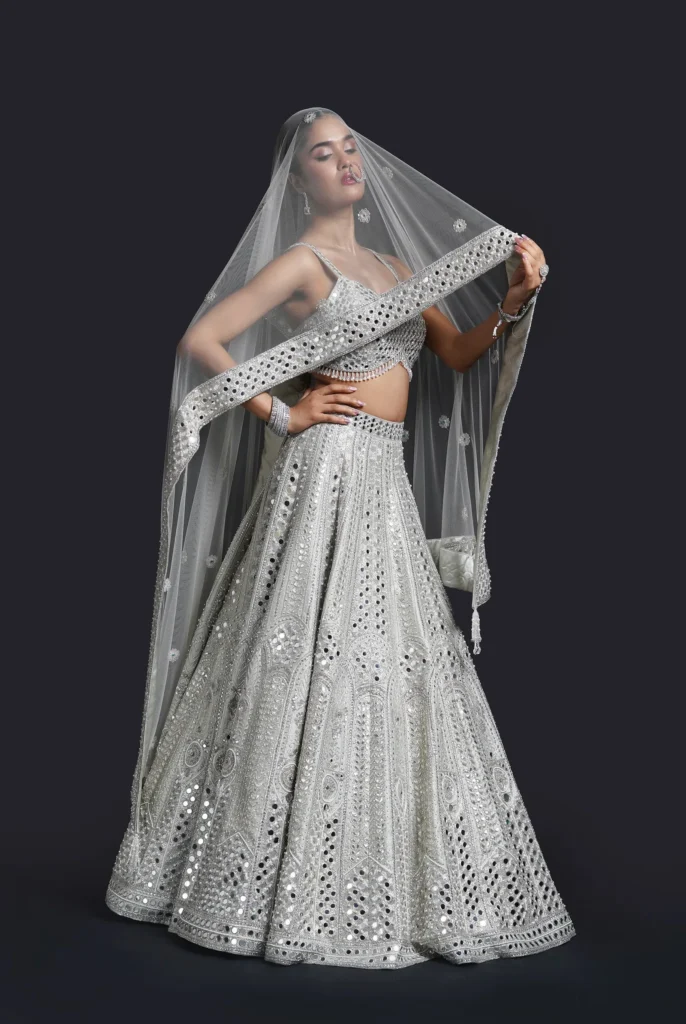
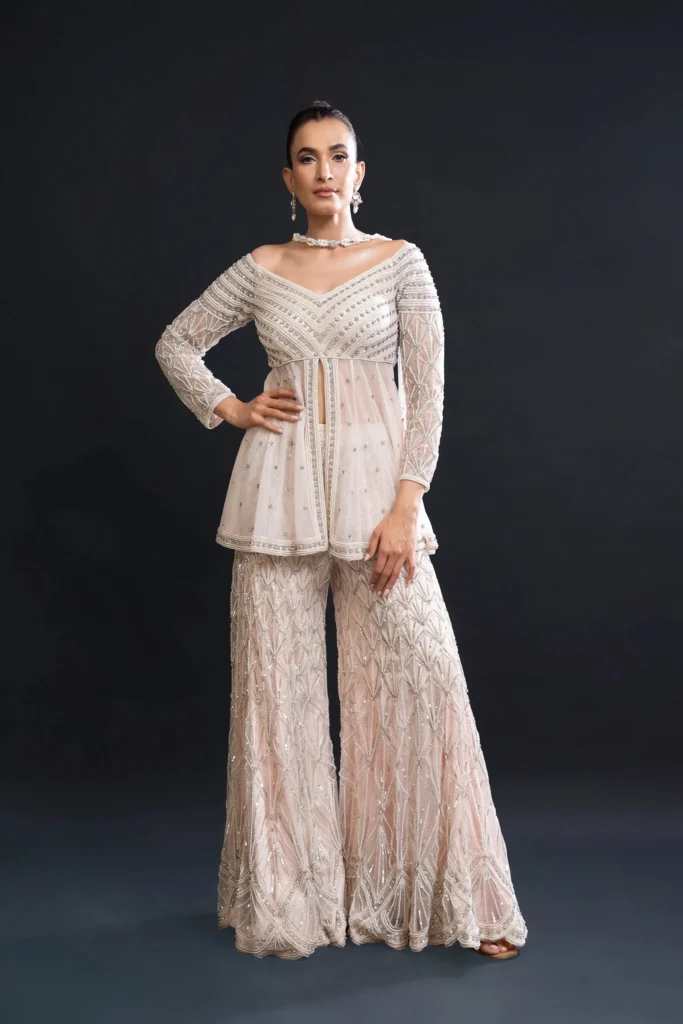
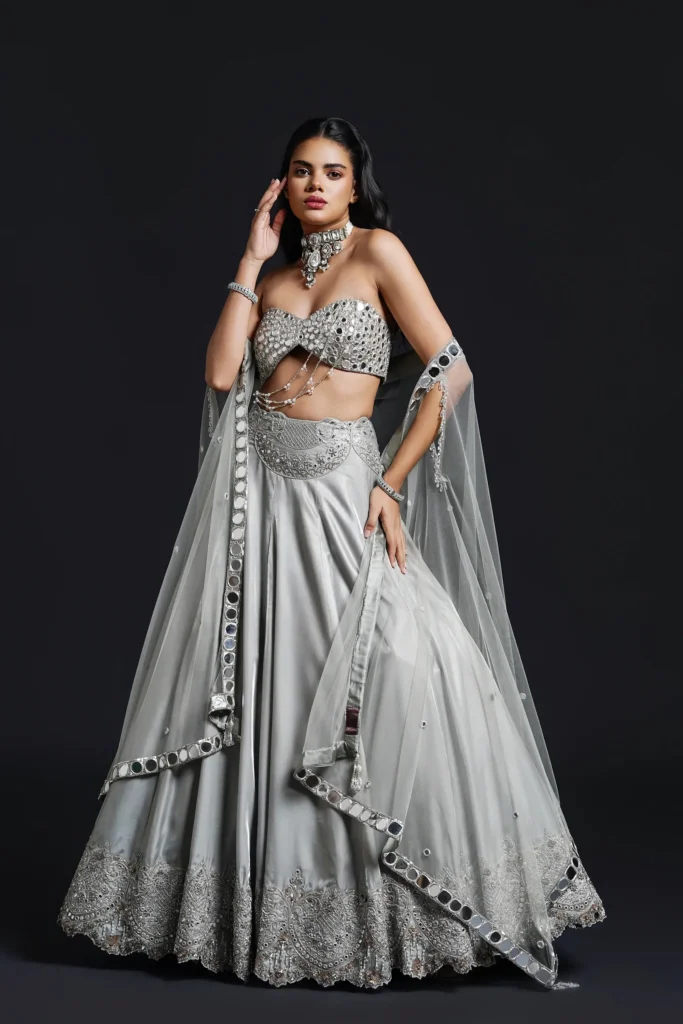
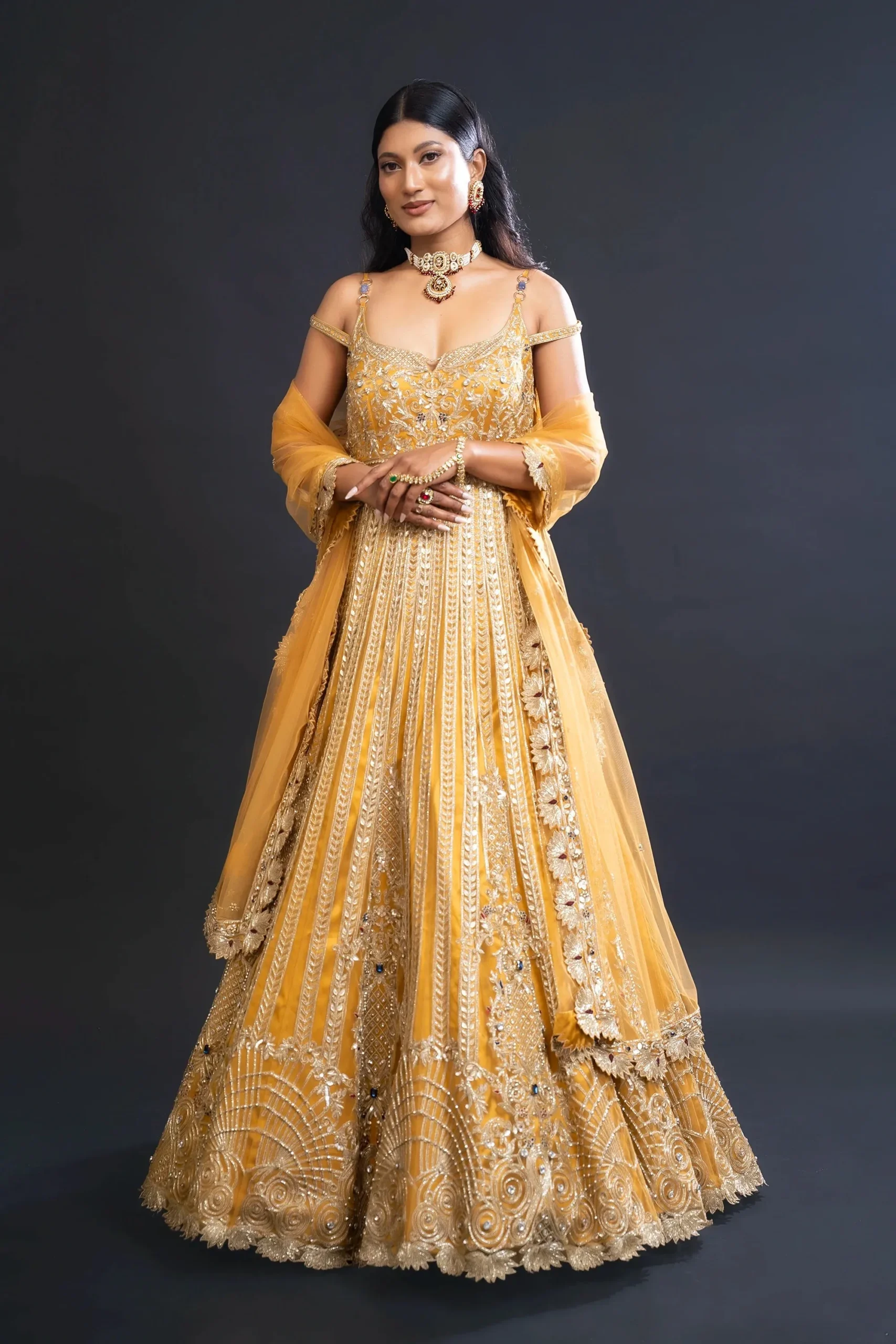
At Aahana’s by Nidhi Mehra, shopping local is the entire model, not a campaign. Every piece is hand-embroidered in-house or by closely partnered local artisan families in Noida, using crafts like zardozi, aari, pearl beadwork and shisha work. We source our finest raw silks, organzas and cottons from ethical weavers across India, championing the domestic textile industry. Because everything is made to order, we produce zero deadstock — a garment is created only when a bride commissions it. And when you visit our atelier for a fitting, you can often see our master craftsmen at work, bringing your piece to life. Explore our bridal, lehenga and occasion collections to see that craftsmanship — then read why it’s a lasting investment.
The Hidden Cost of Fast Fashion — and What Local Avoids
To understand what shopping local protects you from, it helps to see what the alternative really costs. Mass-produced and imported fast fashion is built on long, opaque supply chains where labour is often underpaid and invisible, garments are produced in bulk regardless of demand (creating enormous unsold deadstock), and synthetic materials and international freight generate a heavy environmental toll. The low price on the tag is real only because those costs are paid elsewhere — by underpaid workers and by the planet. A local, made-to-order lehenga simply doesn’t carry those hidden costs: production is visible, wages are fair, waste is near zero, and the garment is built to last rather than to be replaced next season. When you compare the two honestly, “expensive” and “cheap” start to swap places.
Your Role: How Your Purchase Matters
It’s easy to feel that one purchase can’t change an industry — but collectively, brides’ choices are exactly what shape it. Every decision to buy handcrafted and local rather than mass-produced sends demand toward artisans, fair wages, heritage crafts and sustainable production, and away from exploitative, wasteful models. Your wedding is one of the largest, most meaningful purchases of your life; directing it toward a local atelier turns it into a statement of values as well as style. You are not just buying a lehenga — you are casting a vote for the kind of fashion industry you want to exist.
Long-Term Community Benefits
Multiply that vote across many brides and the impact compounds: sustained artisan employment, preserved crafts passed to new generations, a stronger regional economy, more women in skilled and entrepreneurial roles, and a fashion culture that values people and heritage over disposability. Shopping local for your wedding isn’t a sacrifice of quality or beauty — it delivers more of both, while doing lasting good. That is the quiet power of choosing where your celebration’s biggest purchase is made. And unlike almost any other wedding decision, its benefit outlives the day itself — living on in the artisans it employed, the craft it preserved, and the heirloom it created.
Key Takeaways
- Local spending stays local — supporting artisans, suppliers and the regional economy.
- Your purchase directly funds karigars and enables fair, ethical, accountable production.
- Made-to-order is greener — zero deadstock, smaller footprint, heirloom longevity.
- Handcraft preserves heritage — zardozi, aari, pearl and shisha work stay alive through demand.
- Local means better quality, easier customisation, personal service and direct accountability.
- It sustains jobs and apprenticeships, including for women artisans and entrepreneurs.
- Your wedding purchase is a vote for the fashion industry you want to see.
Frequently Asked Questions
Why is shopping local for bridal wear important?
Shopping locally supports the regional economy, sustains traditional artisan communities, and significantly reduces the carbon footprint associated with global fast fashion.
How does AAHANA’s support local artisans in Noida?
We employ and provide sustainable livelihoods for generational karigars (artisans) in our Noida atelier, ensuring their ancient crafts are preserved, and all embroidery is done in-house or by closely partnered local artisan families for strict quality control.
Is locally made bridal wear the same quality as big international brands?
The hand embroidery and bespoke tailoring offered by skilled local artisans often far exceed the quality of mass-produced international luxury, because every piece is checked in-house at each stage.
What crafts are preserved by shopping local at AAHANA’s?
Your purchase helps preserve ancient techniques like authentic zardozi, aari work, delicate pearl beadwork, and shisha (mirror) embroidery.
How does bespoke local fashion benefit the environment?
Made-to-order fashion produces zero deadstock waste — garments are created only when ordered — and avoids international shipping, promoting slow, sustainable fashion.
Does shopping local mean faster delivery?
Yes. Because the entire design and creation process happens locally in Noida, there are no international shipping delays, allowing faster bespoke turnaround times.
About the Author
Nidhi Mehra is a fashion designer and the founder of Aahana’s by Nidhi Mehra, a made-to-order luxury bridal atelier in Sector 4, Noida. She works directly with generational karigars, hand-embroidering every piece in-house, and writes on craftsmanship, ethical fashion and the artisans behind Indian bridal couture.
Contact Aahana’s by Nidhi Mehra
Showroom: A-77, Block A, Sector 4, Noida, UP 201301
Phone: +91 98990 04066
WhatsApp: +91 98990 04066
Email: hello@nidhimehra.in
Shop Online Collection