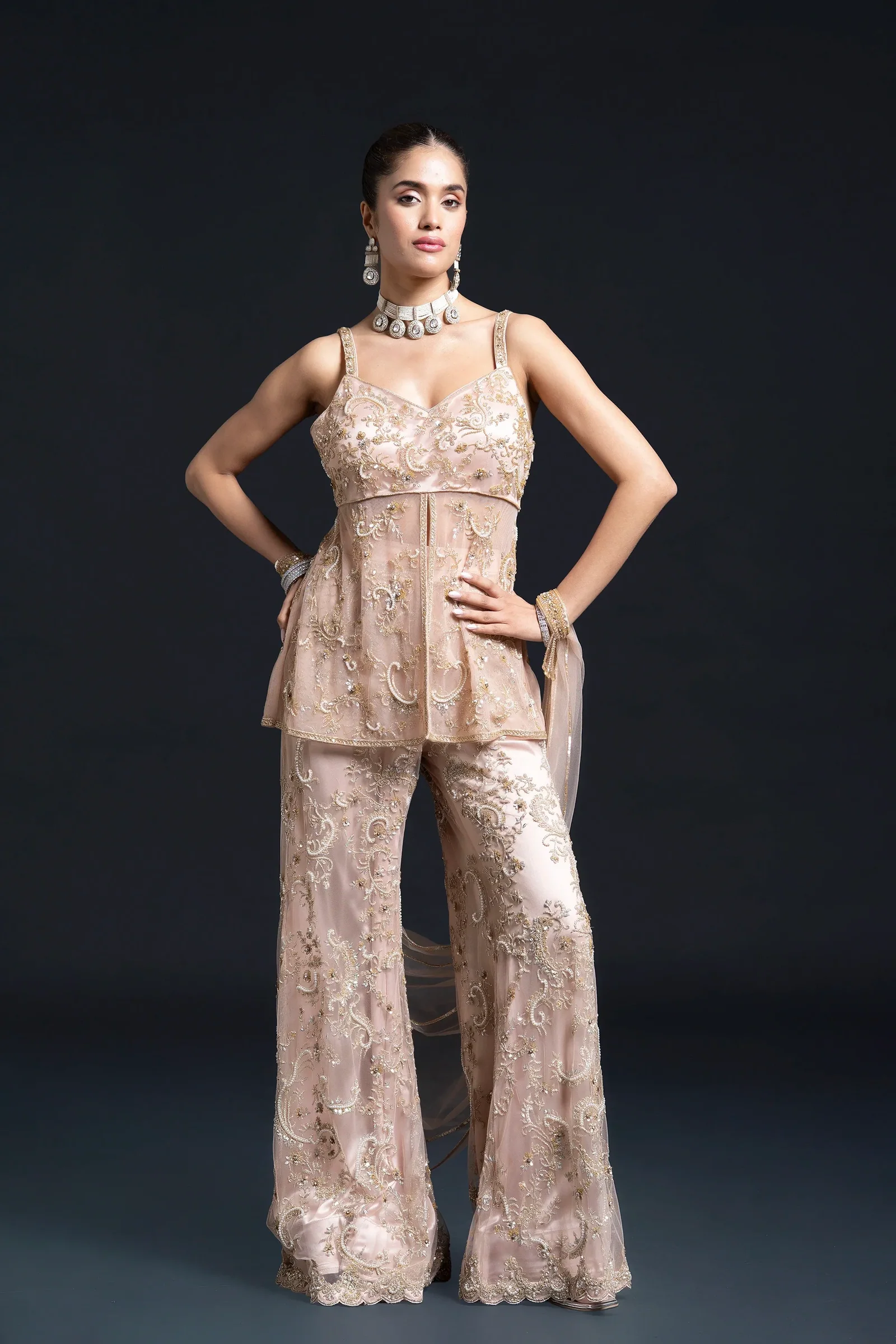
The sangeet is the one wedding event where you are meant to move. There is dancing, laughter, a stage, a camera on every side, and hours of celebration — which means your outfit has a harder job than any other in the trousseau. It has to look spectacular standing still and behave beautifully in motion.
At the Aahana’s atelier in Noida, dressing brides for their sangeet is one of our favourite briefs, because it’s where fashion meets physics. This is our designer’s guide to getting it exactly right: the colours, silhouettes, embroidery, jewellery, footwear, hair, makeup and photography choices that let you shine all night — and dance like you mean it.
What Is a Sangeet: Definition and Tradition
The sangeet — from the Sanskrit for “sung together” — is the musical night of an Indian wedding, traditionally a gathering of the bride’s and groom’s families to sing, dance and celebrate the union to come. Once an intimate evening of folk songs and dholak beats among the women of the family, it has grown into one of the most anticipated events of the wedding, complete with choreographed performances, live music, and a full guest list.
Its spirit is joy and participation. Unlike the solemn ritual of the wedding day, the sangeet is about energy, connection and celebration — everyone dances, everyone performs, and the bride is at the centre of the fun rather than the ceremony. That mood should shape everything about your outfit: it is a celebration first, and your clothes should be ready to celebrate with you.
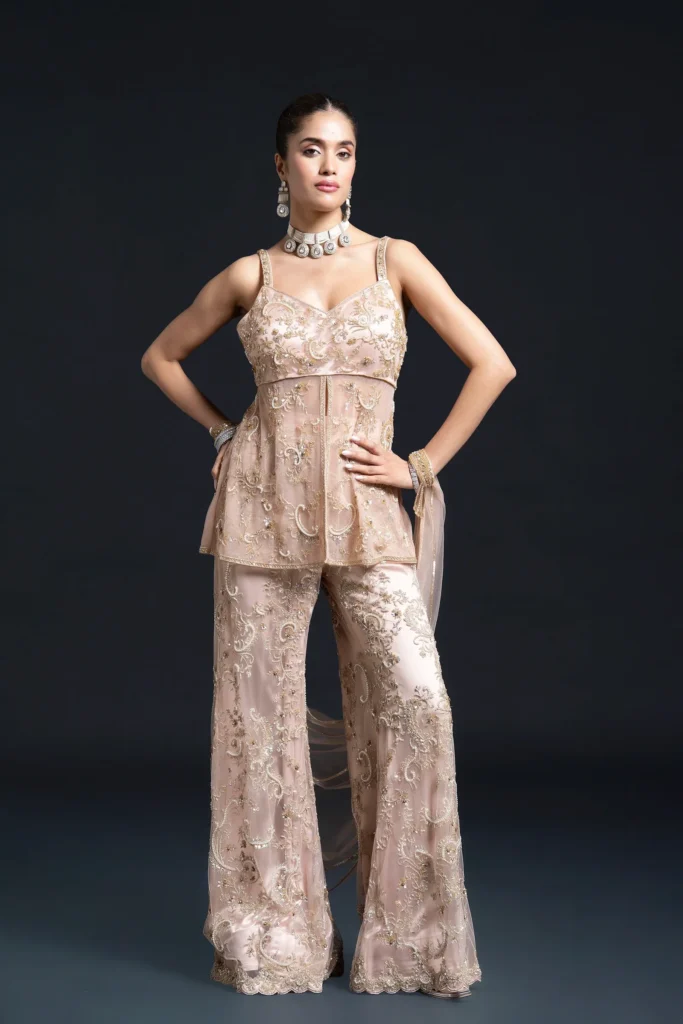
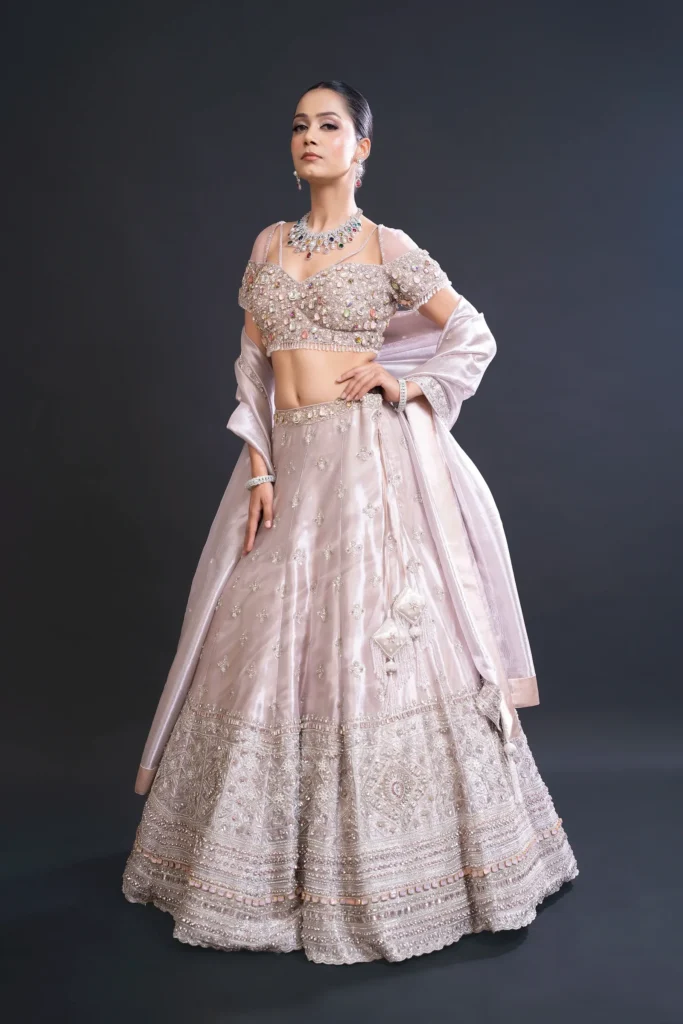
Peach Pink Sharara Set
Sangeet vs. Wedding Day: Different Outfit Requirements
It’s a mistake to dress for the sangeet the way you’d dress for the wedding — the two events ask for opposite things.
| Sangeet | Wedding Day | |
|---|---|---|
| Priority | Movement, energy, fun | Ritual, grandeur, ceremony |
| Ideal weight | Lighter, dance-friendly | Heavier, ceremonial |
| Silhouette | Freeing (sharara, lehenga, gown, Anarkali) | Traditional, often heaviest |
| Mood | Vibrant, playful, modern | Sacred, timeless |
| Test it must pass | Can you dance for hours? | Can you carry ritual grandeur? |
The wedding-day outfit is built to be worn; the sangeet outfit is built to be moved in. A bride who wears her heaviest lehenga to the sangeet often spends the night managing it instead of enjoying it. The right sangeet piece is one you forget you’re wearing the moment the music starts.
Colour Psychology for Sangeet
The sangeet is your licence to embrace colour, and colour sets the emotional temperature of the room.
- Jewel tones (emerald, sapphire, ruby, amethyst) read rich and celebratory and photograph superbly under evening light.
- Vibrant brights (fuchsia, coral, marigold, turquoise) capture the playful, high-energy spirit and pop on camera and video.
- Metallics and golds bring glamour and catch stage lighting beautifully for a show-stopping effect.
- Sunset ombrés and dual tones feel modern and dynamic, especially in motion.
- Deep contrasts (wine, midnight, forest) suit a bride who wants drama with restraint.
The psychology is simple: warm, saturated colours signal celebration and draw the eye, which is exactly what you want on the night you’re meant to shine. Save the softest pastels and the deepest reds for other events — the sangeet rewards a bride who wears joy in colour.
Silhouette Considerations: Dancing and Movement
Silhouette is where a sangeet outfit is won or lost, because it decides whether you can dance freely.
- Sharara and gharara sets are made for movement — the wide-legged flow is dramatic in motion and endlessly comfortable.
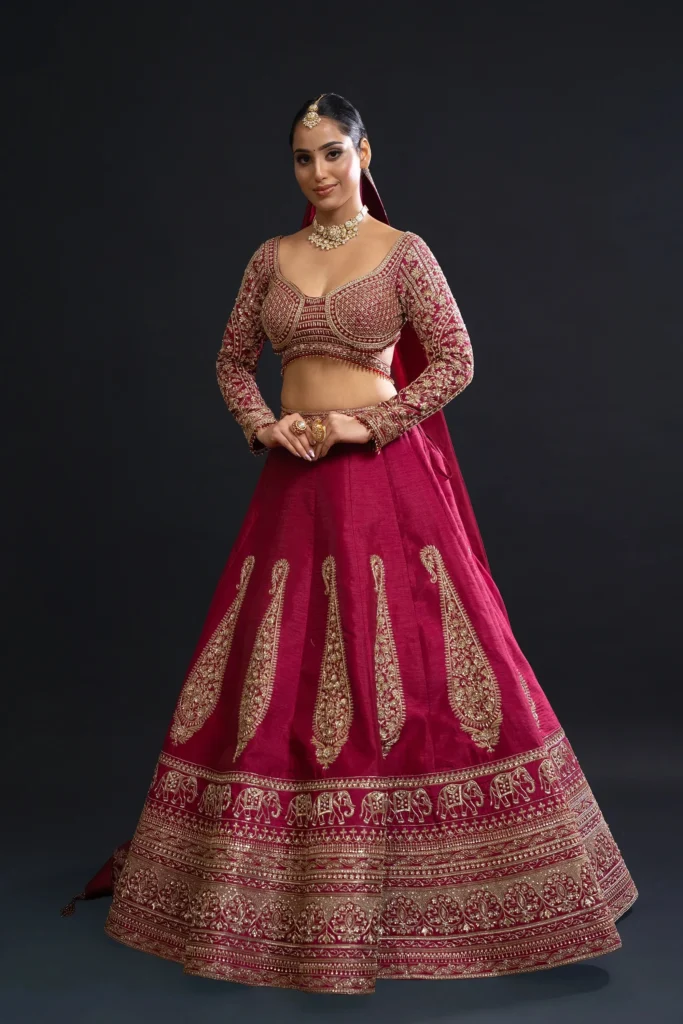
- Lightweight lehengas with a moderate flare give the twirl without the weight.
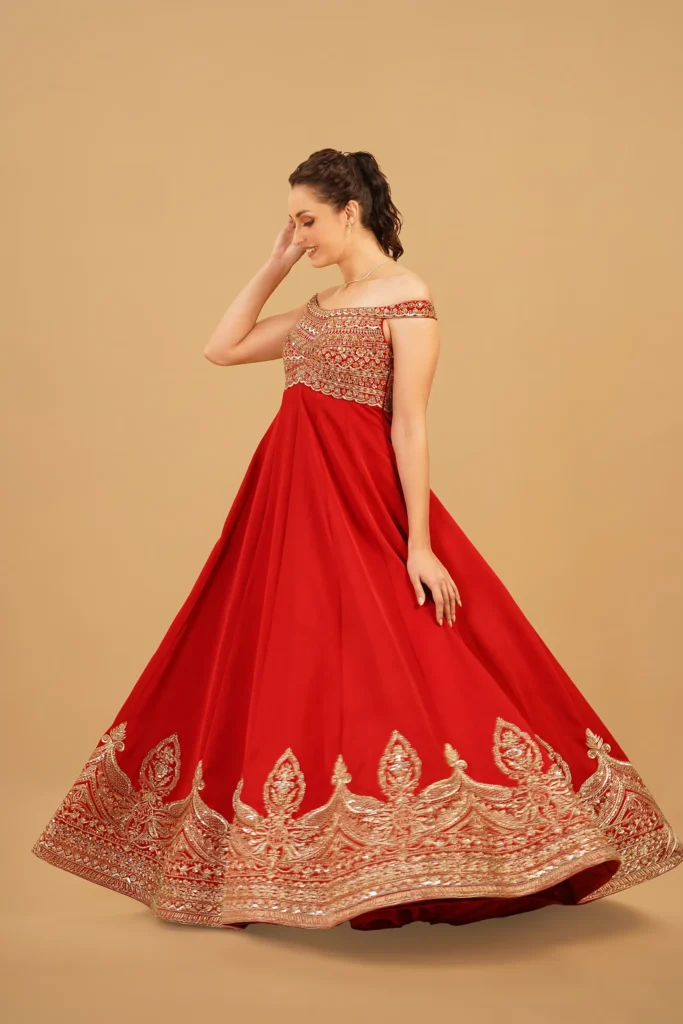
- Anarkalis offer freedom through the legs and a graceful sweep, ideal for a bride who wants elegance she can dance in.
- Indo-western gowns and cape sets bring a modern edge and, cut well, move beautifully.
- Palazzo and pant sets are the most freeing of all for a bride who plans to perform.
Avoid anything that restricts the legs or hips, or that is so voluminous it becomes a burden. The test is honest and simple: try the twirl, the garba step, the arm lift, in the fitting room. If the silhouette moves with you, it’s right.
Embroidery Weight: Comfort for Active Celebrations
Embroidery is what makes a sangeet outfit glamorous — and, if you’re not careful, what makes it exhausting.
The key is strategic embellishment. A piece worked heavily across the entire garment can weigh a bride down over hours of dancing; a piece with concentrated embroidery — a worked bodice, a decorative border, a highlighted neckline — over lighter fabric elsewhere gives all the impact with a fraction of the load. Mirror work, sequins and light gota catch stage light brilliantly while staying featherlight; dense zardozi and heavy dabka look magnificent but add real weight.
For the sangeet specifically, we design toward “high shine, low weight”: maximum sparkle under the lights, minimum drag on the dance floor. You should be able to raise your arms, spin and move for hours without once thinking about your outfit’s weight.
Dupatta Styling: Managing It While Dancing
The dupatta is the classic sangeet hazard — beautiful, and forever slipping mid-dance. Style it so it stays put.
- Pin it securely at the shoulder and, where possible, tuck at the waist so it can’t shift while you move.
- Belt the dupatta with a kamarbandh — on-trend, flattering, and it locks the drape in place.
- Choose the shorter or single dupatta rather than a heavy double drape for the dancing hours.
- Go dupatta-light or dupatta-free: many modern sangeet silhouettes (gowns, cape sets, pant sets) skip it entirely, removing the problem altogether.
- Use a lightweight fabric — net, organza, fine georgette — that flows without weighing you down.
The rule: if you’ll be performing, secure the dupatta before the music starts, or design a look that doesn’t rely on one.
Footwear: Practicality and Style
You will be on your feet for hours, so footwear is a comfort decision as much as a style one.
- Embellished juttis and kolhapuris are the sangeet classic — flat, festive, and endlessly danceable.
- Block heels and wedges add height with stability, far kinder than stilettos for a night of movement.
- Cushioned insoles are worth every rupee; a hidden gel insert saves the last dance.
- Broken-in, never brand-new: wear your footwear at home first so nothing pinches on the night.
- Secure straps keep shoes on through energetic choreography.
Match the metal and embellishment to your outfit, then prioritise comfort — no one photographs your feet mid-bhangra, but everyone sees the joy on your face when your feet don’t hurt.
Jewellery and Accessories: What Works for Dancing
Sangeet jewellery should sparkle without swinging into the way.
- Statement earrings (jhumkas, chandbalis) deliver impact and stay put while dancing.
- A secured maang tikka or matha patti frames the face beautifully on camera.
- Kamarbandh (waist belt) doubles as jewellery and dupatta anchor — a sangeet hero.
- Fewer, well-fastened bangles — enough to catch the light, not so many they distract mid-dance.
- Skip the very long necklaces that swing during movement; choose a secured choker or fitted neckpiece instead.
- Nose ring: a lighter nath or none, so nothing tugs while you perform.
The principle: choose pieces that hold their position and photograph brilliantly, and leave anything that swings, snags or slides for a more static event.
Photography for Sangeet: How to Look Good on Video
The sangeet is the most filmed event of the wedding, so dress for motion and low light.
- Choose colours that pop on video — jewel tones, brights and metallics read vividly under stage and LED lighting, where pastels can wash out.
- Prioritise sparkle — mirror work and sequins catch and throw light, giving you movement and shimmer in every clip.
- Pick a silhouette that moves cinematically — a sharara’s flare or an Anarkali’s sweep looks spectacular in slow-motion reels.
- Mind the lighting — matte, deeper tones can disappear in dim rooms; reflective embellishment keeps you luminous.
- Rehearse a few “camera” moments — a twirl, a hair flick, a laugh — that photographers and reels love.
Because so much sangeet footage is candid and in motion, the outfit that photographs best is the one that comes alive when you move. Design for the video, and the stills take care of themselves.
Makeup for an Evening Event: Stage Lighting Considerations
Sangeet makeup has to survive heat, dancing and bright light — and read on camera.
Go slightly bolder than daytime: stage and flash lighting flatten features, so a defined eye, a considered contour and a confident lip keep you looking vivid rather than washed out. Prioritise longevity and transfer-resistance — a setting spray, waterproof formulas, and a matte or blot-friendly base that won’t slide as you dance and warm up. A subtle highlight catches the light beautifully on video, but keep glitter measured so it reads glamorous, not harsh, up close. Above all, do a trial under evening light before the day, because what looks perfect in a bright salon can look very different on a dim, coloured dance floor.
Hair Styling: What Stays in Place While Dancing
The best sangeet hairstyle is the one that still looks intentional at midnight.
Secured styles win: a sleek low bun, a braided updo, or a pinned half-up hold through hours of movement far better than loose waves that fall flat and frizz. If you love hair down, choose a well-set, product-locked blowout and accept that a secured style is safer for heavy dancing. Fresh flowers or a maang tikka add festivity without risk of collapse. Whatever you choose, have it pinned properly and lightly sprayed, and avoid delicate styles that need constant re-adjusting — you want to be dancing, not fixing your hair between songs.
Colour Trends for Sangeet Specifically
Beyond the timeless jewel tones, a few directions feel especially current for sangeet dressing: sunset ombrés that shift as you move, dual-tone and colour-blocked sets, metallic and liquid golds for full stage glamour, electric brights like fuchsia and cobalt for high-energy nights, and midnight-and-gold for a bride who wants drama with restraint. Pastels still appear — but with vibrant contrast borders and bright dupattas so they hold up under evening light rather than fading into it.
Traditional vs. Contemporary Sangeet Outfits
There’s no wrong answer here, only two moods.
A traditional sangeet look — a vibrant lehenga, sharara or gharara with classic embroidery — roots the celebration in heritage and photographs timelessly. A contemporary look — an indo-western gown, cape set, pant set or draped silhouette — feels modern, fashion-forward and fresh. Many brides split the difference beautifully: a traditional silhouette in an unexpected colour, or a modern cut with classic goldwork. The sangeet, being the most relaxed of the major events, is the perfect place to experiment — it rewards personality over convention.
Price Range for Sangeet Wear
Because sangeet pieces prioritise movement over ceremonial weight, they often sit below the bridal-day outfit in cost — a genuine advantage. Pricing still reflects fabric, embroidery hours and construction rather than the label “sangeet.” At Aahana’s, made-to-order pieces suitable for a sangeet broadly span festive designs from around ₹35,000, through occasion and evening pieces in the ₹60,000–₹1,50,000 range, with heavily worked statement sets reaching higher — the final figure set by the embellishment and fabric you choose. A private consultation gives you an exact quote against your vision, and we’ll always guide you toward the smartest balance of impact and value.
Occasions You Can Repeat the Outfit
A well-chosen sangeet outfit is one of the most re-wearable pieces in a trousseau — which makes it excellent value. Because it’s designed to be lighter and more versatile than the bridal lehenga, a sangeet look travels easily to: another bride’s wedding or sangeet, engagement or cocktail evenings, festive celebrations (Diwali, Karva Chauth), receptions as a guest, and milestone parties and anniversaries. Choosing a slightly more versatile colour and silhouette — a jewel-tone sharara, an elegant Anarkali, a modern gown — multiplies the occasions it can return for, turning a single purchase into a wardrobe staple you’ll reach for again and again.
Aahana’s Pieces Suitable for Sangeet
We design sangeet-ready pieces around one principle: maximum impact, effortless movement. Across our lehengas, sharara and pant sets, Anarkalis and indo-western gowns, we cut for dance — lighter, dance-friendly fabrics, strategically concentrated embroidery for high shine at low weight, and secured, well-engineered dupattas (or none, where the silhouette calls for it).
Every piece is made to order at our Noida atelier, cut to your exact measurements, in fabric Nidhi has personally chosen. When you come in for your 90-minute session, we’ll set aside sangeet-appropriate silhouettes in your colours and sizes, and let you move in them in real fabric — the twirl, the arm lift, the step — before you decide. Made by artisans Nidhi knows by name, for one bride who intends to dance all night.
Pre-Wedding Confidence: Feeling Great in Your Outfit
The sangeet is your first big moment in the spotlight, and confidence there sets the tone for the whole wedding. It comes from three things: an outfit that fits you perfectly (made-to-order removes the tugging and adjusting that undermines poise), a silhouette you can genuinely move in (nothing dims a bride faster than worrying about her clothes mid-dance), and a look that feels authentically like you rather than borrowed from a trend. When those three align, you stop thinking about your outfit and start enjoying your night — and that ease, more than any embellishment, is what makes a bride glow on camera and in the room. Choose the piece that lets you dance like no one’s watching, on the night everyone is.
Key Takeaways
- The sangeet is a celebration of movement — dress for dancing, energy and fun, not for ceremonial grandeur.
- Prioritise freeing silhouettes (sharara, lightweight lehenga, Anarkali, gown) and strategic, low-weight embroidery for high shine without the drag.
- Embrace celebration colours — jewel tones, brights and metallics that pop on stage and video.
- Secure the details — pin or belt the dupatta, choose comfortable danceable footwear, and pick jewellery and hair that stay put.
- Dress for the camera — sparkle and saturated colour read best under evening light; makeup should be bolder and long-wearing.
- Sangeet pieces are often lighter, more affordable and highly re-wearable — excellent value across future events.
- Confidence comes from fit, freedom of movement, and authenticity — the trio that lets you dance all night.
Contact Aahana’s by Nidhi Mehra
Showroom: A-77, Block A, Sector 4, Noida, UP 201301
Phone: +91 98990 04066
WhatsApp: +91 98990 04066
Email: care@nidhimehra.in
Shop Online Collection