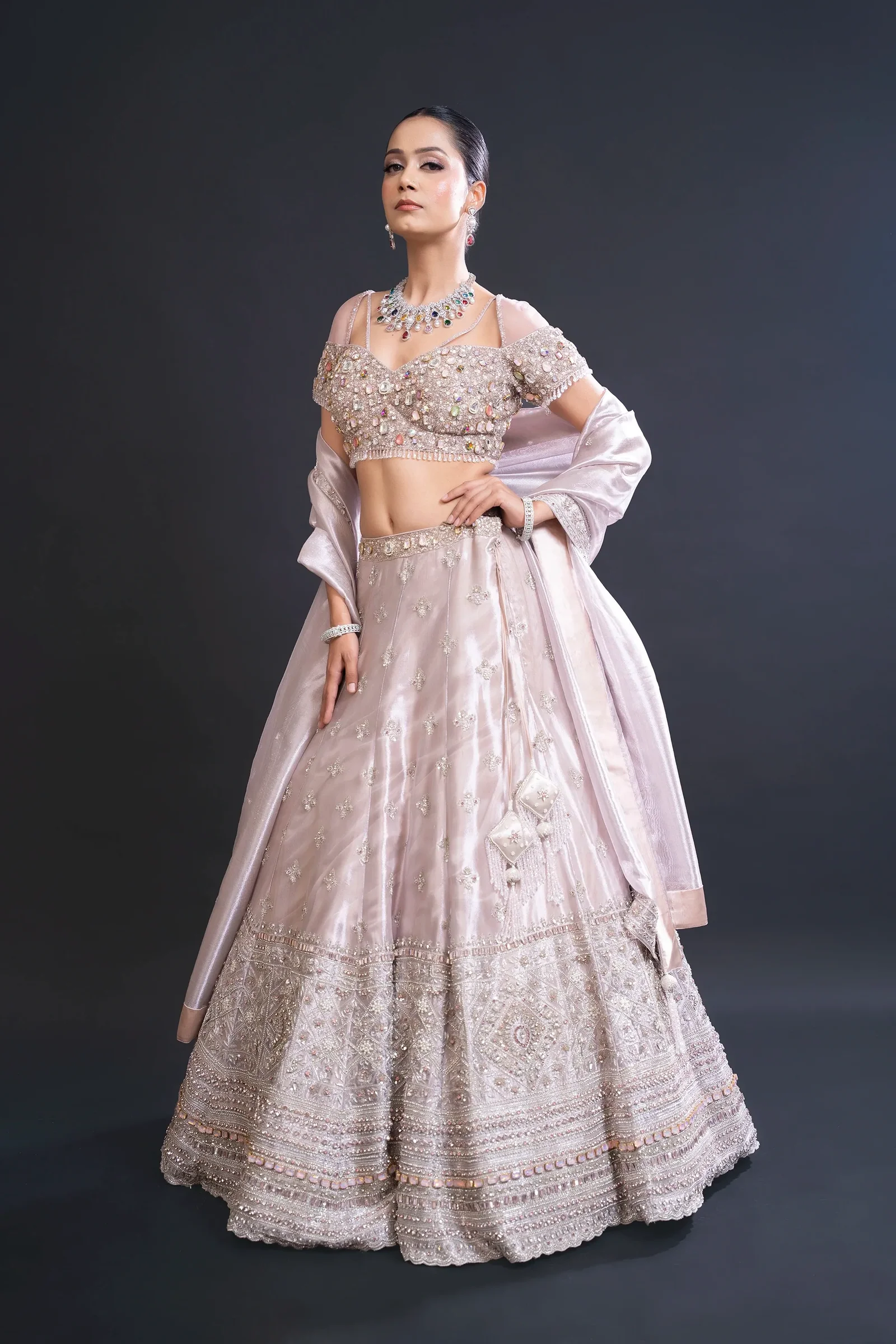
Quick answer: The biggest bridal lehenga trends for 2026 are unconventional colours (sage green, rust orange, ivory and soft metallics alongside classic red), modern silhouettes (sheer and detachable capes, slit gowns, A-line skirts and corset blouses), and “visually heavy but physically light” embroidery — 3D floral appliqué mixed with traditional shisha (mirror) and pearl work on raw silk and tissue fabrics. The overarching direction: heritage craftsmanship in wearable, photogenic, made-to-order forms, with sustainability, personalisation and price transparency now expected as standard.
Written by Nidhi Mehra, couturier and founder of Aahana’s by Nidhi Mehra — a made-to-order bridal atelier in Sector 4, Noida. This forecast reflects what we are seeing on the embroidery floor and in real bridal appointments, not just the runway.
Every year brings new bridal directions, but 2026 marks a genuine shift in how brides think about their lehenga — less about following a single “in” colour, more about individuality, wearability and craftsmanship that lasts. This complete guide breaks down every major trend of the year: colours, silhouettes, embroidery, fabrics, and the deeper movements — sustainability, technology, personalisation — reshaping how brides shop. It closes with an honest view of what will endure and what won’t.
Trend Forecasting: How Bridal Trends Actually Develop
Bridal trends don’t appear overnight. They move through a predictable cycle: couture runways and celebrity weddings introduce a direction, social media accelerates it, real brides adopt and adapt it, and finally it either settles into a lasting classic or fades. Understanding this helps a bride shop wisely — catching a trend early enough to feel current, while judging whether it has the substance to last. The most useful skill isn’t chasing every trend; it’s telling the difference between a passing moment and a lasting shift.
Colour Trends 2026: Beyond the Classic Red
2026 is the year colour convention loosened for good. Red remains a timeless classic and will never leave the mandap, but modern brides are embracing a far wider palette:
- Sage green — the breakout bridal colour, fresh, photogenic and universally flattering.
- Rust and burnt orange — warm, earthy and rich, especially striking for autumn and winter weddings.
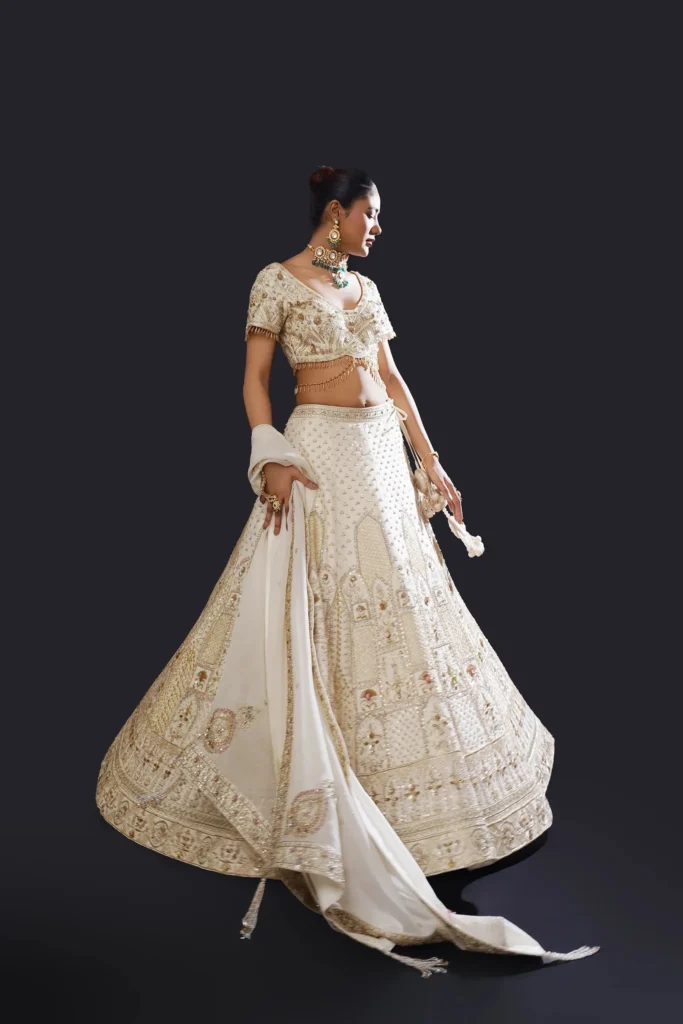
- Deep ivory and champagne — quiet, understated luxury for the pared-back bride.
- Jewel tones — emerald, sapphire and wine for dramatic, camera-ready evening looks.
- Soft metallics and liquid gold — full glamour that catches stage and evening light.
- Pastels — still strong for daytime and mehendi, now paired with vibrant contrast borders.
The direction is clear: bold, personal and unconventional colour is no longer a risk — it’s a signature of the confident 2026 bride. Crucially, colour is now the primary way brides express individuality: two brides can choose the same classic A-line silhouette and look entirely distinct through colour alone. When choosing, consider your event’s lighting (jewel tones and metallics glow under evening light; pastels shine in daytime), your skin tone (sage green and ivory flatter almost universally), and how the colour will read in photographs for decades — not just on a screen today.
Silhouette Trends: Capes, Slits and Contemporary Interpretations
Silhouette is where 2026 feels most modern. The leading shapes:
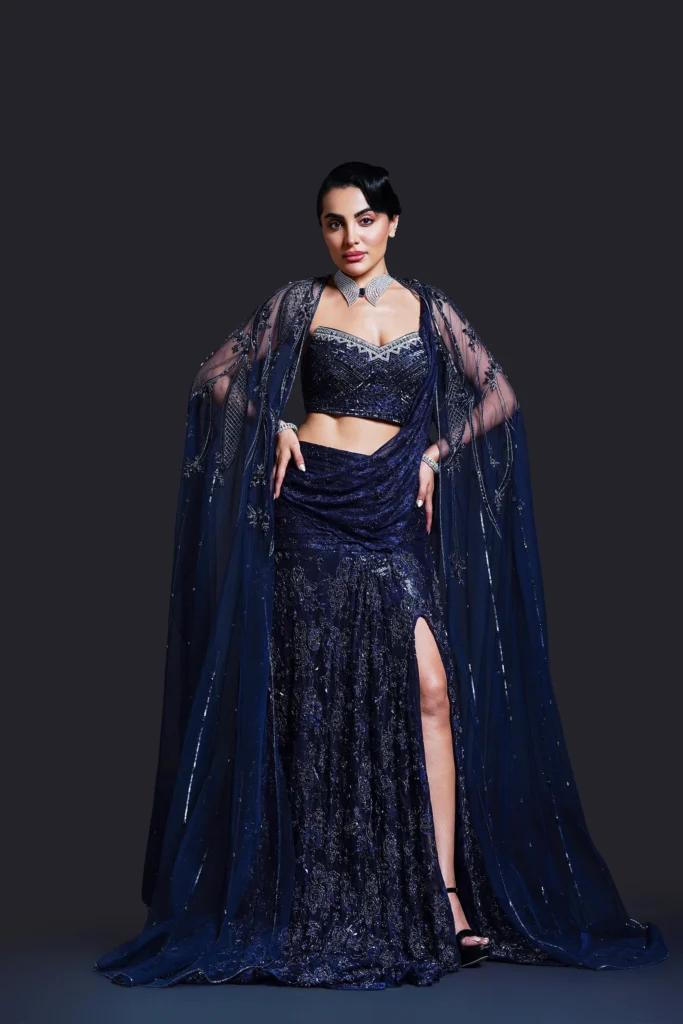
- Cape lehengas — sheer, structured or detachable capes replacing the fussy dupatta. (See our Cape Lehenga Trend 2026 guide.)
- Slit gowns and indo-western silhouettes — modern, movement-friendly and increasingly chosen for receptions. (See our Navy Blue Slit Gown piece.)
- A-line skirts — the flattering, timeless base that carries trend-forward colour and embroidery without dating.
- Corset blouses, plunging V-necks with full sleeves, and sweetheart necklines with attached capes — the standout blouse trends of the year.
The common thread: modern lines that still swirl, flatter and photograph like couture. What’s notable in 2026 is modularity — detachable capes, convertible dupattas and pieces designed to restyle across functions, so one silhouette can shift from ceremony to reception. This reflects a bride who wants versatility and value from her wardrobe, not just a single fixed look. Draping is evolving too: the classic double-dupatta remains the most regal ceremony choice, while lighter single drapes and cape-dupattas dominate the modern, movement-friendly functions.
Embroidery Trends: Visually Heavy, Physically Light
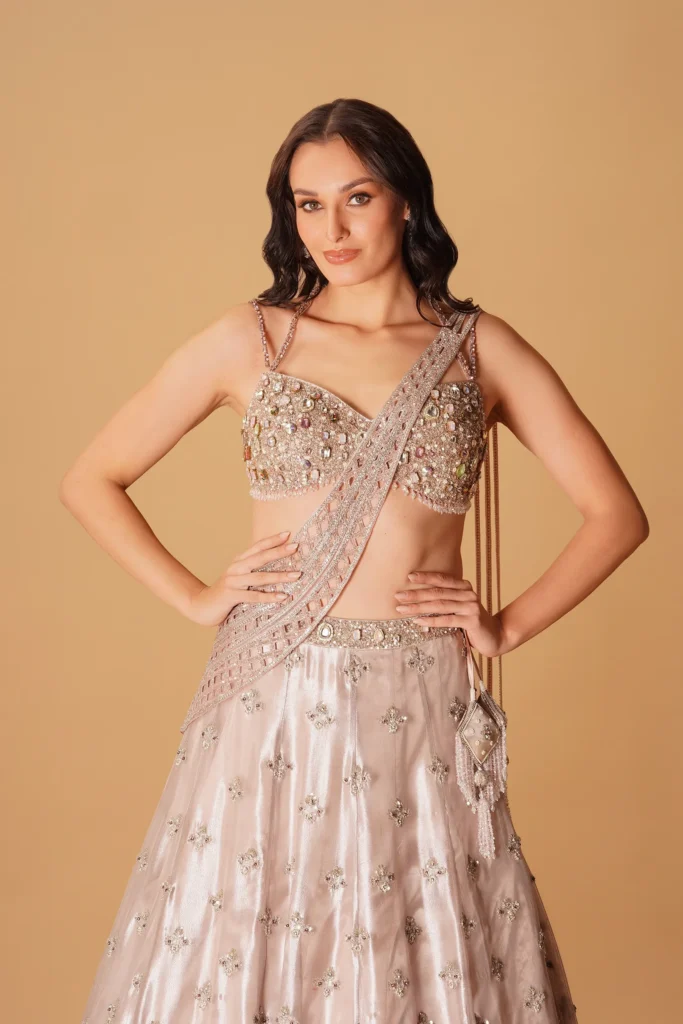
The defining embroidery shift of 2026 is comfort without compromise. Brides want pieces that look richly worked but don’t weigh them down over a long day. That’s achieved through smart fabric choices and finer techniques. The most sought-after work this year is a fusion of 3D floral appliqué with traditional shisha (mirror) work and delicate pearl and crystal detailing — dimensional, light-catching and modern, yet rooted in heritage craft. Vintage-inspired mirror work, dabka and gota remain strong, applied strategically rather than all-over.
Fabric Trends: Raw Silk, Tissue and Innovation
Fabric is doing quiet, important work in 2026. Raw silk leads for its structure and sheen; metallic tissue is having a moment for its glow and lightness; organza and fine net deliver the airy, layered capes and dupattas the year favours; and velvet and brocade hold for winter grandeur. Underpinning all of it is a move toward better, often more sustainable and organic materials — proof that fabric quality, not just embroidery, defines a luxury piece. The reason fabric matters so much in 2026 is the “visually heavy, physically light” goal: the right base fabric lets a lehenga carry rich embroidery while remaining wearable for hours. A skilled atelier chooses fabric and embroidery together — never one without the other — which is another reason made-to-order consistently outperforms off-the-rack for the wedding-day piece.
Trends by Wedding Function: From Mehendi to Reception
A 2026 bride dresses for a whole calendar of events, and the trends read differently across each:
- Mehendi: soft pastels, fresh greens and yellows, light mirror work, and cropped or lightweight silhouettes for a relaxed daytime mood.
- Haldi: marigold, ivory and pastel florals in easy, breathable fabrics — comfort and colour over heavy embellishment.
- Sangeet: pre-draped silhouettes, dramatic thigh-high slits, sharara sets and metallic sequin work that catches the light for a night of dancing.
- Wedding ceremony: the grandest look — jewel tones or classic red, the double-dupatta drape, and dense (but cleverly lightweight) hand embroidery.
- Reception: modern silhouettes lead — slit gowns, capes and structured lehengas in wine, midnight, ivory or metallics for an editorial, evening finish.
The winning 2026 wardrobe isn’t one perfect outfit; it’s a coordinated set where each function has its own moment while sharing a cohesive palette and level of craft.
Minimalism vs. Maximalism: Where the Trend Is Heading
2026 refuses to pick a side — and that’s the point. Maximalism thrives for the wedding day (dense embroidery, jewel colour, drama), while a quieter minimalism rises for intimate ceremonies, receptions and the “understated luxury” bride (ivory, clean lines, restrained embellishment). The smartest brides mix the two: a maximalist ceremony look and a minimalist reception piece, letting the wardrobe span both moods across the celebration.
Sustainability Trends: Ethical Production Becomes Standard
Sustainability has moved from a nice-to-have to an expectation. Brides increasingly favour made-to-order over mass production (less waste, heirloom-grade pieces worn again), natural and responsibly sourced fabrics, and ateliers that pay artisans fairly and keep craft traditions alive. In 2026, “who made this and how” is a question more brides ask — and a value more brands lead with. Practically, sustainability also shows up as re-wearability and repair: brides choosing versatile pieces they can wear again, and ateliers offering alterations that extend a garment’s life rather than encouraging replacement. The most sustainable bridal choice remains a well-made, made-to-order piece built to last and be passed down — the opposite of disposable fashion.
Technology Trends: Digital Shopping, Virtual Try-Ons and AR
Technology is reshaping how brides discover and shop. Digital-first discovery (Instagram, Pinterest, brand websites) now precedes almost every purchase; virtual consultations let out-of-town and international brides work with designers remotely; and virtual try-on and AR tools are emerging to help visualise colour and silhouette before fittings. Technology won’t replace the fitting room for couture — fabric and fit must be felt — but it increasingly owns the research and shortlisting stage.
Personalisation Trends: Customisation as the Expectation
In 2026, customisation is no longer a premium add-on — it’s the baseline expectation. Brides want to shape colour, embroidery, neckline, cape length and silhouette to their own vision and body, rather than buy a stock design. This is exactly where made-to-order ateliers lead, and why bespoke has become the default definition of luxury bridalwear.
Price Transparency Trends
Brides are more informed than ever, and they expect honesty about cost. Transparency — a clear breakdown of what fabric, embroidery hours and construction actually cost, and an all-inclusive quote — is becoming a mark of trust. Ateliers that explain where the money goes earn confidence; those that stay vague increasingly lose it.
Timeline Trends: Faster Delivery Expectations
Modern brides plan on tighter timelines and expect clarity on delivery dates. While genuine hand embroidery cannot be rushed — bridal couture still needs months — ateliers are responding with clearer schedules, ready-to-ship capsule options, and better communication. The trend isn’t cutting corners on craft; it’s removing uncertainty from the process.
Shopping Trends: Direct-to-Consumer and Online Growth
The path to purchase is shifting toward direct-to-consumer — brides buying straight from designers and ateliers rather than multi-brand retailers — and toward online discovery and even online purchase for lighter pieces. For the wedding-day lehenga, the model most brides trust is hybrid: research and shortlist online, then commit in person where fit and fabric can be verified.
Influencer and Social Media Impact
Social media is now the single biggest engine of bridal trends. Real brides, content creators and celebrity weddings shape colour, silhouette and styling faster than any runway, and “reel-worthy” movement (the cape trail, the slit, the twirl) actively influences design. The savvy bride draws inspiration from social media while filtering for what genuinely suits her — not just what photographs well for someone else.
Regional Trends: Different Regions, Different Directions
India’s bridal trends are not monolithic. North Indian and NCR weddings lean toward grand, embroidered lehengas and the double-dupatta drape; Western India embraces bold colour and mirror work; the South and East hold strong silk and saree traditions alongside lehengas. 2026’s cross-cultural and destination weddings increasingly blend these regional signatures into personal, hybrid looks.
The Emerging-Designer Trend
One of the most exciting shifts is the rise of emerging and independent designers. Brides are moving beyond a handful of legacy names toward fresh voices and intimate ateliers that offer personal attention, distinctive design and genuine craftsmanship — often with more customisation and access than large houses. Individuality, not just a label, is the new status.
Contrast Trends: Balancing Tradition and Modernity
If 2026 has one governing idea, it’s contrast — the deliberate balance of heritage and modernity. A traditional silhouette in an unexpected colour; classic hand embroidery on a contemporary cape; a heritage motif in a modern line. Brides no longer want to choose between rooted and modern; they want both, in one considered piece.
Quality Trends: Craftsmanship Valued Over Quantity
Across every trend runs a return to craftsmanship. Brides increasingly value one exceptional, hand-made piece over several disposable ones — judging quality by the reverse of the embroidery, the hand of the fabric, and the precision of the finishing. In 2026, “how well is it made?” is finally beating “how much does it look like?”
AAHANA’s Positioning in the 2026 Trend Landscape
At Aahana’s by Nidhi Mehra, our approach sits exactly where these trends converge: every piece is made to order, hand-embroidered in our Sector 4, Noida atelier, and designed to balance current high fashion with timeless Indian craftsmanship. We work in the year’s leading directions — sage green, rust, ivory and metallics; capes, slit gowns and corset blouses; light-yet-rich mirror, pearl and 3D floral work — while keeping the fit and finish that make a piece last. Explore starting points in our bridal, lehenga and reception collections, or see the trend in pieces like our Mint Green Cape Lehenga and Sage Green Mirror Work Lehenga.
Timeless vs. Trendy: What Will Actually Last
Not every trend deserves your wedding day. Here’s how we’d separate the lasting from the fleeting:
- Will last: A-line and classic silhouettes, quality hand embroidery, natural fabrics, sage green and ivory, and made-to-order fit — these are shifts, not fads.
- Enjoy, but lightly: ultra-specific styling gimmicks, extreme slits, and hyper-of-the-moment motifs — beautiful now, but date fast.
The safest way to look current and timeless: choose a classic silhouette, then express the trend through colour or a detachable modern element (like a cape) you can remove later. Your wedding photographs should look considered in twenty years, not merely on-trend today.
Predictions for 2027–2028
Looking ahead, we expect: unconventional colour to fully normalise (green, rust and ivory as standard bridal choices, not statements); sustainability and provenance to become decisive purchase factors; deeper personalisation powered by better virtual tools; the continued rise of independent ateliers; and a lasting preference for “light-yet-rich” construction. The through-line for the next few years is consistent — individuality, craftsmanship and conscious choice over mass-produced convention. We also expect the line between “bridal” and “eveningwear” to keep blurring, as gowns, capes and indo-western pieces become accepted wedding-day choices, and for AI-assisted styling tools to make it easier for brides to visualise a look before ever entering the atelier — even as the final, made-to-measure decision stays firmly human.
Key Takeaways
- Colour has opened up — sage green, rust, ivory and metallics join classic red.
- Silhouettes are modern — capes, slit gowns, A-lines and corset blouses lead.
- Embroidery is “visually heavy, physically light” — 3D floral, mirror and pearl work on raw silk and tissue.
- Sustainability, personalisation and price transparency are now expected as standard.
- Technology owns discovery; the fitting room still owns the couture purchase.
- Craftsmanship over quantity — one lasting, hand-made piece beats several disposable ones.
- To stay timeless, choose a classic silhouette and express the trend through colour or a detachable element.
Frequently Asked Questions
What are the biggest bridal lehenga trends for 2026?
For 2026, brides are embracing deep jewel tones and unconventional colours like sage green and rust, sheer and detachable capes, metallic tissue fabrics, and intricate vintage-inspired mirror work fused with 3D floral appliqué and pearl detailing.
Is red still popular for 2026 brides?
Red remains a timeless classic, but modern brides in 2026 are leaning heavily toward sage greens, ivories, rust oranges and soft metallics for a more personal, contemporary look.
Are heavy lehengas going out of style?
Not going out of style, but the focus has shifted. Brides now prefer visually heavy yet physically lightweight lehengas, achieved through smart fabric choices and finer embroidery techniques.
What is the trending blouse style for 2026?
Corset-style blouses, plunging V-necks with full sleeves, and delicate sweetheart necklines with attached capes are the top blouse trends this year.
What kind of embroidery is trending in 2026?
A fusion of 3D floral appliqué with traditional shisha (mirror) work and delicate pearl detailing is highly sought after this season.
How do I incorporate a 2026 trend without looking overly trendy?
Opt for a classic silhouette like an A-line skirt and express the trend through your colour choice or a modern, detachable cape dupatta you can remove later.
About the Author
Nidhi Mehra is a fashion designer and the founder of Aahana’s by Nidhi Mehra, a made-to-order luxury bridal atelier in Sector 4, Noida. She and her artisans hand-embroider every piece in-house, balancing current trends with timeless Indian craftsmanship. She writes on bridal fashion, colour, silhouette and artistry.
Contact Aahana’s by Nidhi Mehra
Showroom: A-77, Block A, Sector 4, Noida, UP 201301
Phone: +91 98990 04066
WhatsApp: +91 98990 04066
Email: hello@nidhimehra.in
Shop Online Collection