The Saree Dilemma: Classic Six Yards vs Modern Couture Drape
Few garments in the global lexicon of fashion possess the poetic allure, timeless majesty, and cultural resonance of the Indian saree. For centuries, the unstitched six to nine yards of silk, cotton, or tissue has stood as the quintessential symbol of feminine grace—an adaptable canvas fluidly adapting to regional aesthetics from Kashmir to Kanyakumari. Yet, as the cadence of modern celebrations accelerates, contemporary women find themselves navigating an intriguing sartorial crossroad: the classic unstitched saree versus the modern pre draped saree.
At Aahana’s by Nidhi Mehra, our designer studio in Noida, Uttar Pradesh, we welcome discerning brides, bridesmaids, and cocktail attendees who voice the exact same dilemma each wedding season. The desire to embody the undeniable glamour of a saree remains absolute. However, the anxiety of unraveling pleats, wrestling with scores of hidden safety pins, securing an uncomfortable petticoat drawstring, and spending forty minutes in front of a mirror often turns an exciting celebration into a test of endurance.
To help you make the ultimate fashion investment for your upcoming calendar of galas, sangeets, and destination weddings, this comprehensive comparative guide breaks down every dimension: draping mechanics, anatomical comfort, aesthetic nuance, event suitability, and couture craftsmanship.
Understanding the Silhouettes: Anatomy & Construction
Before comparing their strengths on the dance floor or in destination packing suitcases, it is essential to understand the technical craftsmanship that separates these two silhouettes.
The Traditional Saree: The Pure Unstitched Canvas
The traditional saree is a single, continuous length of unstitched fabric ranging typically between 5.5 and 9 meters. Its structure is entirely created through the wearer’s manual skill. The process requires a secure base—traditionally a cotton or silk underskirt (petticoat) tied tightly around the waist with a drawstring—into which the fabric is tucked, folded into front pleats, swathed around the hips, and cast gracefully over the shoulder as a pallu.
Its enduring virtue lies in its infinite adaptability. A single six-yard expanse can be draped in the classic Nivi style, the royal Gujarati front-pallu drape, the Maharashtrian Nauvari drape, the regal Bengali drape, or a modern cowl wrap. Furthermore, traditional handlooms such as Banarasi katan silks, Chanderi tissues, and South Indian Kanjeevarams carry generational value, handed down through families as cherished heirlooms.
The Pre-Draped Saree: Precision Architectural Couture
The modern pre-draped saree (frequently categorized as a ready-to-wear saree, pre-stitched saree, or concept drape) is a triumph of pattern engineering. Rather than relying on manual folding at the moment of dressing, master couturiers meticulously pre-calculate, sculpt, and stitch every pleat, contour, and fold directly into an integrated garment structure.
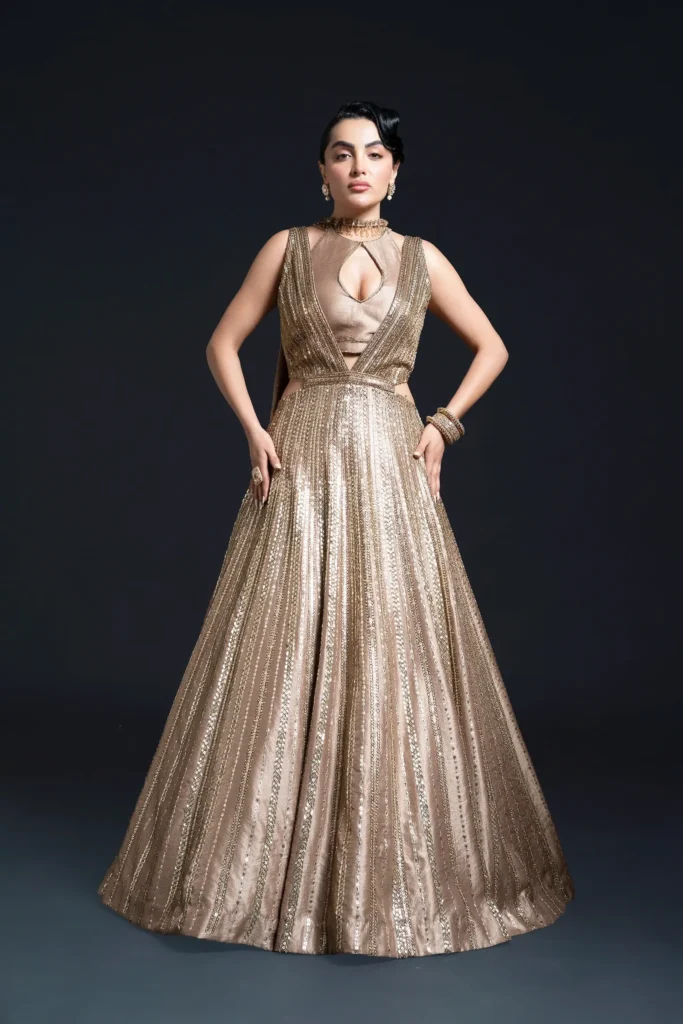
At Aahana’s by Nidhi Mehra, our pre-stitched drapes feature an integrated, contoured inner foundation with concealed side zippers, tailored waist hook extensions, and pre-aligned cascading pleats. The pallu is often architecturally anchored or styled as a pleated stole, an attached cascading cape, or a chic shoulder sash adorned with hand-embellished metallic borders. You simply step into the garment like an evening skirt, fasten the discreet clasp, sweep the pre-set pallu over your shoulder, and step out in under two minutes—flawlessly tailored to your exact proportions.
Head-to-Head Comparison: Pre-Draped vs Traditional Saree
To provide a clear, objective overview for your next shopping or bespoke styling appointment, the following comparative breakdown evaluates both styles across critical real-world parameters:
| Parameter | Pre-Draped Saree (Ready-to-Wear) | Traditional Saree (Unstitched Six Yards) |
|---|---|---|
| Dressing Time | 1 to 2 minutes. Step in, zip, hook, and you are ready. Requires zero external assistance or professional drapers. | 15 to 35 minutes. Requires meticulous pleating, height leveling, safety pin placement, and often a second person or stylist. |
| Movement & Danceability | Exceptional mobility. Pleats are machine-secured to a waistband. Many styles feature slit detailing or pant-saree cuts allowing seamless dancing. | Moderate to restrictive. Tucked pleats can shift or loosen during brisk movement, dancing, or prolonged sitting. Walking requires mindful pacing. |
| Waistline & Silhouette | Sculpted, sleek, and slimming. Eliminates bulky waist tuck-ins and cord lumps. Accentuates natural curves with body-skimming tailoring. | Voluminous around the navel. Multiple layers of tucked fabric can add slight visual bulk at the waist unless expertly draped. |
| Styling Versatility | Fixed silhouette. Crafted to be worn in a specific, intentional silhouette (e.g., ruffle drape, slit drape, dhoti drape, or mermaid tuck). | Infinite versatility. Can be redraped in dozens of regional, contemporary, or avant-garde styles across different occasions. |
| Safety Pin Dependency | Zero to minimal. Structured fastenings and reinforced hooks replace the need for clusters of safety pins. | High dependency. Typically demands 4 to 8 safety pins to secure the pallu, shoulder pleats, and waist tucks safely. |
| Travel & Destination Suitability | Travel-friendly. Packs compactly without shifting pleats. Crafted in crease-resistant fabrics like georgette, crepe, and micro-satin. | Demands careful handling. Pure heavy silks crease during travel and necessitate professional pressing and a dedicated draper on-site. |
| Occasion Alignment | Cocktail parties, Sangeets, Receptions, Destination weddings, after-parties, and contemporary festive celebrations. | Wedding rituals (Phere, Vidai), Temple ceremonies, Pujas, traditional family milestones, and formal cultural festivals. |
| Longevity Across Size Fluctuations | Moderate flexibility. Includes standard 2-4 inch inner seam allowances, but major weight fluctuations require alteration. | Lifetime flexibility. Adjusts instantly to any body size, weight change, or pregnancy stage simply by shifting the drape. |
Event-by-Event Breakdown: Which Silhouette Wins Where?
Because Indian weddings and luxury festive seasons span a dynamic spectrum of settings—from quiet spiritual rituals to electrifying midnight after-parties—choosing between these two silhouettes often comes down to the specific event on your itinerary.
1. Cocktail Nights & Black-Tie Galas
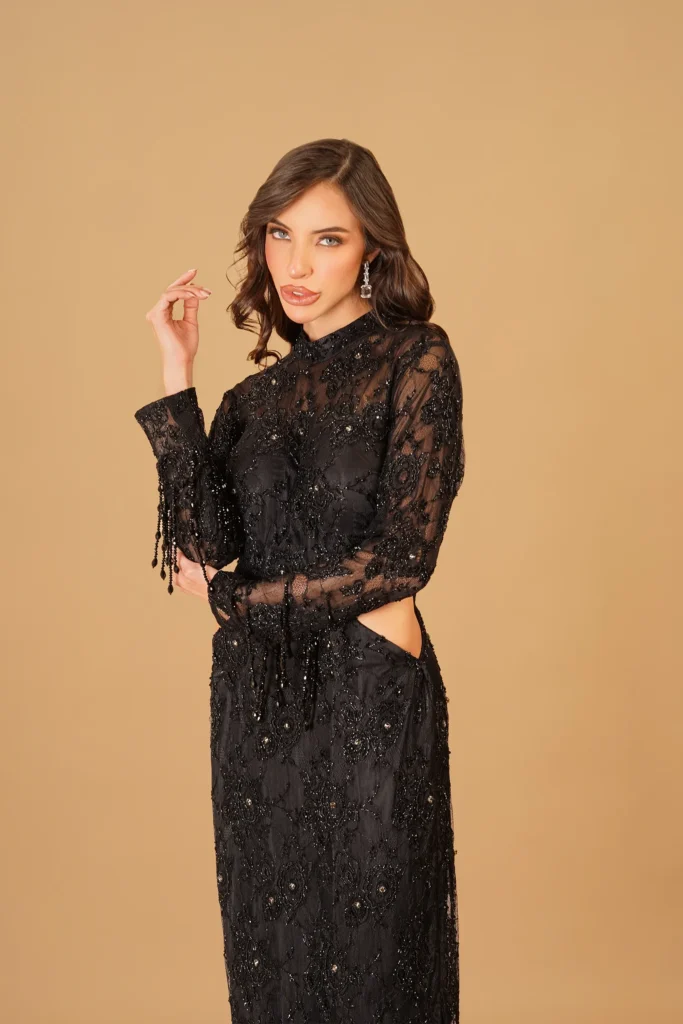
Cocktail parties are characterized by sleek mood lighting, champagne flutes, dynamic social mingling, and high-fashion aesthetics. The atmosphere demands glamorous, red-carpet-worthy sophistication that mirrors international evening wear while celebrating Indian artisanal embroidery.
Pre-Draped Saree: The Clear Victor
- Pros: Effortlessly pairs with structured corset blouses, metallic accents, and high slits; delivers an ultra-sleek, red-carpet silhouette without excess bulk.
- Cons: Cannot be repurposed into a conservative cultural drape for morning temple rituals.
Traditional Saree
- Pros: Can look breathtaking when styled in liquid chiffon or chantilly lace with a statement modern blouse.
- Cons: Floating unpinned pallus can become cumbersome while holding hors d’oeuvres or navigating crowded ballroom bars.
2. Sangeet Nights & High-Energy Dance Floors
The sangeet is undoubtedly the most energetic evening of any Indian wedding celebration. Between choreographed family dance routines, spontaneous Punjabi dhol beats, and hours of celebration, your outfit must withstand vigorous, uninhibited motion.
Pre-Draped Saree: Unrivaled Freedom
- Pros: Zero risk of pleats coming undone mid-dance; hands remain completely free; no tripping over loose hemlines or loose pallu pins.
- Cons: Requires ensuring the inner hem length perfectly matches your specific heel height beforehand.
Traditional Saree
- Pros: Beautiful dramatic swirl if you are an expert dancer accustomed to navigating six yards.
- Cons: High anxiety of someone stepping on your pleats; heavy pins can tear delicate fabrics under sudden movements.
3. Destination Weddings & Resort Celebrations
Whether your destination wedding takes place on the sun-kissed beaches of Goa, a cliffside terrace in Udaipur, or a villa in Tuscany, logistics dictate fashion. Resort wardrobes demand minimal luggage bulk, rapid dressing between back-to-back ceremonies, and independence from local styling artists.
Pre-Draped Saree: The Globetrotter’s Dream
- Pros: No need to pay exorbitant fees for on-site draping artists; slips on in hotel suites in minutes; resilient to wind gusts on coastal beaches.
- Cons: Needs careful hanging in garment bags to protect pre-set sculptural pleats.
Traditional Saree
- Pros: Flat packing profile allows multiple sarees to be packed inside one travel case.
- Cons: Unpredictable beach winds or outdoor drafts can wreak havoc on free-floating pallus; requires a skilled draper on hand.
4. Main Wedding Pheras, Pujas & Sacred Milestones
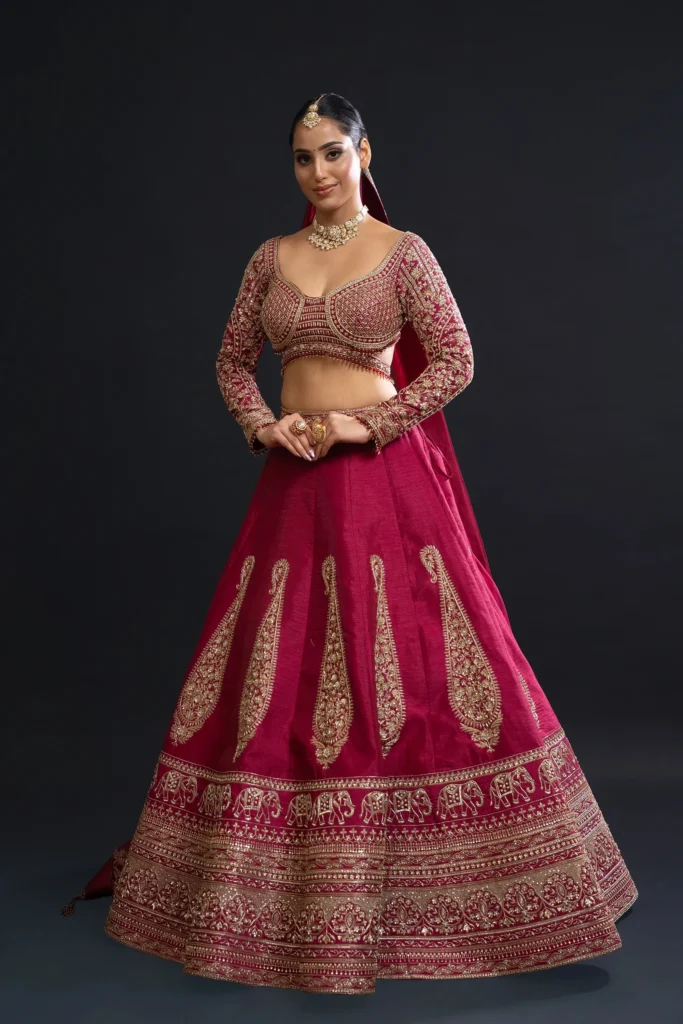
For sacred Vedic rituals, ceremonial morning pheras, haldi ceremonies, and religious housewarmings, traditional cultural sensibilities and familial rituals take center stage.
Traditional Saree: The Revered Gold Standard
- Pros: Pure handloom weaves (Banarasi, Kanjeevaram, Patola, Paithani) carry spiritual purity and cultural solemnity; timeless in family heritage portraits.
- Cons: Requires time, precision, and endurance for sitting cross-legged during long Vedic fire ceremonies.
Pre-Draped Saree
- Pros: Highly comfortable if designed in tasteful, regal fabrics like raw silk or crepe with understated zardozi.
- Cons: May feel overly westernized or unconventional for conservative elders who strictly prefer unstitched handloom yardage.
“Modern couture is not about discarding tradition; it is about liberating it. When a woman wears a saree, she should feel empowered, commanding, and sensuous—never terrified that a misstep will unravel her ensemble. At Aahana’s, our pre-draped concept sarees bridge this exact divide: giving you the breathtaking romance of the drape with the effortless precision of a tailored evening gown.”
— Nidhi Mehra, Creative Director at Aahana’s (Noida)
The Craft Behind Nidhi Mehra’s Signature Pre-Draped Sarees
Creating an exceptional ready-to-wear drape requires an entirely different tier of craftsmanship than manufacturing standard western wear or unstitched ethnic clothing. At the Aahana’s by Nidhi Mehra design studio in Noida, every concept saree is treated as an architectural sculpture.
Here are the unique hallmarks that define our bespoke designer pre draped saree collection:
- Ergonomic Waist Contouring: Unlike commercial mass-market versions that use uncomfortable elastic bands, our drapes are built upon a custom-contoured inner corset or structured basque that hugs the natural waist and hips, creating an instantly elongated, slimming silhouette.
- Fluid, Non-Bulky Fabric Selections: We hand-select high-tensile, wrinkle-resistant luxury textiles—such as heavy Italian crepes, fluid silk georgettes, micro-satins, and tissue organzas—ensuring the pleats cascade with liquid grace rather than looking rigid or artificial.
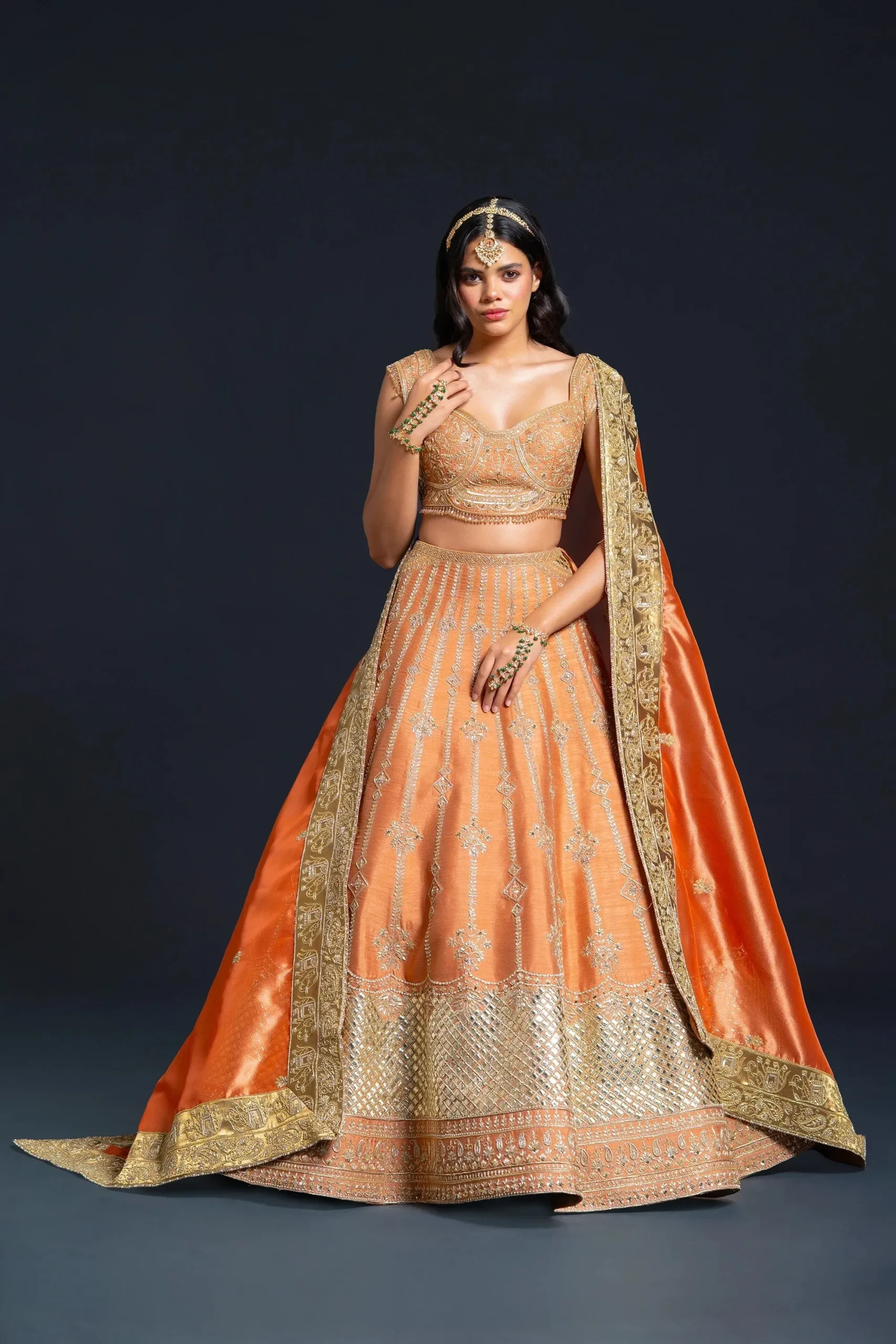
- Hand-Embroidered Zardozi & Sequin Accents: Each piece is adorned with artisanal Noida studio craftsmanship, featuring delicate tonal beadwork, cut-dana embellishments, and metallic borders that catch ambient ballroom lighting with understated luxury.
- Versatile Blouse Pairings: We balance contemporary pre-draped silhouettes with statement blouse designs—ranging from high-neck Victorian cuts and hand-embroidered bustiers to dramatic cape sleeves and sheer illusion necklines.
A 4-Point Decision Framework: How to Choose for Your Next Event
Still uncertain which path to choose for your upcoming event? Walk through this practical 4-step decision framework:
- What is your dressing window? If you have less than fifteen minutes between a busy work schedule or wedding functions to transform from casual to red-carpet ready, a pre-draped saree is an absolute lifesaver. If you have the luxury of leisurely getting ready with professional stylists, a traditional saree offers a ritualistic dressing experience.
- What does the physical environment look like? Will you be stepping onto a packed, high-energy dance floor with pulsating music, navigating grass lawns at a destination resort, or sitting comfortably in an air-conditioned banquet? For dancing and outdoor terrain, pre-stitched stability wins every time.
- What aesthetic message do you want to send? If you want to convey red-carpet chic, youthful edge, and contemporary high-fashion flair, opt for a concept pre-draped saree. If your aesthetic goal is heritage majesty, vintage nostalgia, and generational royalty, choose a handwoven six-yard classic.
- How do you feel about safety pins and petticoats? If the mere thought of pin pricks, bruised hips from tight drawstrings, and constantly checking your shoulder drape stresses you out, do not hesitate—invest in a pre-draped design that eliminates those hassles entirely.
Frequently Asked Questions (FAQs)
The core difference lies in construction and wearability. A traditional saree consists of five to nine yards of continuous, unstitched fabric requiring manual pleating, tucking into an independent petticoat, and safety-pinning. A pre-draped saree has the pleats, waistband, and pallu already stitched into a single, cohesive garment that slips on like a skirt or gown in under two minutes without requiring separate petticoats or pins.
Yes, absolutely. High-fashion designer pre-draped sarees, especially bespoke couture crafted at Aahana’s by Nidhi Mehra in Noida, are carefully tailored to replicate the natural, fluid lines and graceful fall of a masterfully hand-draped saree. In fact, pre-draped couture often provides a sleeker, sculpted waistline because it eliminates the bunching and bulky tuck-ins typical of conventional petticoats.
A pre-draped saree is by far the superior choice for high-energy sangeet nights. Because the pleats are securely stitched to an internal contoured waistband with reinforced hooks or zippers, there is zero risk of pleats coming undone or tripping over the hem while dancing. You can twirl, jump, and celebrate with total peace of mind.
Yes. Luxury couture pre-draped sarees from designers like Nidhi Mehra are crafted with generous inner seam allowances, adjustable hook closures, or concealed elasticized back panels. They can easily be adjusted up or down by 1 to 2 sizes by a professional tailor or during your fitting at the designer studio.
For destination weddings, pre-draped sarees offer significant logistical advantages. They pack compactly, rarely require professional draping artists at the resort, and are crafted from fluid, wrinkle-resistant fabrics like georgette, crepe, and organza. Traditional sarees remain favored for main ritual ceremonies where cultural heirlooms are expected.
Find Your Signature Drape at Aahana’s by Nidhi Mehra
Whether you are seeking an avant-garde pre-draped cocktail saree that turns heads across the ballroom or a timeless, hand-embroidered six-yard masterpiece for your bridal trousseau, experience the magic of bespoke craftsmanship at our designer studio in Noida, Uttar Pradesh.