Quick Summary
- Nidhi Mehra stepped away from fashion for 10 years to be present for her daughter’s childhood and formative years.
- Rather than diminishing her as a designer, motherhood deepened her understanding of her craft.
- Lessons from motherhood—slowness, attention, transformation, the long view, care economics—became AAHANA’s design philosophy.
- The brand named after her daughter Aahana symbolizes the integration of motherhood and professional excellence.
- Her comeback story resonated with 34+ media outlets, positioning AAHANA’s as a fresh voice in luxury bridal fashion.
In 2016, Nidhi Mehra made a choice that, in the fashion industry, was considered career suicide.
She was at a critical juncture. She had trained for years, understood her craft, and had begun building a professional presence. But her daughter Aahana had just been born. And she decided that the most important project she could work on was raising her.
For ten years—from 2016 to 2026—Nidhi stepped away from fashion entirely.
No side projects. No “keeping hand in.” No network maintenance. Nothing. Just motherhood.
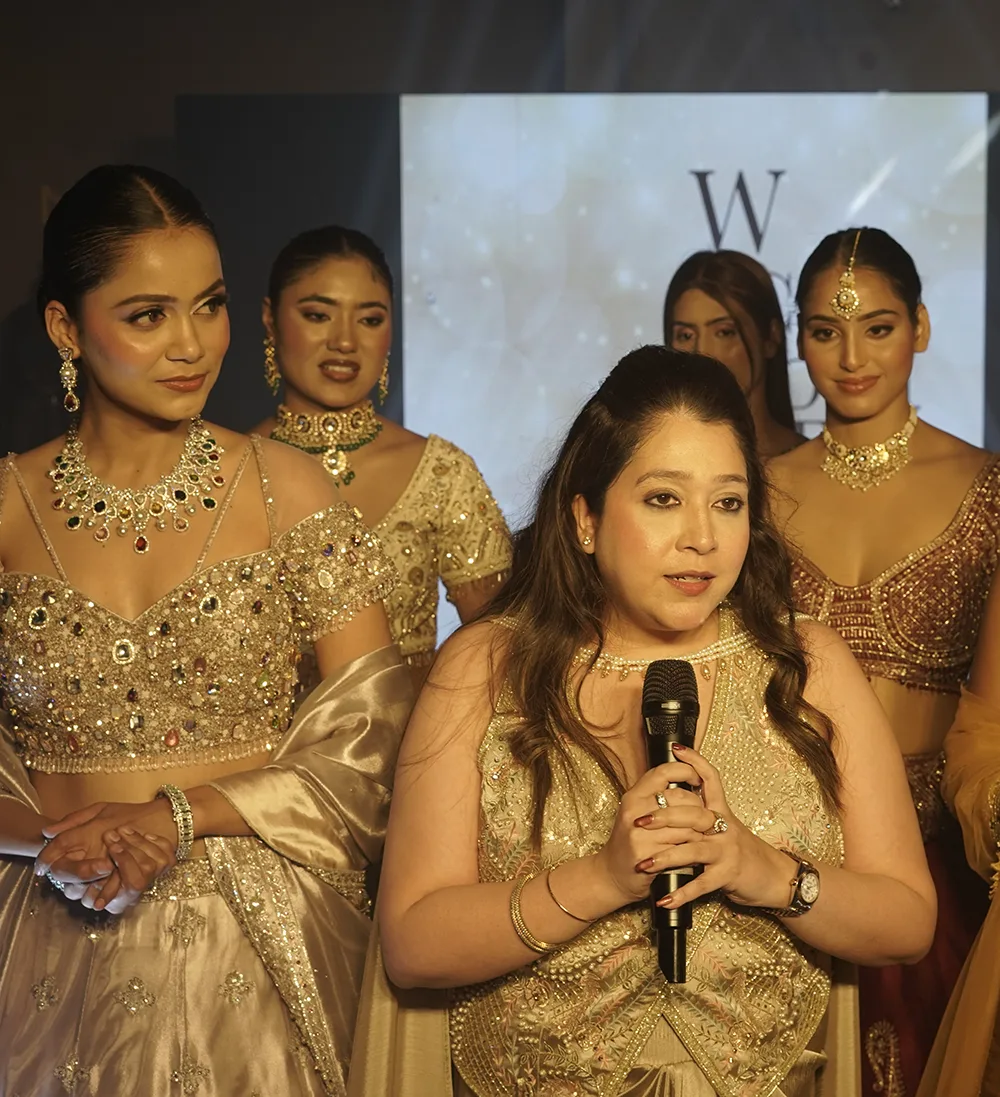
In April 2026, she stepped back into her studio. The collection she created, MOHINI, immediately resonated with an industry that had moved on without her. Within weeks, 34 media outlets had covered her comeback. Within months, she was being recognized among India’s top 10 emerging designers.
But the real story isn’t about a designer who lost a decade and came back. It’s about a designer whose decade away fundamentally transformed her approach to her craft.
The Decision: Why Nidhi Chose Motherhood
In interviews, Nidhi has spoken candidly about this choice. The fashion industry had expected her to find a way to “do both”—keep working while raising a child. This is the standard narrative: women who “have it all,” who don’t sacrifice, who prove that motherhood and career are perfectly compatible.
Nidhi chose a different narrative.
“I could have tried to do both,” she explains. “But I realized I would be doing both poorly. I would be a part-time mother and a part-time designer. Neither would get my full attention.”
This clarity is important. She wasn’t saying motherhood prevents women from having careers. She was saying that she wanted to be fully present for her daughter during these specific years.
“Ages 0 to 6 are critical for a child’s development,” she noted. “And ages 6 to 16 are when their personality and values are formed. I wanted to be there for both of those periods.”
The Pressure to Return: Industry Expectations
After five years of being away, industry colleagues began asking, “When are you coming back?”
After eight years, the question had changed: “Are you coming back?”
After ten years, most people had simply accepted that Nidhi Mehra wasn’t in fashion anymore. She had become a memory—a designer who was promising but disappeared.
The pressure to return came from multiple directions:
Professional Pressure:
– Colleagues who wondered if she was “wasting” her training
– The fashion industry’s narrative that time away = career death
– The fear that she would be permanently replaced by newer designers
Social Pressure:
– Family members asking when she’d “go back to work”
– Friends who saw her career pause as her failure
– A society that values professional status above personal choices
Financial Pressure:
– Her husband’s income supporting the family
– The knowledge that re-entry would require financial investment
– The risk that she’d invested years away only to find herself unable to restart
Personal Pressure:
– Her own doubts about whether she still “had it” as a designer
– Fear that the industry had moved on so far that she couldn’t catch up
– Uncertainty about whether her vision would still resonate
What Motherhood Taught Her: The Education of Ten Years
While away from fashion, Nidhi experienced something most fashion designers never do: a complete break from the industry’s constant churn of trends, egos, and commercial pressures.
Instead, she learned something deeper.
Lesson 1: The Value of Slowness
In fashion, speed is currency. New collections every few months. Trends changing with the seasons. Designers measured by their output.
With her daughter, Nidhi learned the opposite. A child’s development cannot be rushed. Emotional intelligence takes years to cultivate. Learning happens at its own pace.
When she returned to design, this lesson became her brand philosophy: “Six artisans, 320 hours, one bride.”
This isn’t a marketing slogan. It’s a statement that speed is not the goal. Quality is. Depth is. Taking the time to do something right.
Lesson 2: The Difference Between Attention and Time
Nidhi spent “time” with her daughter, but what she treasured was “attention.” Time you can waste. Attention is intentional presence.
In fashion, most production is time-based: “How much can we produce in X time period?” Nidhi flipped this: “How much can one designer produce if she’s giving full attention to the details?”
Each AAHANA’s piece receives dedicated, undivided attention. Not rotated among dozens of factory workers. Not overseen by project managers. Careful, thoughtful attention from six artisans who know the bride’s story and vision.
Lesson 3: Understanding Transformation
Motherhood is transformation. Your body transforms. Your mind transforms. Your identity transforms. You become responsible for another human being in a way that reshapes your entire sense of self.
This profound understanding of transformation became central to AAHANA’s brand message:
> “You’re not just buying a lehenga. You’re stepping into a transformed version of yourself. This is who you become on your wedding day.”
Lesson 4: The Long View
A parent raising a child thinks in terms of decades. “What will my daughter need to know at 5? At 10? At 18? At 30?”
Fashion typically thinks in terms of seasons. “What’s trending this fall? Next spring?”
Nidhi’s return to design involved a complete reorientation toward the long view: “I design pieces that will be beautiful in 5 years, 10 years, 20 years. Not pieces that will be dated in two seasons.”
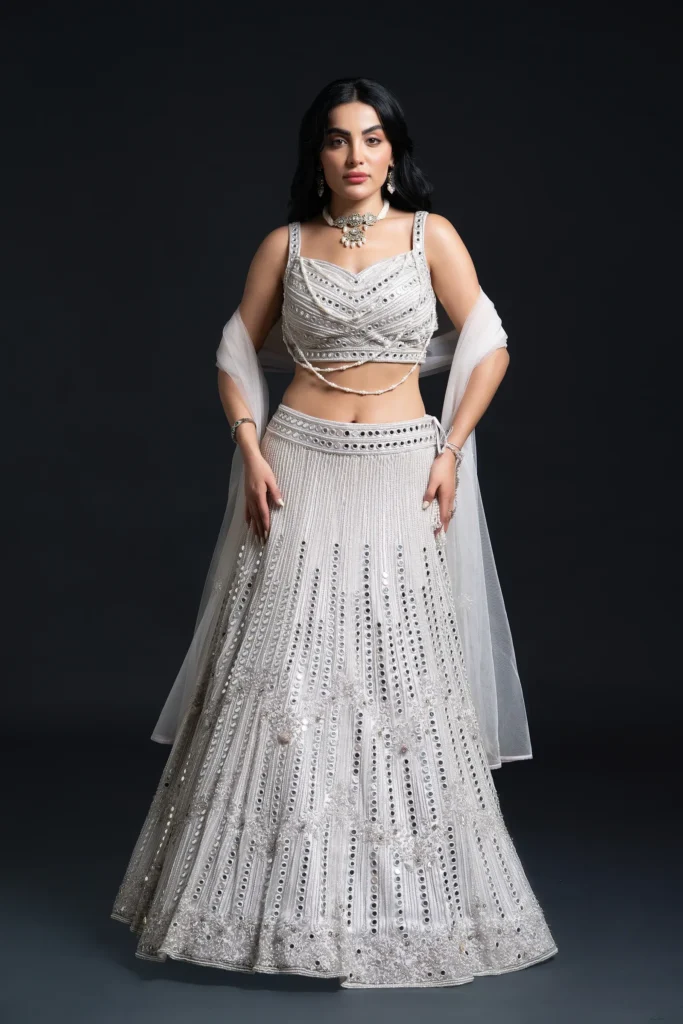
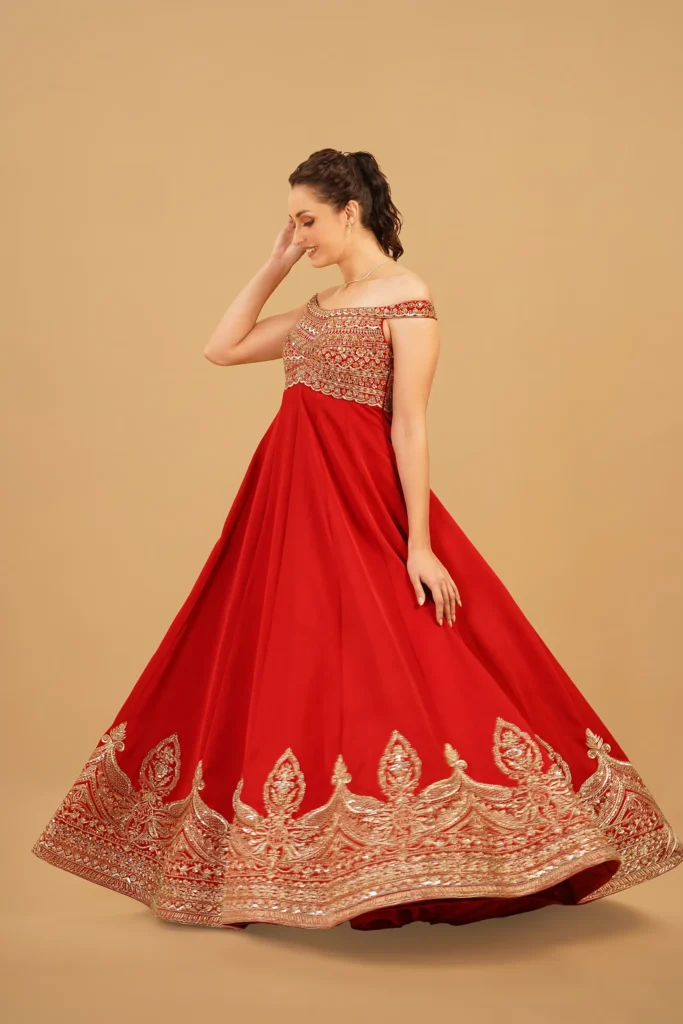
This is why AAHANA’s collection is so timeless. Pieces like the Ivory Embroidered Lehenga or Golden Anarkali feel classic, not trendy. They’ll look beautiful when the bride’s daughter is getting married.
Lesson 5: The Economics of Care
Motherhood taught Nidhi economics in a new way. When you’re responsible for another person’s wellbeing—their food, health, education, safety—you understand value differently.
You stop buying cheap things that fall apart. You invest in quality that lasts. You understand that the cheapest option is often the most expensive in the long run.
This understanding became embedded in AAHANA’s pricing and approach. The pieces cost more than fast-fashion alternatives, but they cost less than comparable designer pieces from established brands. And they last longer, work harder, and provide better value.
She also understood artisan economics. A craftsperson deserves to be paid well because their skill has taken years to develop. ₹300-500/hour isn’t excessive—it’s appropriate for expertise.
The Comeback: Why Now?
Nidhi didn’t return to fashion at a random moment. She returned when her daughter was 10 years old—old enough to be more independent, young enough that Nidhi’s presence still mattered.
But more importantly, she returned because she had something to say.
“I spent ten years watching my daughter grow,” she explained. “Watching her develop her own sense of beauty, her own preferences, her own identity. And I realized: that’s what every young woman deserves—to have the space to develop her own sense of self before stepping into marriage.”
This insight became the philosophical foundation of her comeback collection.
The MOHINI collection isn’t just beautiful clothes. It’s a statement: “A bride is not a girl. She’s a woman with her own aesthetic, her own values, her own vision. She deserves clothing that honors who she is, not what she’s expected to be.”
The Comeback Effect: Media Coverage and Industry Recognition
Within weeks of announcing AAHANA’s, Nidhi had secured coverage from 34 media outlets. This wasn’t because she had a massive marketing budget. It was because the story was compelling.
A designer returning after a decade with a philosophy rooted in motherhood and wisdom? That’s a story.
Media coverage included:
- Dailyhunt (April 15, 2026): “The Return of an Artist”
- Fashion blogs and Instagram features: Dozens of influencers and fashion bloggers featured the collection
- Wedding publications: Multiple wedding magazines highlighted the brand as a fresh voice
- Lifestyle media: Publications interested in the motherhood-to-comeback narrative
- Business media: Articles about emerging designers and women entrepreneurs
This organic coverage speaks to the authenticity of her story. It wasn’t manufactured. It emerged because the media (and public) recognized something genuine.
Design Philosophy Born From Motherhood
Every element of AAHANA’s brand reflects lessons learned from motherhood:
1. Personalization as Default
Motherhood taught Nidhi that every child is unique. What works for one child doesn’t work for another. You customize everything—sleep schedules, nutrition, learning approaches—based on the individual.
At AAHANA’s, customization is not premium—it’s standard. Every bride gets:
– Custom color options
– Personalized embroidery elements
– Fitted sizing (not standard sizes)
– Timeline customization
2. Transparency and Trust
As a parent, Nidhi believed in being transparent with her daughter. When you’re honest about your reasoning and decisions, children trust you more.
AAHANA’s operates the same way:
– Transparent about how pieces are made
– Clear about pricing and what it includes
– Honest about timelines and potential challenges
– Direct about care requirements and maintenance
3. Quality Over Quantity
Parenting teaches you that more stuff doesn’t equal better outcomes. A child needs quality food, quality sleep, quality time—not vast quantities of material possessions.
AAHANA’s rejected the model of producing 50-100 pieces per collection. Instead: fewer pieces, higher quality, more personal investment.
4. The Long-Term Relationship
Parenting isn’t transactional. It’s a long-term relationship. You invest in a child not for immediate return, but because the relationship matters beyond the transaction.
AAHANA’s operates this way. A bride who buys a piece isn’t just a customer. She’s in a relationship:
– Lifetime repair and maintenance included
– Follow-up consultations available
– Feedback and adjustments possible
– Recognition and connection with the designer
This isn’t common in fashion. But it’s common in parenting.
The Brand Named After Her Daughter
The brand is called AAHANA’s by Nidhi Mehra—literally named after Nidhi’s daughter, Aahana.
This is symbolically significant. It announces that motherhood isn’t separate from her work—it’s central to it. Her daughter isn’t a distraction from her career. She’s the foundation of it.
In a culture where women are often pressured to compartmentalize (motherhood over here, career over there), Nidhi publicly integrated them.
“My daughter is not my brand mascot,” she’s explained. “But her existence and my experience of motherhood shaped who I am as a designer.”
How Brides Respond to This Philosophy
The response from brides has been overwhelmingly positive. They recognize something authentic in AAHANA’s approach.
Comments from customers include:
– “I felt like Nidhi understood me as a person, not just a customer”
– “The customization options made me feel special, not rushed”
– “I love that I’m supporting a designer who chose to be a mother”
– “The lehenga feels like it was made specifically for me”
These comments reflect what happens when a designer brings their whole self to their work. Nidhi didn’t design these pieces as a businesswoman who happens to be a mother. She designed them as a woman who became a designer through motherhood.
The Broader Narrative: Motherhood as Professional Asset
Nidhi’s return challenges a cultural narrative: that motherhood is a career interruption, a setback, a loss.
What if it’s the opposite? What if the wisdom, patience, and clarity that come from motherhood actually make you a better professional?
This is the subversive message of AAHANA’s: motherhood isn’t a career sacrifice. It’s a career education.
Industries are slowly recognizing this. Tech companies are offering better parental leave not out of pure generosity, but because they recognize that diverse life experiences make better leaders and creators.
Nidhi Mehra is a living example of this principle. Her decade away didn’t diminish her as a designer. It deepened her.
The Broader Impact: Changing Narratives About Women
By being public about her choice to step away for motherhood, and then returning with a successful, celebrated comeback, Nidhi Mehra is changing narratives:
- Women don’t have to choose between motherhood and career
- Stepping back is not the same as stepping out
- A gap in your timeline doesn’t define your potential
- Unconventional choices (like spending ten years parenting) can lead to exceptional professional outcomes
- Personal experience is a legitimate foundation for professional excellence
For young women in fashion (and other industries), Nidhi represents a different model: one where your whole life informs your work, not one where you have to compartmentalize to succeed.
The Wedding Lehenga as Symbol
There’s something profound about the fact that Nidhi’s comeback product is the wedding lehenga—the garment worn at the moment a woman transitions into a new phase of her life.
A bride putting on an AAHANA’s lehenga isn’t just getting dressed. She’s engaging with a designer who understands transformation at a deep level. Who understands that marriage is a major life transition. Who understands that a woman should enter this transition as herself, not as a watered-down version of herself.
This is what makes AAHANA’s different. It’s not just producing beautiful clothing. It’s participating in brides’ transformations with wisdom, care, and understanding.
Lessons for Other Women
Nidhi’s journey offers lessons for women across industries:
- Your “gap” could be your greatest asset — Ten years away seemed like a career death sentence. It became her greatest asset.
- Life experience deepens craft — She didn’t need 10 more years in the fashion industry to improve. She needed 10 years living fully.
- Your values will find customers — She didn’t need to compromise her values (slow production, fair wages, personalization) to succeed. These values attracted devoted customers.
- Authenticity is your competitive advantage — In an industry crowded with brands, authenticity stands out. Her real story is more powerful than any marketing could be.
- Different timelines work — Success isn’t linear. A decade away, then a comeback, can be just as valid (maybe more valid) than constant forward motion.
Shop AAHANA’s: Invest in a Comeback Story
When you buy from AAHANA’s, you’re not just buying clothing. You’re investing in:
- A designer who returned stronger
- A brand built on motherhood wisdom
- Pieces that reflect deep understanding of women’s transformations
- Clothing that will outlast trends
- A connection with a designer who’s fully present and engaged
Contact Aahana’s by Nidhi Mehra
Showroom: A-77, Block A, Sector 4, Noida, UP 201301
Phone: +91 98990 04066
WhatsApp: +91 98990 04066
Email: care@nidhimehra.in
Shop Online Collection