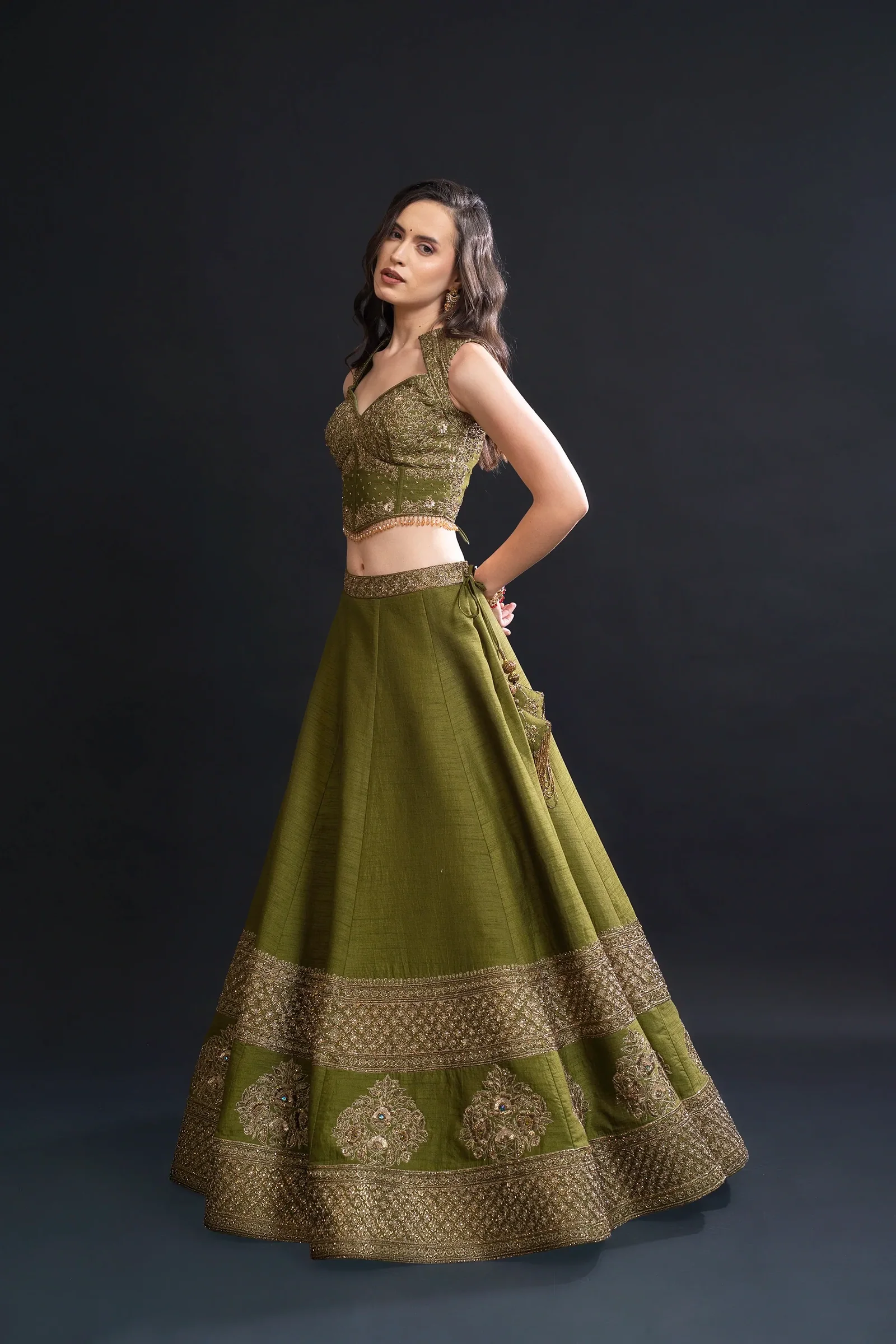
Quick answer: Designing a custom bridal lehenga follows a clear path — you begin with a consultation to share your vision, then move through design sketches, fabric and colour selection, embroidery design, precise measurements, weeks of hand-crafting, and one or two fittings before final delivery. At Aahana’s by Nidhi Mehra in Noida, the full made-to-order journey typically takes six to nine months for intricate bridal couture, and every piece is cut to you and hand-embroidered in-house. The result is a lehenga that fits only you and reflects your story, not a stock design.
Written by Nidhi Mehra, couturier and founder of Aahana’s by Nidhi Mehra — a made-to-order bridal atelier in Sector 4, Noida.
There is a particular kind of magic in watching a lehenga come into being — a saved image and a feeling slowly becoming a real, hand-embroidered piece made for you alone. Custom design can feel mysterious from the outside, so this guide opens the atelier doors and walks you through the entire journey, step by step: what happens, how long it takes, what it costs, and how to make the experience wonderful. Whether you are just beginning to dream or ready to commission, here is exactly how your vision becomes reality.
The Case for Custom — Why Design Instead of Buying Pre-Made
An off-the-rack lehenga is bought as it is and altered to approximate your fit, which means adapting yourself to the garment. A custom, made-to-order lehenga is created around you — your measurements, colours, embroidery and silhouette — so the piece fits only you and reflects your vision rather than a stock decision. For the most photographed garment of your life, and one you may keep as an heirloom, that difference is profound. Custom design also gives you creative ownership: you are not choosing from what exists, you are shaping something that does not exist yet. And because a bespoke piece is made to last and to flatter your exact frame, it delivers better fit, deeper meaning and greater long-term value than a mass-produced alternative. You can read more on why a quality bridal lehenga is worth the investment.
Finding the Right Designer
The right atelier makes the whole journey joyful, so choose carefully. Look for genuine in-house craftsmanship (real artisans, not just a reseller), made-to-order as standard, a clear design signature, transparent process and pricing, an unhurried, appointment-led experience, and direct access to the designer. Ask to see finished work or real client pieces, and notice how openly your questions are answered — hesitation is itself an answer. At Aahana’s by Nidhi Mehra, everything is hand-embroidered in our own Noida atelier, and you meet Nidhi personally through the design journey. A good designer feels like a collaborator, not a salesperson.
Step 1 — The Initial Consultation & Gathering Your Vision
Every custom lehenga begins with a conversation. During your consultation, you share your wedding, your functions, your style and the feeling you want — timeless and rooted, or modern and striking. The best way to communicate your dream is to show, not just tell: bring a mood board of saved images, colour swatches, and references (a family heirloom, a Pinterest board, even a sketch on a napkin), along with details of your venue and theme. Don’t worry about knowing exactly what you want — that is what the consultation is for. A skilled designer listens, asks the right questions, and begins translating your feeling into direction. At Aahana’s, we set aside pieces in your colours and sizes before you arrive, so you can react to real fabric and shape ideas in person during a private session.
Step 2 — Design Sketches
Once your vision is clear, it takes visual form. The designer creates sketches that capture the silhouette, neckline, sleeves, skirt flare, dupatta and the placement of embroidery. This is a collaborative stage — you review, respond and refine until the drawing feels like you. Sketches are where abstract inspiration becomes a concrete plan, and where small decisions (a deeper neckline, a fuller flare, a particular motif) are made before any fabric is cut. Take your time here; changes on paper are effortless, changes later are not. A good atelier welcomes your input at this stage rather than presenting a finished idea to approve.
Step 3 — Fabric Selection
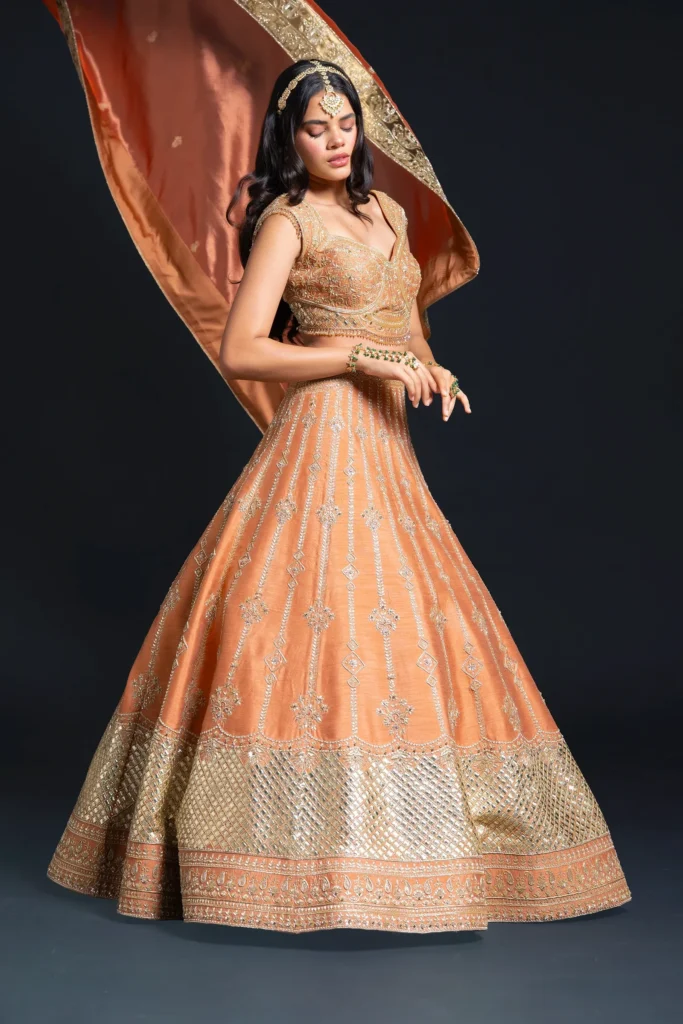
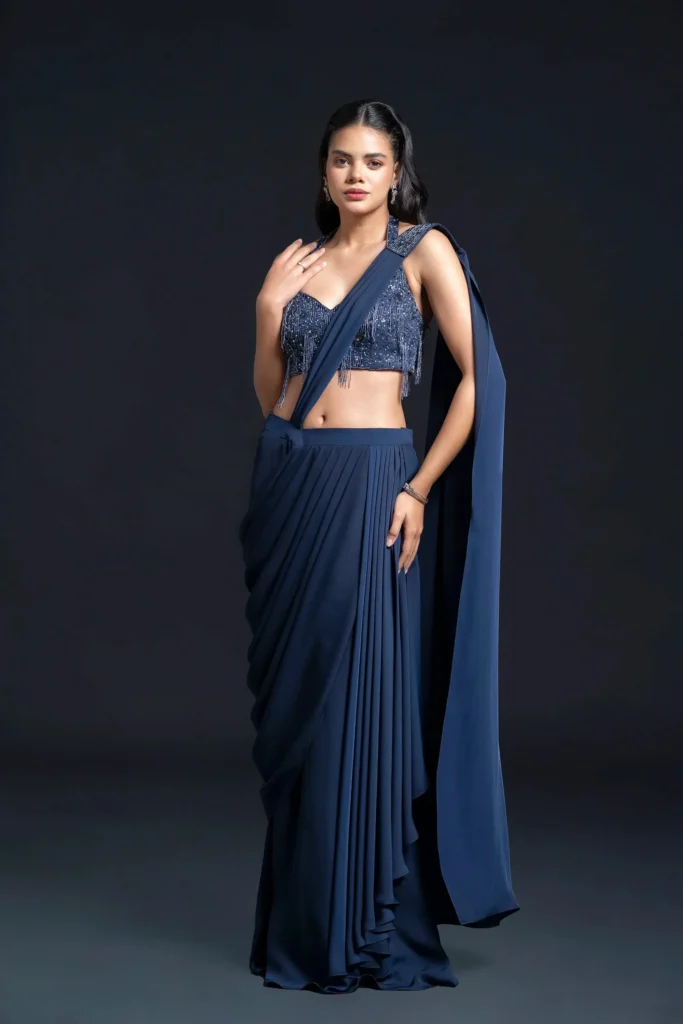
Fabric decides how a lehenga looks, moves and feels through a long day. Raw silk offers structure and a rich sheen for grand, embroidery-heavy pieces; organza and fine net create lightness and graceful flare; velvet and brocade bring winter warmth; and tissue or georgette drape softly for a more fluid look. The right fabric is chosen together with the embroidery, never separately, because the base is what allows rich hand work to sit beautifully while remaining wearable. During your session you can feel each option in person — which tells you far more than any photograph — and browse how different fabrics fall across our lehenga collection.
Step 4 — Colour Customization
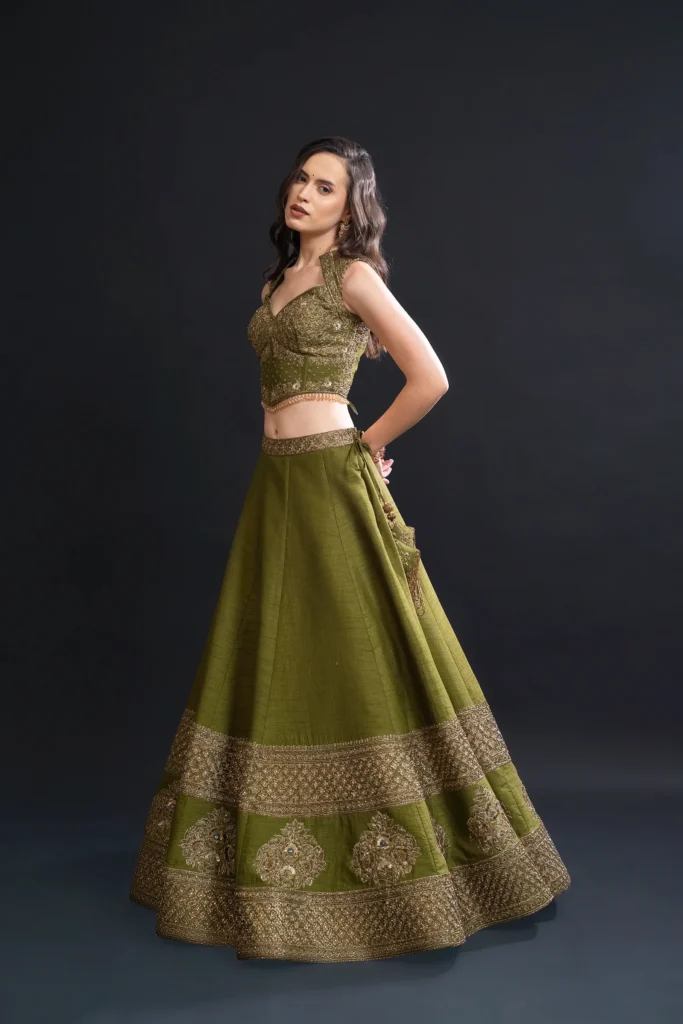
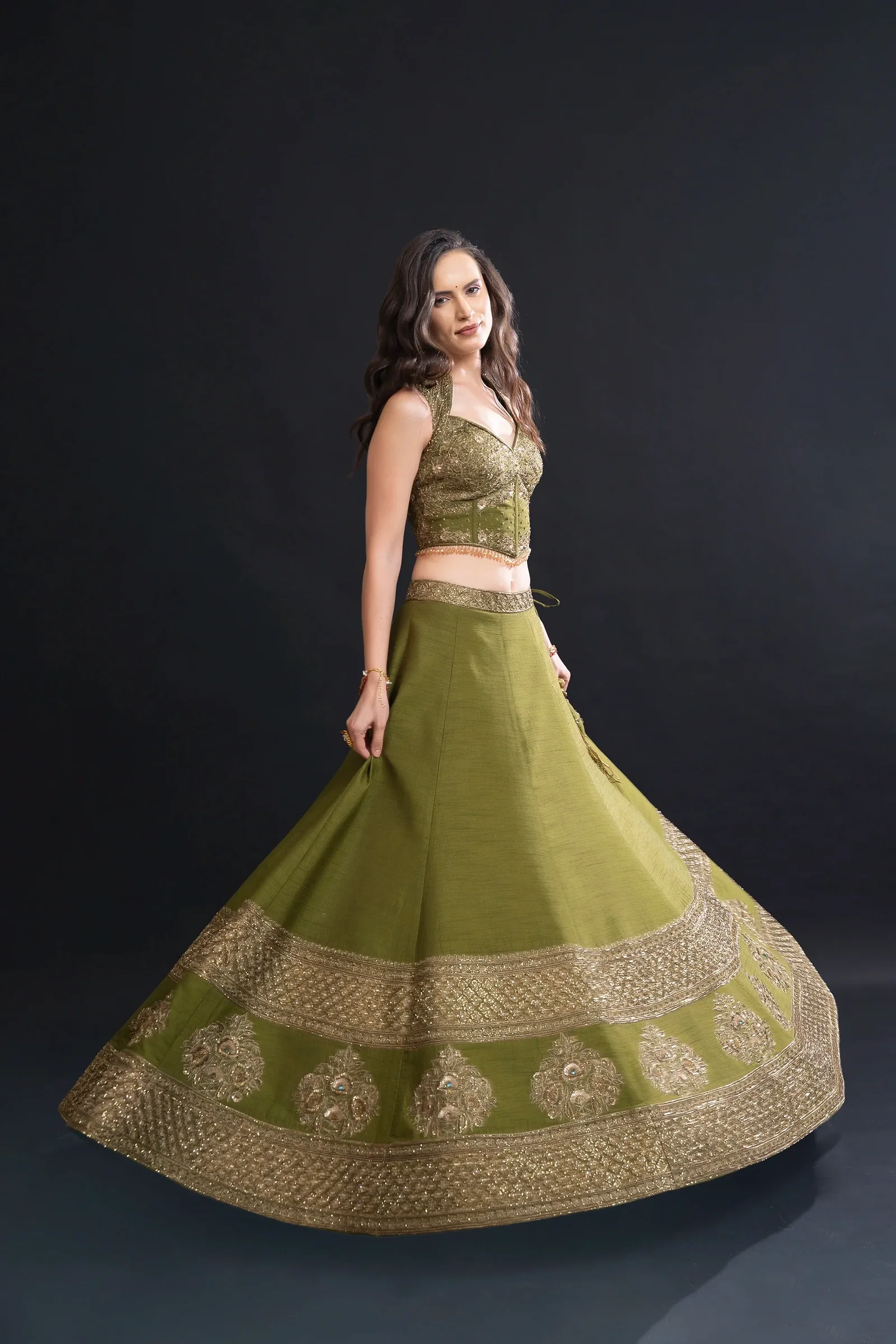
Colour is the clearest way to make a lehenga unmistakably yours. Beyond classic red, custom design lets you choose almost any shade — sage green, ivory, rust, wine, pastels or metallics — and even custom-mixed tones, ombrés and colour-blocking. When choosing, consider your skin tone, your event’s lighting (jewel tones and metallics glow under evening lamps; pastels shine in daylight), and how the colour will read in photographs for years to come. The most reliable test is holding the fabric against your face in natural light. At Aahana’s, we test shades against your frame in real fabric during your consultation, because the same colour can look entirely different in person than on a screen.
Step 5 — Embroidery Design
This is the soul of a custom lehenga. You can customise the technique — zardozi, dabka, gota patti, mirror or shisha work, pearl and crystal detailing, or three-dimensional floral applique — as well as the density and placement of the work, and even bespoke motifs meaningful to you. The artistry lies as much in restraint as in density: knowing where to concentrate the work so the eye travels the silhouette. A single intricate bridal lehenga can represent hundreds of artisan hours. If you love a particular craft, we design around it, matching embroidery to your fabric, colour and the functions you’ll wear it for — every stitch done by hand, by artisans we know by name.
Step 6 — Measurements
With the design finalised, precise measurements are taken — bust, waist, hip, height, blouse length and more — so the pattern is built from scratch for your body, not adjusted from a stock size. If your wedding is months away, this is the moment to discuss how possible weight changes will be handled at the final fitting. Accurate measurements are the foundation of that flawless, made-only-for-you fit that no off-the-rack piece can match.
Step 7 — The Making, and How Long It Takes
Now your lehenga is created. Artisans hand-embroider and construct the piece over weeks, with the embroidery alone often representing hundreds of hours. This is unhurried, skilled work — it cannot be rushed without compromising quality. As a guide, plan on eight to sixteen weeks from confirmation for substantial hand-embroidered pieces, and begin the overall journey six to nine months before your wedding for intricate bridal couture. Lighter or less embellished pieces take less time. Always build a buffer of a few weeks before your event for final alterations and cleaning. A reputable atelier gives you a realistic date at the start and honours it.
Understanding the Cost Structure
Custom pricing reflects three real things — fabric, embroidery hours and hand construction — not a brand markup alone. Heavier hand work and premium fabrics raise the price; lighter designs cost less. Because everything is bespoke, an exact quote is shared once fabric, colour and embroidery are chosen, and it’s wise to ask for the all-inclusive figure in writing, clarifying what’s included (dupatta, blouse, petticoat) and what may cost extra (heavy customisation, additional fittings). At Aahana’s by Nidhi Mehra, made-to-order pieces span a wide range, and we believe in full transparency: you should always see exactly what your investment buys before committing. Think in terms of cost-per-wear too — a timeless, heirloom-grade piece holds real long-term value.
Communication, Progress Check-ins & Mid-Process Changes
A good custom experience is a well-communicated one. Expect to stay in touch through the making — updates on progress, and honest guidance if something needs adjusting. Minor modifications are usually possible mid-process (a small change to embroidery placement, a neckline tweak), while major structural changes after work has begun are harder, which is exactly why the sketch and fabric stages matter so much. Don’t hesitate to ask for a progress check-in; a genuine atelier is happy to share where your piece stands. At Aahana’s, our Noida atelier makes it easy to stay close to your lehenga as it comes to life, and Nidhi is present through each appointment.
Step 8 — Fittings, Final Delivery & Alterations
As your lehenga nears completion, fittings perfect the fit — usually one or two, checking silhouette, blouse structure and length, then fine-tuning after any adjustments. Wear the right foundation garments and heel height to your fitting so the fall is accurate, and speak up about anything that feels off; that is precisely what fittings are for. At final delivery, you receive your complete ensemble — lehenga, blouse and dupatta — beautifully finished, with any last alterations made so it sits flawlessly. A well-run atelier also builds in a comfortable buffer before your event so there is no last-minute stress.
Care and Lifetime Support
Your relationship with a custom piece doesn’t end at delivery. A bridal lehenga is an heirloom-grade textile: dry clean only through a specialist experienced with hand embroidery, store folded with acid-free tissue or on a padded hanger, wrap in breathable cotton or muslin (never plastic), and keep away from light, humidity and perfume. Many ateliers, including Aahana’s, offer guidance on care and storage and can help with future alterations or minor repairs — so your piece can be re-worn, reinterpreted, and one day passed down. That ongoing care is part of what makes commissioning custom so worthwhile.
The Aahana’s Custom Design Process, at a Glance
- Consultation — share your vision, functions and inspiration in a private 90-minute session (in person or virtual).
- Design & sketching — silhouette, neckline, embroidery placement, refined with you.
- Fabric & colour — chosen together in real fabric, against your frame.
- Embroidery design — technique, density, placement and bespoke motifs.
- Measurements — your exact measurements taken for a made-only-for-you pattern.
- The making — hand-embroidered in our Noida atelier over weeks.
- Fittings — one or two, perfecting the fit.
- Delivery — your finished, flawless ensemble, with a buffer before your day.
Explore starting points in our bridal and lehenga collections, then bring your vision to the atelier to make it yours.
Real-World Examples
Every custom journey is different (the following are illustrative composites, not specific clients). One bride arrived with a single saved image of sage green and left with a fully realised, hand-embroidered lehenga in her exact shade, designed around a family motif. Another, marrying abroad, began entirely over video calls, approved sketches remotely, and only saw the atelier at her final fitting — her piece delivered internationally in a structured garment bag. A third wanted a modern silhouette in heritage embroidery, and we balanced a contemporary cut with traditional zardozi. Their common thread is not a colour or a shape — it is the moment they saw the finished piece and recognised themselves in it. That recognition is what the whole process exists to create.
Key Takeaways
- Custom means made for you — your measurements, colours, embroidery and silhouette, not a stock design.
- The journey flows through consultation → sketches → fabric & colour → embroidery → measurements → making → fittings → delivery.
- Show, don’t just tell — bring a mood board, references, venue and theme to your consultation.
- Plan six to nine months ahead for intricate bridal couture; build a buffer before your event.
- Cost reflects fabric + embroidery hours + hand construction — ask for an all-inclusive quote in writing.
- Minor changes are possible mid-process; lock the big decisions at the sketch and fabric stage.
- A custom piece comes with care guidance and lasting support, ready to become an heirloom.
Frequently Asked Questions
How long does it take to design a custom bridal lehenga?
Plan on eight to sixteen weeks of making for substantial hand-embroidered pieces, and begin the overall journey six to nine months before your wedding for intricate bridal couture. Lighter pieces take less time. Always keep a buffer of a few weeks before your event for final fittings and cleaning.
How much does a custom lehenga cost?
Pricing reflects fabric, embroidery hours and hand construction rather than a brand markup. Heavier hand work and premium fabrics cost more. Because every piece is bespoke, an exact, all-inclusive quote is shared once your fabric, colour and embroidery are chosen.
Can I make changes once the design has started?
Minor modifications — a small embroidery adjustment or a neckline tweak — are usually possible mid-process. Major structural changes after work has begun are difficult, which is why the sketch and fabric stages are the time to finalise the big decisions.
How do I communicate my vision to the designer?
Show, don’t just tell. Bring a mood board of saved images, colour references, and details of your wedding venue and theme, plus any meaningful references such as a family heirloom. You don’t need every answer — a good designer will guide you from a feeling to a finished design.
Do you offer custom design for brides outside Noida?
Yes. While our atelier is in Sector 4, Noida, we work with brides across Delhi NCR and internationally through in-person and virtual consultations, coordinating measurements and fittings remotely, with nationwide and worldwide delivery.
About the Author
Nidhi Mehra is a fashion designer and the founder of Aahana’s by Nidhi Mehra, a made-to-order luxury bridal atelier in Sector 4, Noida. She and her artisans hand-embroider every piece in-house, and she personally guides each bride through the custom design journey. She writes on Indian bridal couture, craftsmanship and design.
Contact Aahana’s by Nidhi Mehra
- Showroom: A-77, Block A, Sector 4, Noida, UP 201301
- Phone: +91 98990 04066
- WhatsApp: wa.me/919899004066
- Email: care@nidhimehra.in
- Book a session: nidhimehra.in/pages/book-a-bridal-session