Indian fashion is deeply connected to its rich textile heritage. Across generations, artisans have developed intricate embroidery techniques that transform ordinary fabrics into works of art. Among these traditional crafts, mirror work, also known as Shisha embroidery, remains one of the most distinctive and visually striking forms of Indian embellishment.
Small pieces of reflective material are carefully secured to fabric and surrounded by decorative stitches, creating an interplay of texture, light and movement. Although the technique has ancient roots, contemporary designers continue to reinterpret Shisha embroidery for modern bridal lehengas, sarees, blouses, jackets and occasion wear.
What Is Mirror Work or Shisha Embroidery?
Shisha embroidery is a traditional Indian embroidery technique in which small mirrors or reflective pieces are attached to fabric using decorative stitches. The mirrors catch and reflect light, giving the garment a distinctive sparkle without relying entirely on metallic embellishments.
The technique can range from delicate and understated detailing to elaborate patterns covering large sections of a garment. The final appearance depends on the size and shape of the mirrors, the embroidery surrounding them and the fabric on which the work is created.
The Ancient Roots of Shisha Embroidery
Mirror embroidery has been associated with several Indian textile traditions, particularly in regions known for vibrant folk embroidery and handcrafted textiles. Over time, different communities developed their own approaches to mirror placement, stitch patterns, colours and motifs.
Traditional Shisha work was often used to decorate clothing, household textiles and ceremonial garments. Its reflective quality also contributed to the colourful visual identity of regional Indian dress.
How Traditional Mirror Work Is Created
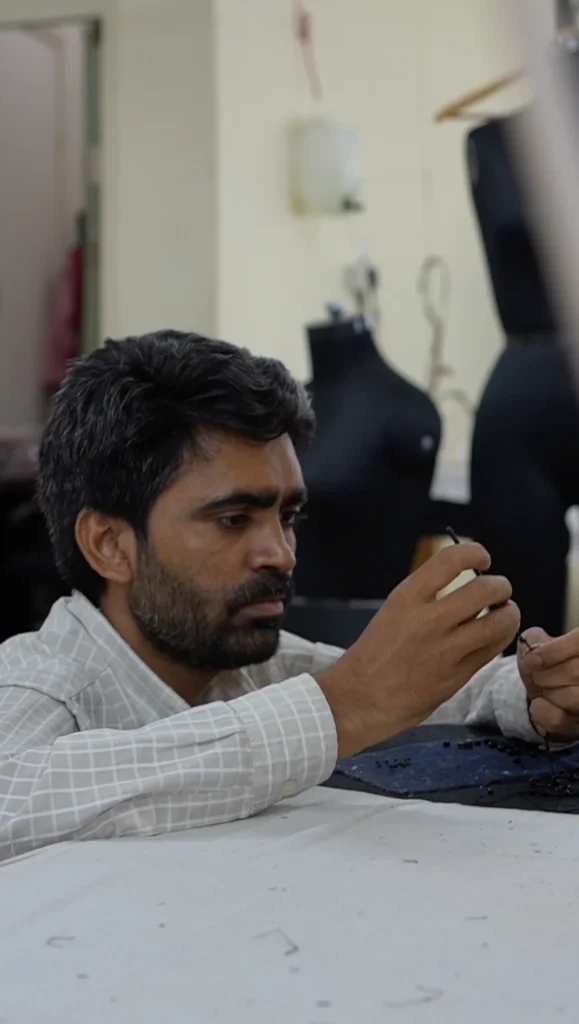
Creating detailed Shisha embroidery requires patience and precision. The reflective pieces need to be positioned carefully before being secured with surrounding stitches.
- The fabric is prepared and the design is planned.
- Mirror pieces are selected according to the desired pattern.
- The mirrors are positioned on the fabric.
- Decorative stitches are worked around the edges.
- Additional embroidery is added to complete the motif.
- The finished fabric is inspected for consistency and durability.
Depending on the complexity of the design, the process can require considerable time and skilled craftsmanship.
Why Mirror Work Creates a Unique Visual Effect
The defining feature of Shisha embroidery is its interaction with light. As the wearer moves, the mirrors catch light from different directions, creating subtle flashes across the garment.
This quality makes mirror work particularly effective for celebrations and evening events. It can add dimension to an outfit without requiring the entire garment to be covered in heavy embellishment.
Mirror Work in Modern Bridal Lehengas
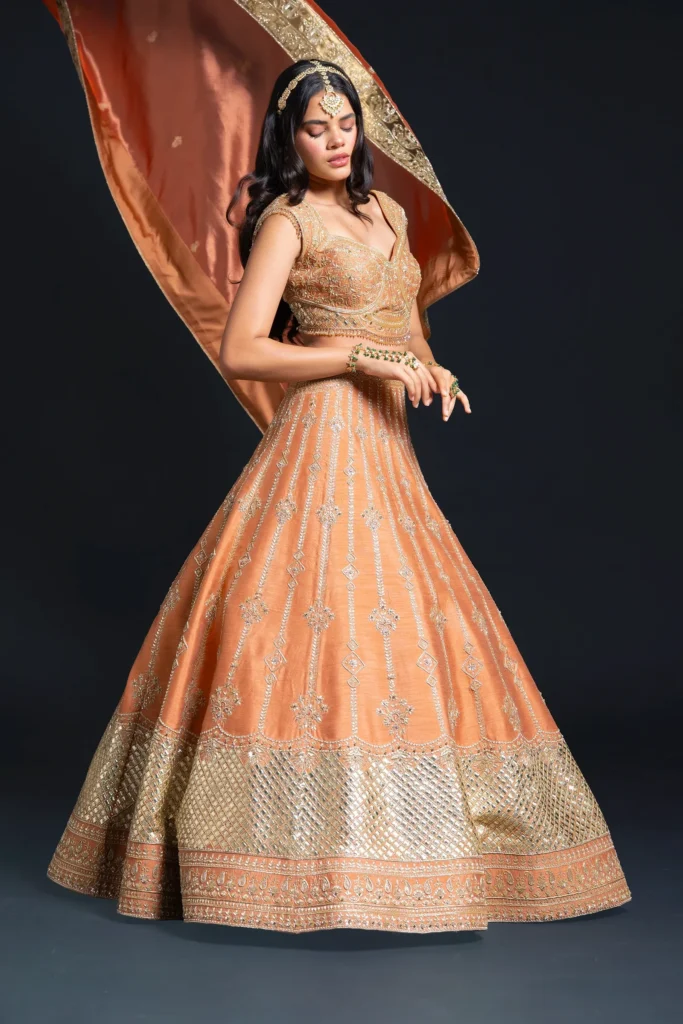
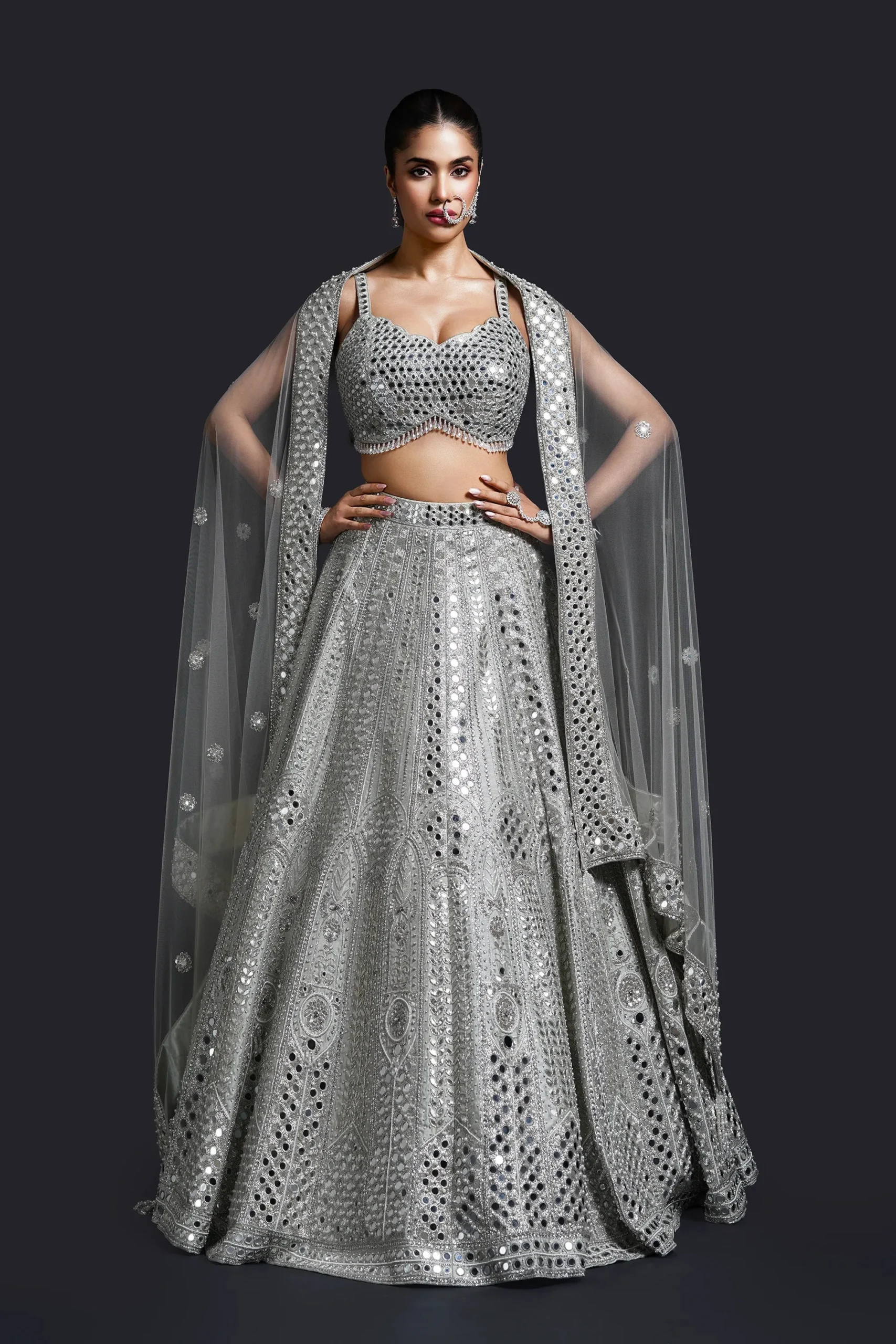
Contemporary bridal fashion has brought traditional mirror work into new silhouettes and colour palettes. Designers are combining Shisha embroidery with modern lehenga structures, statement blouses, contemporary dupattas and sophisticated styling.
Instead of using mirror work exclusively in colourful folk-inspired designs, modern couture can incorporate it alongside tonal embroidery, metallic details and delicate craftsmanship.
Image suggestion: Use a close-up image showing mirror work and surrounding embroidery on a bridal lehenga.
Image ALT: Mirror work Shisha embroidery on a luxury bridal lehenga
Mirror Work Bridal Blouses
A statement blouse can be an excellent way to incorporate Shisha embroidery into a bridal look. Mirrors can be arranged around the neckline, sleeves, back or bodice to create a distinctive focal point.
For brides who prefer a more understated look, small mirrors can be used selectively rather than covering the entire blouse. This creates a refined interpretation of a traditional craft.
Using Shisha Embroidery With Contemporary Colours
Traditional mirror work is often associated with vibrant colours, but contemporary designers are experimenting with more sophisticated palettes.
- Ivory and gold
- Blush pink and silver
- Deep maroon and antique gold
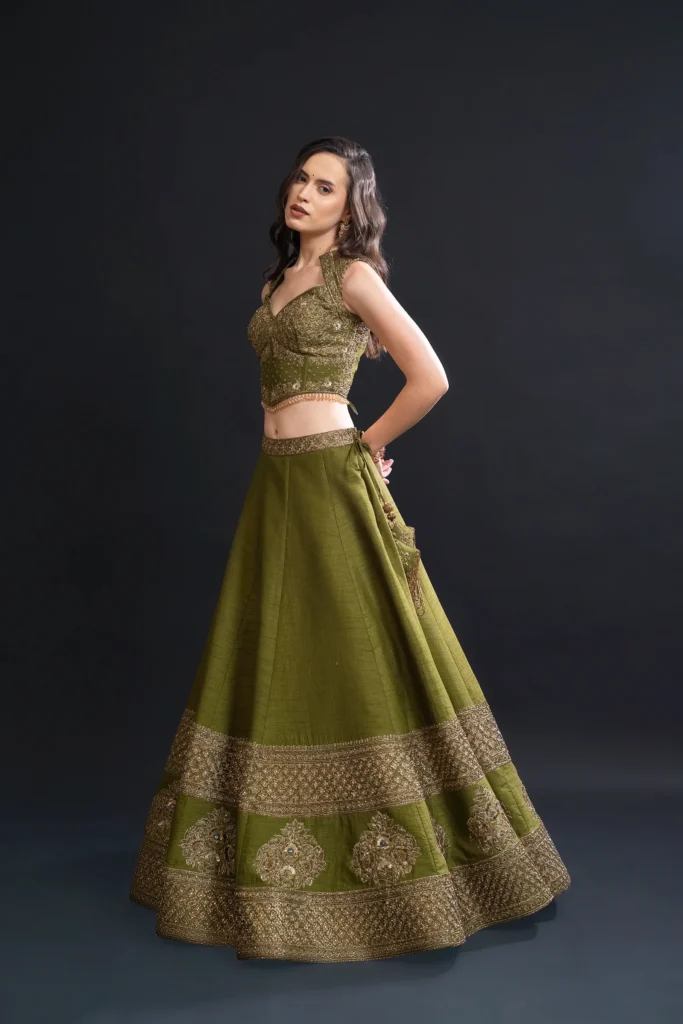
- Emerald green and metallic accents
- Champagne and ivory
- Classic red with gold detailing
- Black with silver embellishment
These combinations allow the traditional technique to work within both classic and modern bridal aesthetics.
Mirror Work Beyond the Bridal Lehenga
Shisha embroidery is not limited to bridal lehengas. The technique can be incorporated into several forms of Indian and contemporary fashion.
- Designer sarees
- Bridal blouses
- Dupattas
- Lehenga skirts
- Contemporary jackets
- Indo-Western outfits
- Festive occasion wear
This versatility allows designers to reinterpret traditional embroidery according to the occasion and the personality of the wearer.
Mirror Work for Sangeet and Mehendi Celebrations
Sangeet and Mehendi celebrations are ideal settings for mirror embroidery. These events are naturally associated with colour, music and movement, allowing reflective details to become part of the celebration.
A mirror-work lehenga or blouse can create an energetic appearance while remaining rooted in Indian textile traditions. Lighter fabrics and strategically placed embellishment can also help maintain comfort during long celebrations.
Mirror Work for the Modern Bride
Today’s brides are increasingly interested in meaningful fashion choices. Rather than simply selecting an outfit because it is heavily embellished, many brides want to understand the craftsmanship and story behind the garment.
Traditional techniques such as Shisha embroidery provide an opportunity to connect contemporary bridal fashion with India’s rich craft heritage.
Combining Mirror Work With Other Embroidery Techniques
Mirror work does not have to be used alone. It can be combined with other forms of embroidery to create depth and contrast.
For example, mirrors can be surrounded by delicate Resham embroidery, metallic threadwork, sequins or traditional embellishment. The combination creates a layered surface where different textures respond to light in different ways.
Mirror Work and Luxury Couture
Luxury couture is often defined by the attention given to small details. When traditional mirror work is incorporated thoughtfully into a couture garment, each individual element contributes to the overall design.
The placement of mirrors, the spacing between motifs, the surrounding embroidery and the choice of fabric can all influence how sophisticated the final garment appears.
For brides interested in handcrafted Indian fashion, Nidhi Mehra brings together traditional craftsmanship and contemporary bridal design to create elegant couture for modern celebrations.
How to Style a Mirror Work Bridal Outfit
Because mirror embroidery naturally catches attention, accessories should be selected thoughtfully. A balanced styling approach allows the embroidery to remain the centre of the look.
- Choose jewellery that complements rather than competes with the mirrors.
- Keep makeup sophisticated and coordinated with the outfit.
- Use a simple dupatta drape if the lehenga is heavily embellished.
- Consider metallic footwear that works with the embroidery.
- Choose hairstyles that allow statement blouse or neckline details to remain visible.
How to Care for Mirror Work Embroidery
Mirror embroidery requires careful handling because the reflective elements and surrounding threadwork can be delicate.
- Store the outfit in a breathable garment bag.
- Avoid folding directly over heavily embellished areas.
- Keep the garment away from excessive moisture.
- Do not wash delicate mirror-work couture at home.
- Use professional cleaning when required.
- Handle the garment carefully while wearing and storing it.
Why Traditional Craftsmanship Still Matters
Fashion trends may change, but traditional craftsmanship continues to give Indian couture its distinctive identity. Techniques such as Shisha embroidery preserve knowledge that has been passed between generations while allowing modern designers to create new interpretations.
The result is a form of fashion that feels both familiar and contemporary. A modern bridal lehenga can feature a centuries-old craft while using a completely contemporary silhouette and styling approach.
Frequently Asked Questions
What is Shisha embroidery?
Shisha embroidery is a traditional decorative technique in which small mirrors or reflective pieces are secured to fabric using embroidery stitches.
Is mirror work suitable for bridal lehengas?
Yes. Mirror work can add texture, movement and subtle sparkle to bridal lehengas, particularly for Mehendi, Sangeet and contemporary wedding looks.
Can mirror work be used on sarees?
Yes. Designers can incorporate Shisha embroidery into sarees, blouses, borders and dupattas to create both traditional and contemporary looks.
Is mirror work only suitable for colourful outfits?
No. Modern interpretations can use mirror embroidery with ivory, champagne, blush, maroon, emerald and other sophisticated colour palettes.
How should a mirror-work bridal lehenga be stored?
Store it in a breathable garment bag in a cool, dry place and avoid excessive pressure on areas containing mirrors or delicate embroidery.
Final Thoughts
Mirror work and Shisha embroidery represent the remarkable ability of Indian craftsmanship to remain relevant across generations. What began as a traditional decorative technique continues to inspire modern bridal fashion through new colours, silhouettes and styling ideas.
For the modern bride, mirror embroidery can offer more than sparkle. It brings texture, movement, craftsmanship and a connection to India’s rich textile heritage into a contemporary wedding wardrobe.
Explore the Nidhi Mehra Bridal Collection to discover handcrafted couture that brings together traditional inspiration and contemporary bridal elegance.