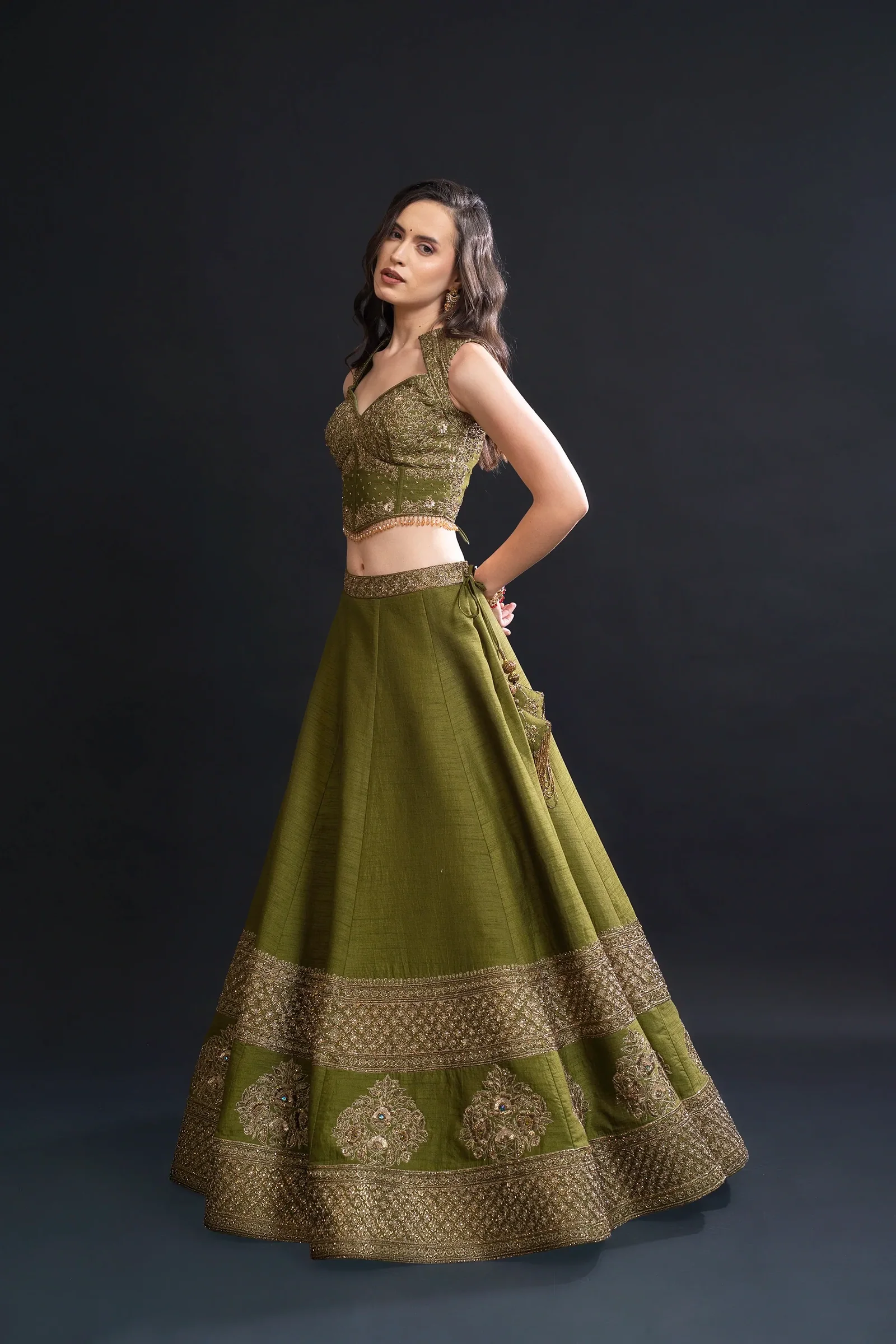
A bridal lehenga is more than a wedding outfit. It is often one of the most personal pieces of clothing a bride will ever wear. From the colour and fabric to the embroidery, silhouette and finishing details, every element can reflect a bride’s personality, heritage and vision for her wedding day.
For brides who want something truly personal, a custom lehenga offers the opportunity to transform an idea into a one-of-a-kind couture ensemble. But what actually happens between the first inspiration and the finished lehenga? The custom design process involves several carefully planned stages, each contributing to the final look.
What Is a Custom Bridal Lehenga?
A custom bridal lehenga is designed and developed according to the individual preferences, measurements and requirements of a bride. Unlike a standard ready-to-wear outfit, the design can be adapted to suit the bride’s preferred silhouette, colours, fabrics, embroidery and styling.
The process allows the bride and designer to collaborate from the early concept stage through fittings and final finishing. This makes the finished outfit more personal and can also provide a more precise fit.
Step 1: Defining Your Bridal Vision
The first step is understanding what the bride wants her wedding outfit to communicate. Some brides imagine a traditional red lehenga with intricate embroidery, while others may prefer ivory, pastel, jewel tones or a contemporary colour combination.
Before the design begins, it can be helpful to collect inspiration from wedding photographs, fashion editorials, embroidery details, historical textiles and favourite silhouettes.
During a consultation, the designer can discuss these references with the bride and identify the elements that can be incorporated into the final design.
Step 2: Choosing the Silhouette
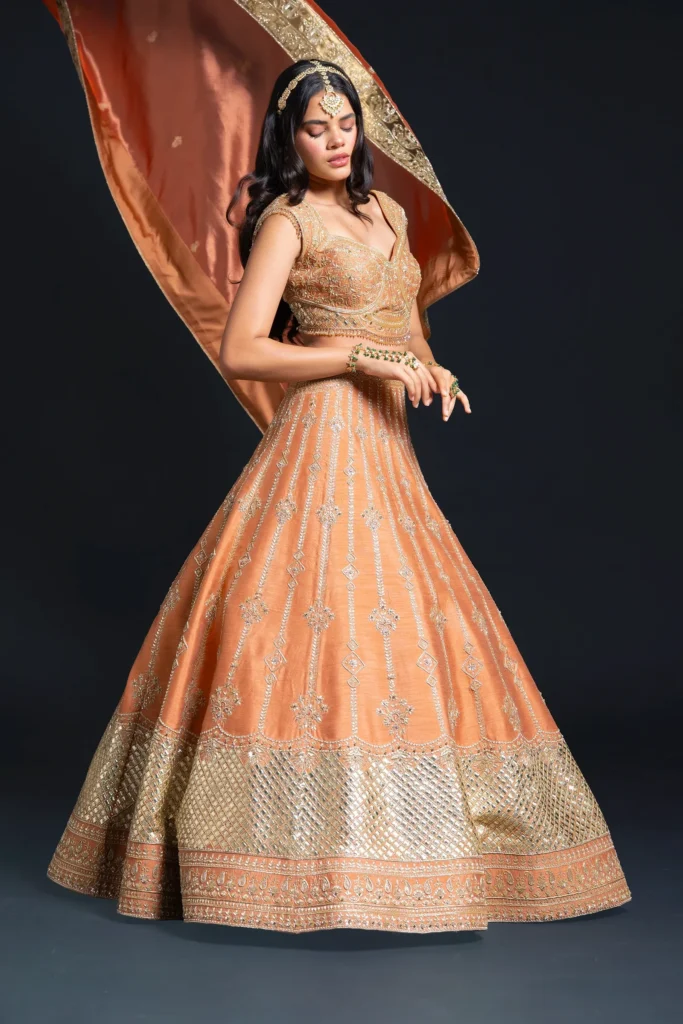
The silhouette determines the overall structure and movement of the lehenga. A bride may prefer a traditional flared lehenga, an A-line silhouette, a more structured skirt or another contemporary interpretation.
The right silhouette should complement the bride’s proportions while also considering the wedding venue, ceremony and level of movement required during the celebrations.
- A-line lehenga for a graceful and versatile silhouette
- Flared lehenga for a dramatic bridal statement
- Structured silhouettes for a contemporary appearance
- Lightweight silhouettes for outdoor or destination weddings
Step 3: Selecting the Fabric
Fabric has a major influence on how a lehenga looks and feels. It affects the fall, movement, weight and overall finish of the outfit.
Depending on the design and season, options may include silk, velvet, organza, tissue, georgette and other premium textiles.
For example, velvet can create a rich and regal appearance for winter weddings, while organza and lightweight fabrics may be more suitable for warm-weather celebrations.
Step 4: Deciding the Colour Palette
Colour is one of the most visible elements of a bridal lehenga. Traditional red continues to be an iconic bridal choice, but modern brides are also experimenting with ivory, champagne, blush, maroon, emerald, pink and other sophisticated combinations.
The colour palette can be selected according to the bride’s personal style, jewellery, wedding décor and the overall mood of the celebration.
Step 5: Creating the Embroidery Concept
Embroidery is often what gives a bridal lehenga its distinctive character. A custom design can incorporate different techniques and motifs depending on the desired aesthetic.
Traditional craftsmanship such as Zardozi, Dabka, Resham, sequins and other detailed embellishment techniques can be used to create depth and texture.
The placement of embroidery is just as important as the embroidery itself. A thoughtful design can balance heavily embellished areas with quieter sections, allowing the silhouette and craftsmanship to work together.
Step 6: Designing the Blouse
The blouse is an important part of the overall bridal look and offers considerable scope for customization. Neckline, sleeve length, back design, embroidery and finishing can all influence the final appearance.
Some brides prefer classic traditional blouses, while others choose contemporary cuts, statement backs, full sleeves or more minimal designs.
The blouse should complement the lehenga rather than compete with it, creating a cohesive overall ensemble.
Step 7: Planning the Dupatta
A bridal dupatta can completely change the appearance of a lehenga. The fabric, border, embroidery and draping style should therefore be considered during the design process rather than treated as an afterthought.
Some brides prefer a heavily embroidered dupatta for a traditional look, while others may choose a lighter second dupatta for additional styling options.
Step 8: Measurements and Initial Fitting
Once the main design direction has been finalized, accurate measurements become essential. A custom lehenga is created around the bride’s individual proportions rather than a standard size chart.
The initial fitting allows the designer and bride to assess the silhouette, blouse fit, waist placement and overall proportions. Adjustments can then be made before the final finishing stage.
Step 9: Craftsmanship and Embroidery
This is where the concept begins to take physical form. Skilled artisans work on embroidery, embellishments and finishing according to the approved design.
Depending on the complexity of the design, handcrafted details can require significant time and precision. The quality of this stage plays an important role in determining the final appearance of the couture piece.
Step 10: Final Fittings and Alterations
Custom couture typically involves more than one fitting. Subsequent fittings allow the designer to make precise adjustments and ensure that the outfit sits comfortably and looks balanced from every angle.
These final alterations can include adjustments to the blouse, skirt waist, length, sleeves, neckline and dupatta styling.
Step 11: Final Styling
The finished lehenga is only one part of the bridal look. Jewellery, footwear, hairstyle, makeup and dupatta draping all contribute to the final appearance.
A professional styling consultation can help bring these elements together while ensuring that the outfit remains the focal point.
Step 12: The Finished Custom Lehenga
After the design, craftsmanship and fitting stages are complete, the final lehenga becomes a reflection of the original vision. Every detail, from the fabric and embroidery to the silhouette and finishing, has been considered specifically for the bride.
For brides looking for a personalized couture experience, Nidhi Mehra offers handcrafted bridal fashion with an emphasis on bespoke design, detailed craftsmanship and personalized styling.
How Long Does a Custom Lehenga Take?
The timeline for a custom bridal lehenga depends on the complexity of the design, amount of embroidery, fabric selection and customization requirements.
Because couture involves design development, craftsmanship and fittings, brides should ideally begin the process several months before their wedding. Starting early provides enough time for thoughtful design decisions and any necessary alterations.
Why Choose a Custom Lehenga?
There are several reasons brides choose custom couture over ready-to-wear designs.
- Personalized design
- Individual measurements
- Choice of colours and fabrics
- Customized embroidery
- Unique blouse design
- Personalized styling
- A more distinctive bridal experience
Tips for Planning Your Custom Bridal Lehenga
- Start the design process several months before the wedding.
- Collect inspiration images before your first consultation.
- Be clear about your preferred colours and overall aesthetic.
- Consider your wedding venue and season when selecting fabrics.
- Prioritize comfort alongside visual appeal.
- Allow sufficient time for multiple fittings.
- Coordinate the lehenga with your jewellery and bridal accessories.
Frequently Asked Questions
Can I completely customize my bridal lehenga?
Custom bridal couture can allow personalization of the silhouette, colour, fabric, embroidery, blouse, dupatta and other design details, depending on the designer and the chosen design.
How early should I start designing my bridal lehenga?
Starting several months before the wedding is recommended. A longer timeline allows room for design development, handcrafted embroidery, fittings and alterations.
Is a custom lehenga more comfortable than a ready-made lehenga?
A custom lehenga can provide a more personalized fit because it is developed around the bride’s individual measurements and preferences. Proper fittings are still essential for achieving the best result.
Can I bring inspiration pictures to a bridal consultation?
Yes. Inspiration images can help communicate preferred colours, silhouettes, embroidery styles and overall aesthetic to the designer.
Final Thoughts
Designing a custom bridal lehenga is a journey that begins with an idea and ends with a garment created specifically for one bride. From selecting the silhouette and fabric to developing embroidery and completing final fittings, every stage contributes to the finished couture experience.
The beauty of custom bridal fashion lies in its ability to turn personal preferences into something tangible and memorable. For brides who want an outfit that feels uniquely theirs, bespoke couture can offer the perfect combination of craftsmanship, individuality and timeless elegance.
Explore the Nidhi Mehra Bridal Collection to discover handcrafted bridal couture designed for modern Indian brides.