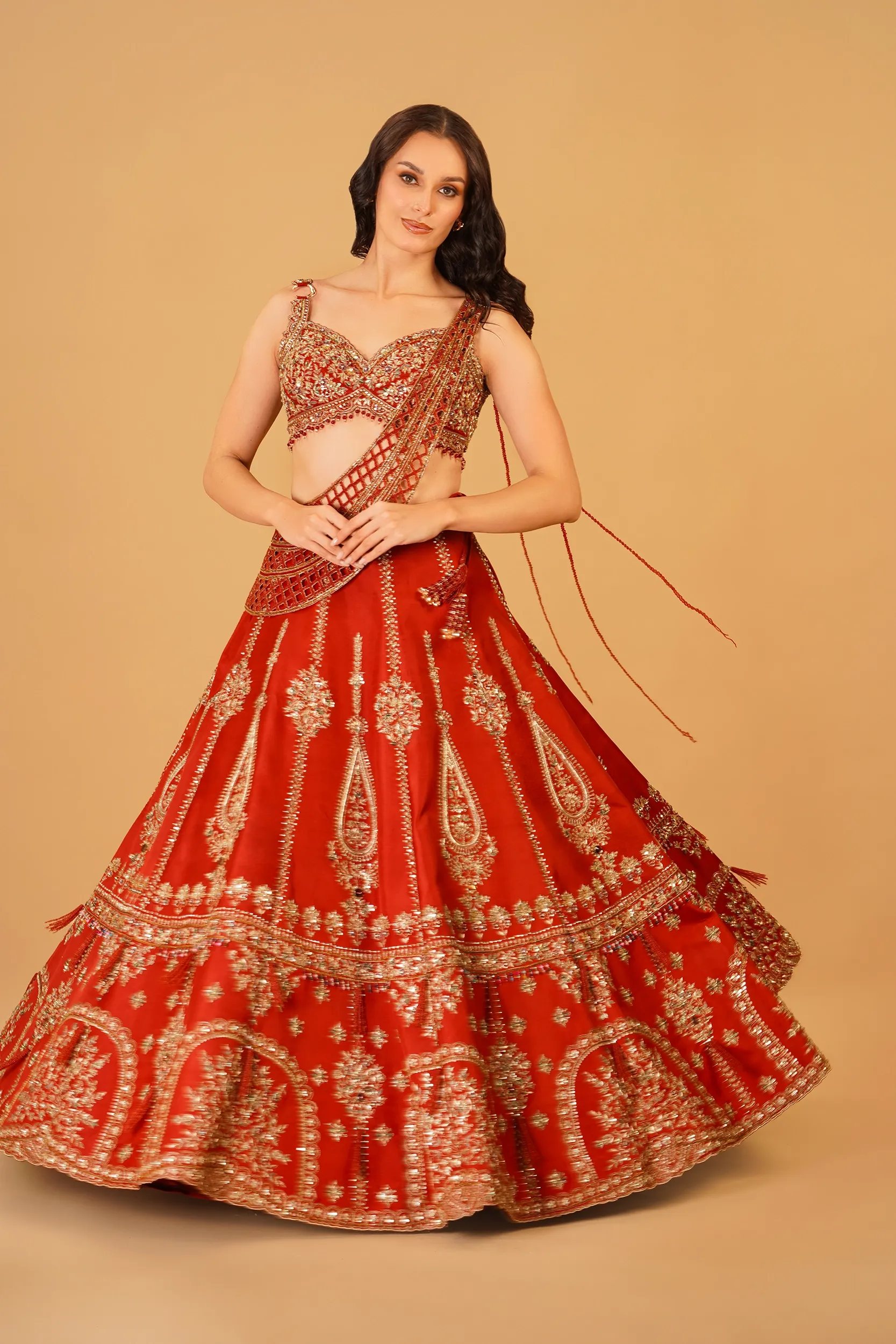
Your wedding day is arguably one of the most important days of your life, and at the center of this momentous occasion is the Party Lehenga. The bridal lehenga is more than just a garment; it is a profound expression of your personality, a nod to your cultural heritage, and a symbol of your journey into a new chapter. However, with the myriad of options available in today’s fashion landscape, selecting the perfect bridal lehenga can quickly shift from an exciting dream to an overwhelming challenge.
Every modern Indian bride wants to look flawless, but achieving that dream requires careful consideration of various elements, including silhouette, color, fabric, embroidery, and comfort. Whether you envision yourself in a traditional deep red outfit adorned with heavy zardozi or a lightweight pastel organza ensemble, this comprehensive guide will walk you through everything you need to know to choose the perfect bridal lehenga for your wedding day.
1. Understand Your Personal Style and Vision
Before you step into a luxury designer atelier like Aahana’s by Nidhi Mehra, it is crucial to spend some time visualizing what you want. The world of bridal couture is vast, and without a clear direction, it is easy to get swayed by trends that may not necessarily align with your personal aesthetic.
Are You a Traditional or Modern Bride?
Think about your everyday style. Do you gravitate towards classic, timeless pieces, or do you love experimenting with contemporary, edgy fashion?
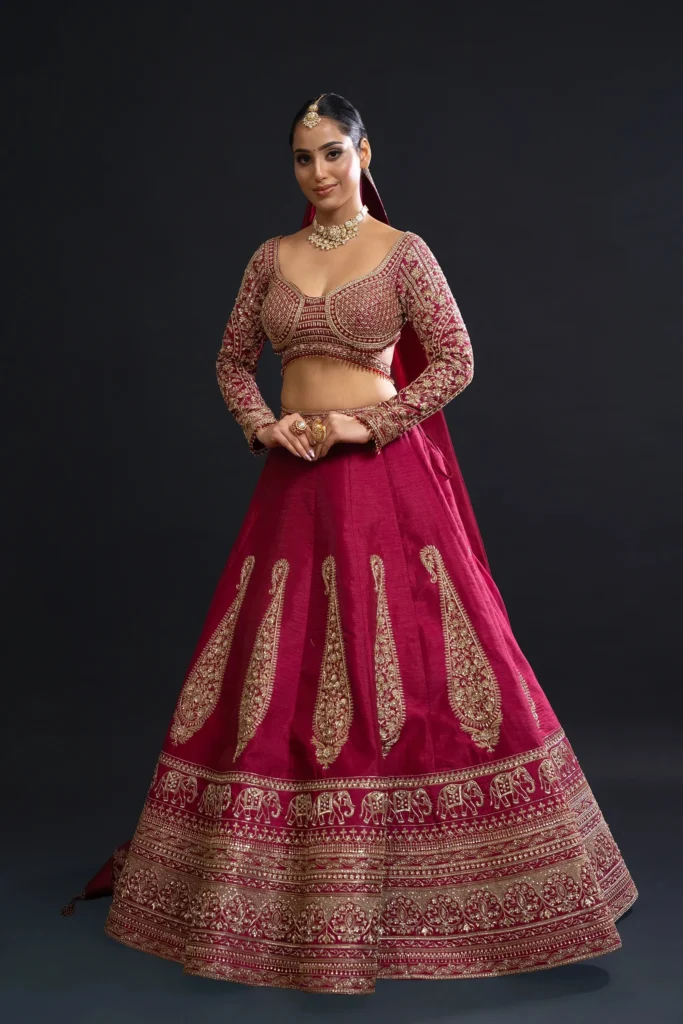
– The Traditional Bride: If you love heritage and timelessness, you might prefer classic reds, maroons, or deep pinks with traditional motifs like lotuses, peacocks, or intricate architectural jaal work.
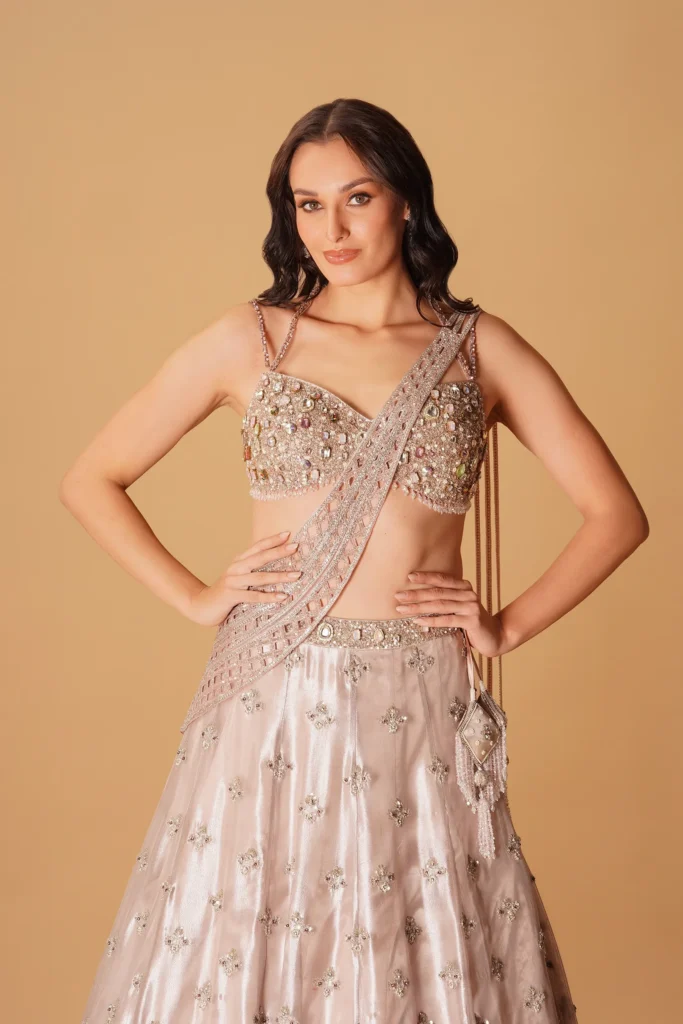
– The Modern Bride: If you prefer a contemporary look, you might lean towards unconventional colors like ivory, sage green, or lavender. You might also prefer geometric embroidery, mirror work, or unconventional blouse cuts such as corsets or off-shoulder designs.
Creating a mood board on Pinterest or Instagram can be incredibly helpful. Save images of bridal lehengas, jewelry, makeup, and even venue decorations that catch your eye. Over time, a distinct pattern will emerge, helping you articulate your vision to your designer.
2. Decode the Bridal Lehenga Silhouettes
Not every bridal lehenga is created equal. The silhouette—or the shape—of the lehenga skirt plays a massive role in how the outfit complements your body type. Understanding the different cuts will help you choose a style that highlights your best features.
The Classic A-Line Lehenga
The A-line lehenga is the most universal and flattering silhouette. As the name suggests, the skirt resembles the letter “A”—it is fitted at the waist and gradually flares out towards the hem. This style suits almost all body types, particularly pear-shaped and hourglass figures, as it creates an illusion of a slimmer waist while offering graceful movement.
The Broad Flared (Umbrella) Lehenga
If you have always dreamed of a princess-like, royal wedding outfit with massive volume, the broad flared lehenga is for you. This style uses a large amount of fabric with numerous pleats or panels (kalis) that start at the waist. It works beautifully for brides who are tall or have an hourglass or apple-shaped body. The immense volume creates a dramatic, regal effect when you walk down the aisle.
The Mermaid (Fishtail) Lehenga
For the bold and confident bride, the mermaid lehenga offers a highly structured and glamorous look. This silhouette is tightly fitted from the waist down to the knees and then flares out dramatically at the bottom. It is ideal for brides with an hourglass figure who want to accentuate their curves. However, keep in mind that this style can restrict movement, so it might be better suited for a reception or engagement rather than the main wedding ceremony where you have to sit for long hours.
The Straight-Cut Lehenga
The straight-cut lehenga falls parallel to your legs, with very little flare. It creates a sleek, elongating effect, making it a great choice for petite brides who want to appear taller. It is also an excellent option for pre-wedding functions like the Mehendi or Sangeet, where you want an outfit that allows for easy movement and dancing.
3. Choose the Right Fabric for the Season and Venue
The fabric of your bridal lehenga dictates not only how the outfit looks but also how comfortable you will be. The season and the venue of your wedding are the two most critical factors in this decision.
Winter Weddings: Velvet and Raw Silk
If you are tying the knot in the cooler months of November to February, heavier fabrics are your best friend.
– Velvet: Velvet offers a rich, opulent, and royal look. It holds heavy embroidery beautifully and will keep you warm during late-night pheras.
– Raw Silk: Raw silk is a timeless classic. It has a natural, rich sheen and provides an excellent structural base for intricate hand-embroidery like zardozi and dabka.
Summer and Monsoon Weddings: Georgette, Chiffon, and Organza
For spring and summer weddings, breathability is key. You do not want to be weighed down by a heavy lehenga under the hot sun or high humidity.
– Organza: Organza is currently ruling the bridal fashion world. It is lightweight, sheer, and offers a crisp, voluminous look without the added weight. It is perfect for pastel-colored lehengas.
– Georgette and Crepe: These fluid fabrics drape beautifully and are excellent for brides who want a softer, more romantic look. They are also highly comfortable and allow for fluid movement.
The Destination Factor
If you are having a beach wedding in Goa or a palace wedding in Rajasthan, let the venue influence your fabric choice. A beach wedding calls for breezy, lightweight fabrics like chiffon and tulle, while a royal palace wedding is the perfect setting for heavy silk and velvet.
4. Selecting the Perfect Bridal Lehenga Color
While red will always hold a sacred place in Indian bridal fashion, the modern bride is no longer restricted to a single color palette. Choosing the right color involves understanding your skin undertone, the time of the wedding, and the overall wedding decor theme.
Identifying Your Undertone
- Warm Undertones: If your veins look green under natural light, you have a warm undertone. Colors like classic tomato red, mustard yellow, peach, coral, and deep orange will look stunning on you.
- Cool Undertones: If your veins look blue or purple, you have a cool undertone. You will shine in jewel tones like emerald green, ruby red, magenta, royal blue, and icy pastels.
- Neutral Undertones: If you cannot clearly identify the color of your veins, you likely have a neutral undertone and can pull off almost any color!
Day vs. Night Wedding
- Day Weddings: Natural sunlight brings out the beauty of softer shades. Pastel pinks, powder blues, mint greens, ivory, and soft peach are spectacular choices for morning or afternoon ceremonies.
- Night Weddings: Artificial lighting and evening ambiance call for deeper, richer colors. Deep maroon, classic red, navy blue, emerald green, and even metallic shades of gold and bronze work beautifully for night pheras.
5. The Art of Embroidery and Detailing
At Aahana’s by Nidhi Mehra, we believe that the true soul of a bridal lehenga lies in its craftsmanship. The embroidery you choose will define the overall vibe of the outfit.
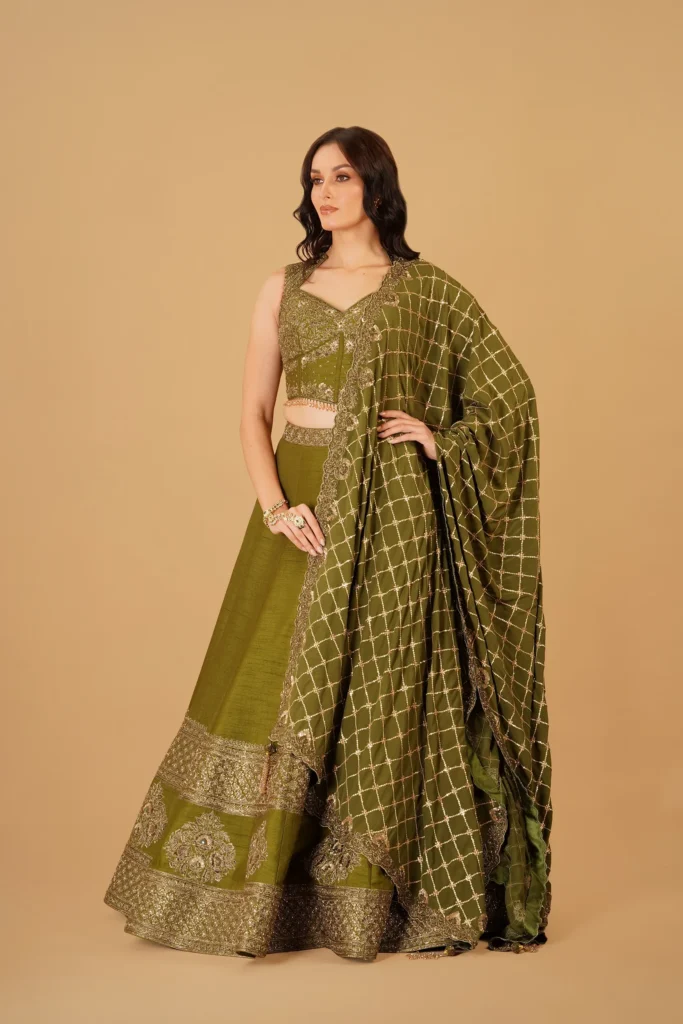
- Zardozi and Dabka: For a traditional, heavy, and regal look, zardozi (metallic thread embroidery) and dabka (coiled wire work) are unparalleled. This type of hand-embroidery takes hundreds of hours to complete and is the hallmark of true luxury couture.
- Thread Work (Resham): If you prefer a softer, more vibrant look, multi-colored thread work is a beautiful option. It adds texture and color without making the outfit overly heavy.
- Mirror Work and Sequins: For the bride who wants to shine, mirror work (shisha) and sequins catch the light beautifully. These are incredibly popular for Sangeet and Reception outfits.
- Gota Patti: Originating from Rajasthan, Gota Patti involves sewing pieces of gold or silver ribbon onto the fabric. It is visually striking yet relatively lightweight, making it a great choice for brides who want a heavy look without the physical burden.
6. Do Not Compromise on the Fit (The Blouse and Dupatta)
While the skirt often gets the most attention, the blouse (choli) and the dupatta are what frame your face in all your close-up photographs.
The Bridal Blouse
The blouse must fit like a second skin. When customizing your lehenga, discuss necklines and sleeve lengths that flatter your body.
– A sweetheart neckline or a deep V-neck elongates the neck and provides the perfect canvas for heavy bridal jewelry.
– Full sleeves or elbow-length sleeves give a vintage, royal appearance, while sleeveless or cap sleeves offer a modern, chic vibe.
– Ensure the blouse has adequate structural support, especially if you have a heavier bust. Built-in cups and secure hooks are a must.
The Dupatta Draping
Modern brides often opt for a double dupatta style. A heavier dupatta (matching the lehenga skirt) is draped across the chest and shoulder, while a lighter, sheer dupatta (usually tulle or net) is pinned securely over the head. This ensures that the bride’s head is not weighed down, allowing her to remain comfortable throughout the long rituals.
7. Plan Your Budget and Timeline
A bespoke bridal lehenga is a significant investment of both money and time.
Start Early
Luxury couture cannot be rushed. Crafting a custom hand-embroidered lehenga from scratch typically takes anywhere from 3 to 6 months. Begin your shopping process at least 6 to 8 months before your wedding date. This allows ample time for consultations, fabric sourcing, hand-embroidery, and multiple fitting sessions.
Be Transparent About Your Budget
When you book a consultation, have a clear budget in mind. A good designer will work with you to maximize the impact of your outfit within your price range—perhaps by balancing a heavily embroidered blouse with a slightly lighter skirt, or by choosing a different embroidery technique.
8. Trust the Custom Couture Process
Buying a bridal lehenga off the rack means compromising on fit and personalization. By choosing custom bridal couture, you are investing in an experience.
At Aahana’s by Nidhi Mehra, the process begins with an in-depth consultation where we understand your vision, your venue, and your personality. We then move on to sketching, fabric selection, and deciding on the embroidery swatches. You are involved in every step, culminating in an outfit that is uniquely, unapologetically yours.
Conclusion
Choosing the perfect bridal lehenga is a journey of self-discovery. It requires a balance of logic (budget, weather, comfort) and emotion (style, dreams, heritage). Remember that while trends come and go, your wedding photographs will last a lifetime. Choose a bridal lehenga that makes you feel confident, beautiful, and authentic.
When you are ready to bring your dream outfit to life, Aahana’s by Nidhi Mehra is here to translate your vision into a handcrafted masterpiece. Step into our Noida atelier, and let us embark on this beautiful couture journey together.
Ready to find your perfect bridal lehenga? Book your exclusive bridal consultation with Aahana’s by Nidhi Mehra today.