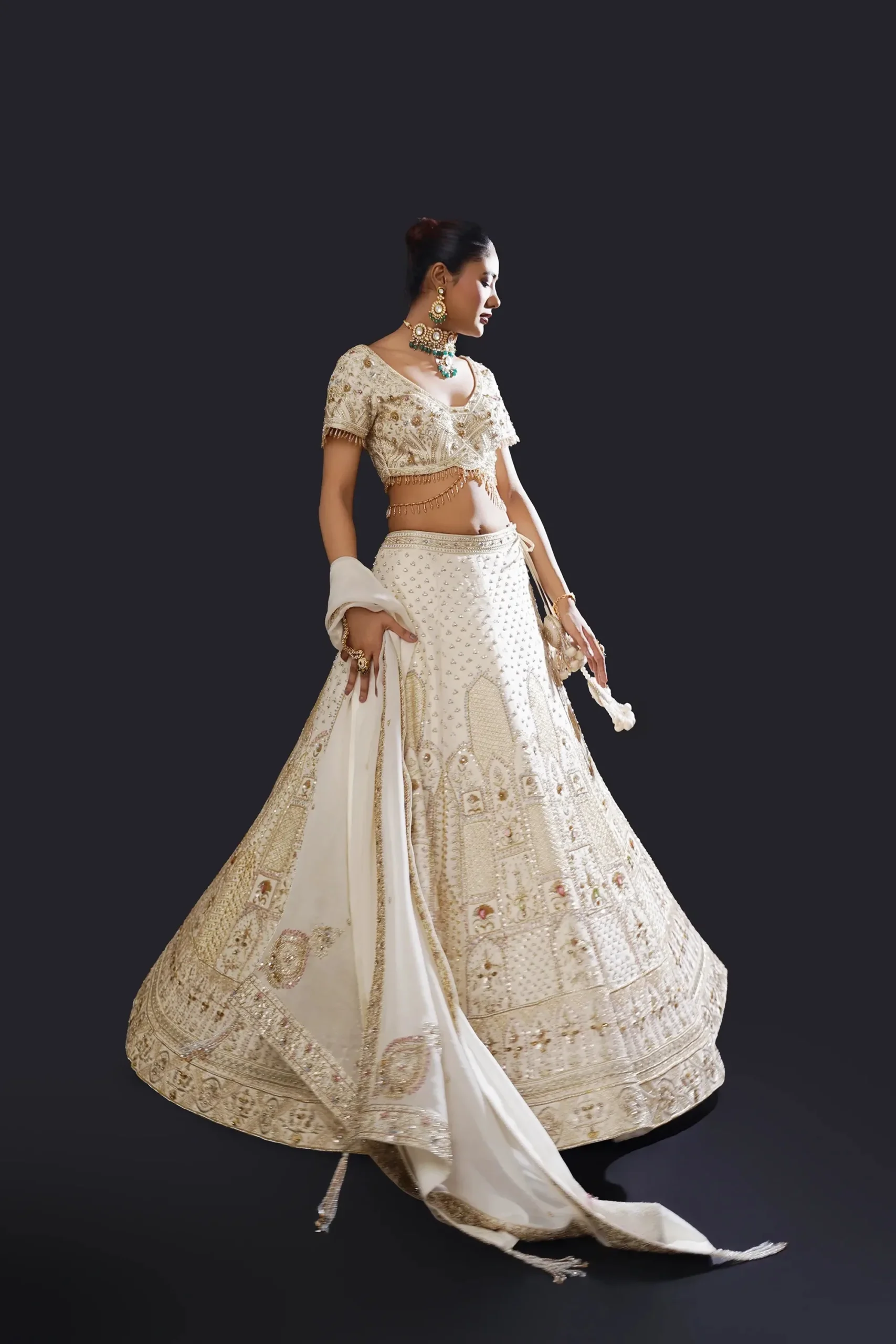
In short: An ivory lehenga is the rare bridal choice that is both classic and quietly modern. Softer and warmer than stark white, ivory flatters almost every skin tone, photographs luminously, and lets embroidery take centre stage. The key to making it yours is the craft — gold zardozi, pearl, tonal thread and crystal work — plus the right jewellery and makeup to keep it from washing out. It suits daytime ceremonies, destination weddings, and brides who want to feel distinct from the traditional deep-red palette.
By Nidhi Mehra, couturier and founder of Aahana’s by Nidhi Mehra — a made-to-order bridal atelier in Sector 4, Noida.
Every few seasons a colour is declared the new bridal trend. Ivory never needed the announcement. It has quietly outlasted every passing palette because it isn’t a trend at all — it is a foundation. A well-made ivory lehenga looks as considered in a photograph today as it will in one your daughter finds in twenty years. For the modern Indian bride who wants tradition and restraint in the same breath, nothing does it quite like ivory. Here is everything worth knowing before you choose yours.
Why Ivory Is Eternal
Ivory occupies a beautiful middle ground in Indian bridal culture. It carries the purity and serenity long associated with white in ceremony and celebration, but without the starkness — its warmth reads as rich and celebratory rather than plain. That balance is why it has never dated. Bold colours announce a specific year; ivory simply looks right, decade after decade. It also has a quiet confidence to it. A bride in a deep red is expected; a bride in ivory has clearly made a choice, and that intentionality reads as elegance. In a wedding landscape that increasingly celebrates the bride who does it her own way, ivory has become the sophisticated modern classic — timeless in its roots, contemporary in its restraint.
White vs. Ivory vs. Cream: Understanding the Spectrum
These three words get used interchangeably, but they are not the same, and the difference matters enormously against skin and under light. Pure white is cool and crisp, with no warmth — striking, but it can read as harsh against warm Indian skin tones and can look clinical under certain lighting. Ivory is white softened with the faintest warm undertone — it glows rather than glares, and it is by far the most flattering of the three on the widest range of complexions. Cream goes a step further into yellow-warm territory, cosier and more vintage, beautiful on some brides but occasionally reading as “off-white” rather than intentional. As a rule, ivory is the safest and most universally flattering choice; cream suits warmer, golden skin tones especially well; and pure white works best when balanced with plenty of gold embroidery to warm it up.
Making Your Ivory Lehenga Unique
Here is the paradox of ivory: because the colour is understated, the craft becomes everything. On a deep maroon, embroidery shares the visual weight with the background. On an ivory base, there is nowhere to hide — the technique, density and placement of the work are the entire personality of the piece. That is what makes ivory the most customisable of all bridal colours.
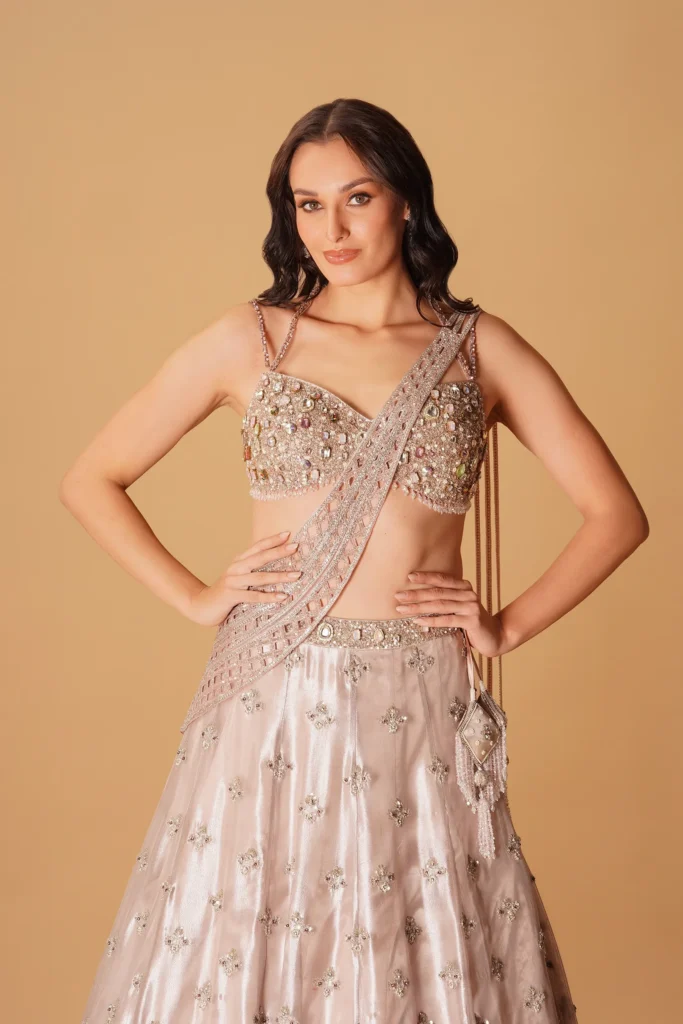
The most effective ways to make an ivory lehenga unmistakably yours: gold zardozi and zari for richness and traditional contrast; pearl and moti work for a soft, luminous, tonal effect; silver and crystal detailing for a cooler, more contemporary shimmer; tonal ivory-on-ivory embroidery for the quietest, most editorial luxury, where texture rather than colour carries the design; and a single accent colour — a blush, sage or powder-blue border or motif — for brides who want a whisper of colour without leaving the ivory family. Because everything is bespoke at the atelier, the density and placement can be tuned to your body and your functions. You can explore starting points in our Iconic Ivory capsule.
Ivory and Your Skin Tone
One of ivory’s great strengths is that it flatters nearly everyone — but the styling around it shifts by complexion. On deep and rich skin tones, ivory is stunning and high-contrast; lean into gold embroidery and warm jewellery to harmonise. On medium and wheatish tones, ivory is effortlessly flattering — almost any embroidery palette works, which is the widest creative freedom of all. On fair and cool-toned skin, the risk is the lehenga and the complexion blending into one pale wash, so the fix is contrast: warmer gold work, a defined makeup look, and richer jewellery to create separation. The colour itself rarely fails; it is the styling that makes it sing.
Jewellery: Diamond, Gold, or Silver
Ivory is a generous canvas for jewellery because it competes with nothing. Polki and diamond pieces look extraordinary against ivory — the pale base lets the stones read as the hero, which is why ivory is a favourite for brides who want their jewellery to be the statement. Gold (especially antique or matte gold) adds warmth and grounds the look in tradition, and pairs beautifully with gold-embroidered ivory. Silver, platinum and diamond tones give a cooler, more contemporary, almost editorial feel — lovely with crystal or silver-thread embroidery. The one principle: match your jewellery metal to your embroidery metal. Gold work wants gold or polki; silver and crystal work wants diamond, platinum or silver. That single alignment is what makes the whole look feel deliberate rather than assembled.
Makeup for Ivory: Avoiding the Wash-Out
The one genuine risk with ivory is looking washed out — a pale outfit against under-defined features can flatten a bride, especially in photographs. The solution is definition, not heaviness. A warm base with a hint of glow keeps skin from looking grey next to ivory. Defined eyes — whether a soft smoke, a warm bronze, or a classic liner — give the face an anchor. A considered lip in berry, warm rose, brick or a classic red adds the colour the outfit deliberately withholds, and instantly lifts the whole look. Sculpted, warm cheeks restore dimension. The goal is a face with enough warmth and contrast to hold its own beside the ivory, so you look radiant rather than pale. When in doubt, let the outfit be the quiet one and let your makeup bring the definition.
When to Wear Ivory
Ivory has a natural affinity for certain settings. It is exquisite for daytime and morning ceremonies, where soft natural light makes it glow. It is a signature choice for destination and outdoor weddings — beaches, palaces, gardens — where a heavy dark palette can feel out of step with the light and setting. It suits engagements, Christian and court ceremonies, and receptions beautifully. And it is increasingly chosen for the wedding day itself by brides who want to feel distinct from the deep reds and maroons worn at their other functions that week. If you are planning multiple outfits, an ivory wedding-day piece creates a striking contrast against a red sangeet or a jewel-toned reception look.
Photographing Ivory: How to Look Bright, Not Pale
Ivory photographs like a dream when it is handled right — and there are a few things worth knowing. Ivory loves natural and soft light, where it glows luminously; it can occasionally read cooler or greyish under harsh fluorescent lighting, so it helps to brief your photographer to warm the tones slightly. Contrast is your friend in photos: rich jewellery, defined makeup and a considered backdrop keep you from disappearing into a pale frame. Against greenery, stone, wood or richly coloured decor, an ivory lehenga stands out beautifully. And because ivory reflects light, it tends to make a bride look softly lit and radiant from every angle — which is a large part of why it has become such an editorial favourite.
Caring for White and Ivory Fabrics
Pale bridal fabrics deserve a little extra care, because ivory shows marks that a dark colour would hide — but with sensible handling it stays pristine for a lifetime. Keep it away from perfume, deodorant and makeup after dressing (dress last, spray first). Dry clean only, through a specialist experienced with hand embroidery and delicate pale fabrics — never attempt to spot-clean ivory at home, as water marks and rings are hard to reverse. For storage, wrap the piece in acid-free tissue and breathable cotton or muslin — never plastic, which can yellow pale fabric over time — and keep it away from direct light and humidity. Stored well, an ivory lehenga remains an heirloom rather than a one-day garment.
The Aahana’s Ivory Embroidered Lehenga
Our Ivory Embroidered Bridal Lehenga is a study in exactly what this article celebrates — restraint that reads as richness. Built on a structured raw-silk and organza base that holds its flare and its embroidery weight, it carries hand-worked gold and pearl detailing placed to create depth against the pale ground rather than simply covering it. Because gold and pearl work on ivory shows every stitch, the piece is finished with the kind of precision that only in-house hand embroidery allows. It is designed for the bride who wants her wedding-day look to feel timeless, luminous and distinctly her own — and it sits alongside the rest of our Iconic Ivory capsule for brides drawn to this palette.
Customising Your Ivory Piece
Every ivory lehenga we make is built around the individual bride. You can adjust the embroidery palette (gold, silver, pearl, tonal, or a single accent colour), the density and placement of the work, the silhouette — skirt flare, choli neckline and sleeve, dupatta drape — and the exact shade of ivory within the cream-to-white spectrum to suit your complexion and lighting. Because the piece is made to your measurements from scratch, the fit is yours alone. If you love the idea of ivory but aren’t sure which version suits you, that is exactly what a consultation is for — we test shades and embroidery against your skin in real fabric before anything is decided.
Key Takeaways
- Ivory is timeless, not trend-led — warmer and more flattering than stark white, with a quiet, modern confidence.
- Know the spectrum: ivory is the most universally flattering; cream suits warm/golden tones; pure white needs gold embroidery to warm it.
- The craft is the personality — on an ivory base, embroidery technique, density and placement carry the entire design.
- Match jewellery metal to embroidery metal — gold work with gold/polki, silver/crystal work with diamond/platinum.
- Avoid washing out with a warm base, defined eyes, and a colour lip; add contrast through jewellery and styling.
- Ivory is perfect for daytime, destination and editorial weddings, and for brides who want to stand apart from the traditional red palette.
- Care matters: dry clean only via a specialist, store in acid-free tissue and cotton, never plastic.
Frequently Asked Questions
Is an ivory lehenga suitable for a traditional Indian wedding?
Yes. Ivory carries the serenity and richness associated with celebration while offering a modern, distinctive alternative to red. It is especially suited to daytime ceremonies, destination weddings, engagements and receptions, and is increasingly chosen for the wedding day itself by brides who want to feel distinct from the deeper palettes worn at their other functions.
What is the difference between white, ivory and cream?
Pure white is cool and crisp; ivory is white with a faint warm undertone that glows and flatters the widest range of skin tones; cream is warmer still, with a soft yellow cast. Ivory is generally the most universally flattering, while cream suits warm, golden complexions and pure white benefits from gold embroidery to add warmth.
Does ivory suit all skin tones?
Ivory flatters nearly every complexion — only the styling shifts. Deep and medium skin tones wear it effortlessly; fair, cool-toned brides simply need more contrast through warmer gold embroidery, defined makeup and richer jewellery so the outfit and skin don’t blend into one pale wash.
What jewellery goes best with an ivory lehenga?
Ivory is a generous canvas. Polki and diamond read as the hero against the pale base; antique gold adds warmth and tradition; silver and platinum give a cooler, contemporary feel. The key principle is to match your jewellery metal to your embroidery metal for a deliberate, cohesive look.
How do I keep an ivory lehenga from looking washed out in photos?
Add definition and contrast. Use a warm makeup base with a defined eye and a colour lip, choose rich jewellery, and photograph in soft natural light against greenery, stone or coloured decor. Briefing your photographer to warm the tones slightly also keeps ivory from reading grey under harsh lighting.
About the Author
Nidhi Mehra is a fashion designer and the founder of Aahana’s by Nidhi Mehra, a made-to-order luxury bridal atelier in Sector 4, Noida. She and her artisans hand-embroider every piece in-house, and she personally guides each bride through her design journey. She writes on Indian bridal couture, colour, and craftsmanship.
Contact Aahana’s by Nidhi Mehra
Showroom: A-77, Block A, Sector 4, Noida, UP 201301
Phone: +91 98990 04066
WhatsApp: +91 98990 04066
Email: hello@nidhimehra.in
Shop Online Collection